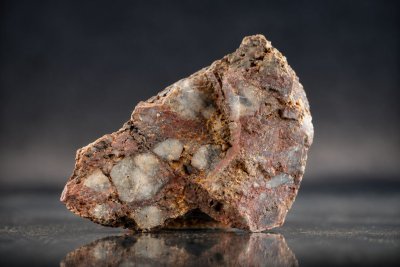
IperionX (IPX) has reported a significant milestone for its GenX titanium production process, with a 41-hour continuous furnace test demonstrating six times the throughput of its existing batch system and a more than 75% reduction in power consumption. The company, which is developing a more efficient method for producing titanium powder, said the test produced over 500 kilograms of powder at a rate of roughly 12 kilograms per hour across four separate campaigns.
The results, announced on September 16, represent the first commercial-scale evidence that the GenX process can run continuously. According to the company, the new process also cut magnesium use by more than 45% and hydrogen use by over 60% compared to its current batch HAMR technology. However, IperionX did not disclose the production cost per kilogram, the capital expenditure required for an industrial-scale line, or expected commercial uptime, leaving investors to weigh the efficiency gains against the lack of concrete financial metrics.
Market Reaction
Shares of IperionX traded at A$2.56 late in Sydney, up 2.4% from the previous close, after ranging between A$2.50 and A$2.64 during the session. Volume was approximately 1.45 million shares as of 3:58 p.m. AEST, according to delayed market data. The positive but restrained response suggests investors are cautiously optimistic about the technical progress but are waiting for more detailed cost projections.
Test Results: Quality and Consistency
During the test, two angular-powder runs operated for a combined 18 hours, with seven valid samples showing oxygen levels between 0.104% and 0.144%, all within the ASTM Grade 5 limit of 0.200%. Four of those samples also met the tighter Grade 23 specification of 0.130%. Two spherical-powder runs, totaling 23 hours, produced eight samples that all met Grade 23, with oxygen readings averaging 0.078%.
One angular sample from an interrupted run was excluded from the validation set. The company said minor refinements should allow angular powder to consistently meet Grade 23, but that remains to be demonstrated in future tests.
Comparative Data and Implications
The comparisons to the batch HAMR process are based on actual operating data from IperionX's existing equipment, but the release does not provide underlying kilowatt-hours, magnesium kilograms, or hydrogen volumes. The GenX process uses a continuous furnace, which avoids repeated heating, cooling, loading, and unloading, potentially increasing equipment utilization and reducing handling costs. Lower magnesium consumption could also reduce the material that later needs to be leached and managed.
However, the 12 kg-per-hour pace would equate to roughly 105 metric tons per year if it ran continuously with no downtime. That calculation is not company guidance, as the test covered a furnace rather than a complete powder production line, and four campaigns cannot establish annual availability, maintenance needs, or steady-state yield.
Future Targets and Financing
The GenX results are separate from IperionX's target to reach approximately 200 metric tons of powder capacity by the end of 2026. The company has stated that GenX is not needed for that ramp or for its already-planned Virginia expansion, which relies on the batch system. This distinction limits the near-term earnings impact of the new data.
In its June-quarter update, IperionX said Virginia production had returned to its ramp after furnace downtime and maintenance. That history is relevant to any annualized reading of a 41-hour test. The company also noted that it was producing for customer qualification and engineered-product programs rather than reporting mature high-volume sales.
Looking ahead, IperionX plans to optimize the GenX furnace during the fourth quarter, connect it to a full powder-production line, and complete engineering and technoeconomic studies for a first industrial-scale system. Those studies will need to translate the percentage savings into installed capital per ton, labor per ton, consumable cost, maintenance intervals, and saleable yield.
The company's financing position has strengthened this year. IperionX raised approximately US$50 million before fees in a July public offering, and an August U.S. Army task order supports continuous HSPT component-processing capacity under an agreement with a ceiling of US$99 million. The Army work does not turn the GenX furnace result into a purchase order for titanium powder.
In summary, the test clears an important technical hurdle: continuous processing produced low-oxygen powder while using fewer inputs. The investment case now depends on whether the integrated line can repeat those results for months, not hours, and show a unit cost low enough to convert qualification programs into profitable volume.