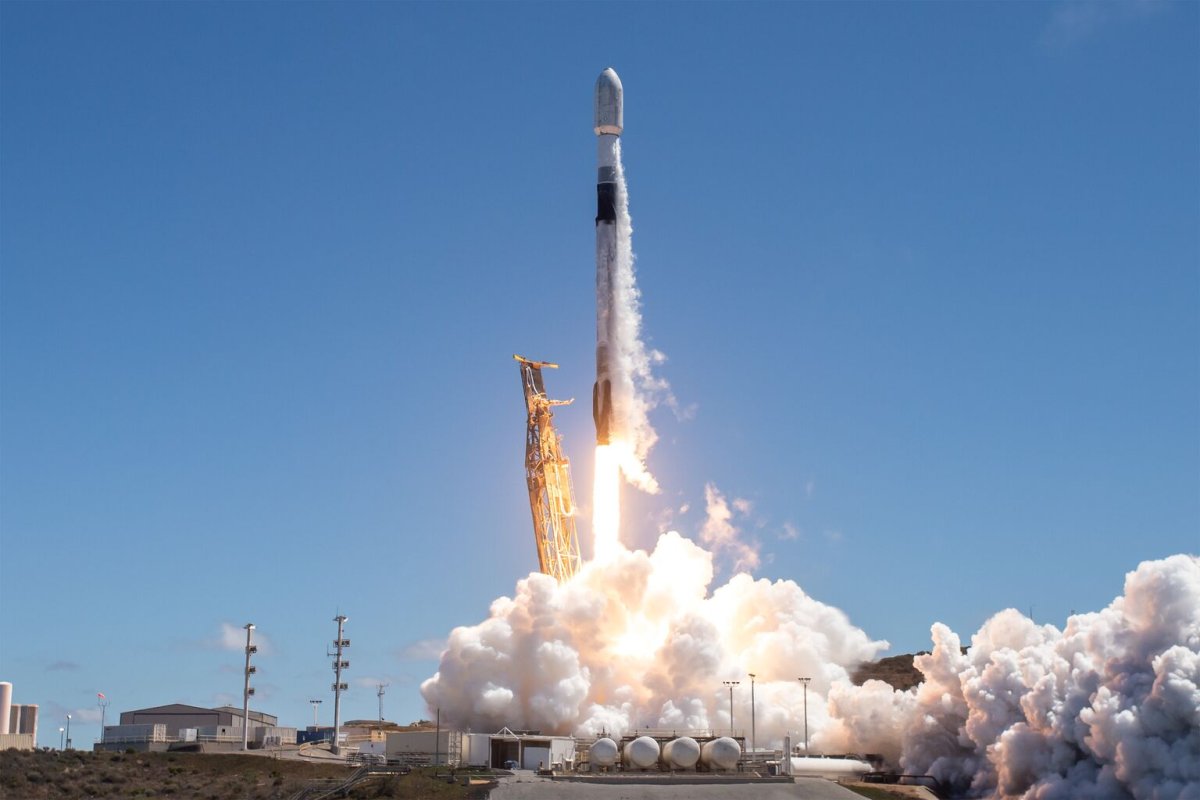
NASA's TRACERS (Tandem Reconnection and Cusp Electrodynamics Reconnaissance Satellites) mission has delivered a significant statistical analysis of magnetic reconnection near Earth, providing fresh insights into how solar wind energy enters our planet's magnetic environment. The study, published on October 29, 2026, in the journal AGU/Wiley, analyzed 207 paired encounters with the southern polar cusp, a funnel-shaped region near the magnetic poles where solar wind particles penetrate the magnetosphere.
Spatial vs. Temporal: A Key Distinction
The core question addressed by the study is whether variations in the solar wind's interaction with Earth's magnetic field are primarily spatial (varying by location) or temporal (varying over time). The findings strongly favor spatial variation, with 129 encounters (62.3%) classified as spatially dominated, 48 (23.2%) as temporally dominated, and 30 (14.5%) as ambiguous. This 2.69-to-1 ratio highlights the importance of spatial structure in the reconnection process.
However, the researchers caution that this does not imply temporal variation is absent. Almost every spatially dominated encounter contained temporal variations within its larger structures, indicating that both processes coexist, but spatial patterns are the dominant feature.
Mission Design and Methodology
TRACERS employs two spacecraft flying in close succession through the cusp region to distinguish between spatial and temporal effects. A single spacecraft cannot easily separate changing conditions from different structures along its path. The paired instruments measure ion-energy steps across magnetic latitudes; steps that remain at similar latitudes support spatial variability, while shifting steps indicate temporal change.
The ion analyzer, developed under the leadership of Stephen Fuselier at Southwest Research Institute, samples every 0.312 seconds across an energy range of 8 to 20,000 electronvolts. An additional electric-field instrument measures voltage differences between electrodes spaced seven meters apart, providing complementary data on plasma flow.
Operational Challenges and Data Limitations
The mission has faced operational hurdles. One satellite experienced battery trouble, requiring it to rely on solar power for data collection. This constraint forced a switch from northern to southern cusp observations, as the southern route allows the affected satellite to receive sunlight before reaching its science target. Consequently, the study's sample size is only about one-tenth of what was originally planned.
Furthermore, usable attitude (orientation) data was available for only about half of the encounters, which is critical for interpreting the electric-field measurements. The researchers emphasize the need for more encounters with accurate orientation data to confirm the observed spatial dominance.
Implications for Space Weather
Understanding the mechanisms of magnetic reconnection is crucial for predicting space weather, which can disrupt satellite navigation systems and power grids on Earth. NOAA has identified reduced satellite-navigation accuracy and power-grid disruptions as key impacts of geomagnetic storms. By clarifying whether spatial or temporal processes dominate, TRACERS data could improve space weather forecasting models.
In a NASA update on October 29, Fuselier noted that the observations provide “a clearer view of solar wind particle behavior.” The mission has been granted an extension through spring 2027, and additional passes may help solidify the findings. Whether the spatial lead will persist across a broader dataset remains an open question, but the current results offer a compelling new perspective on the dynamics of Earth's magnetic shield.
