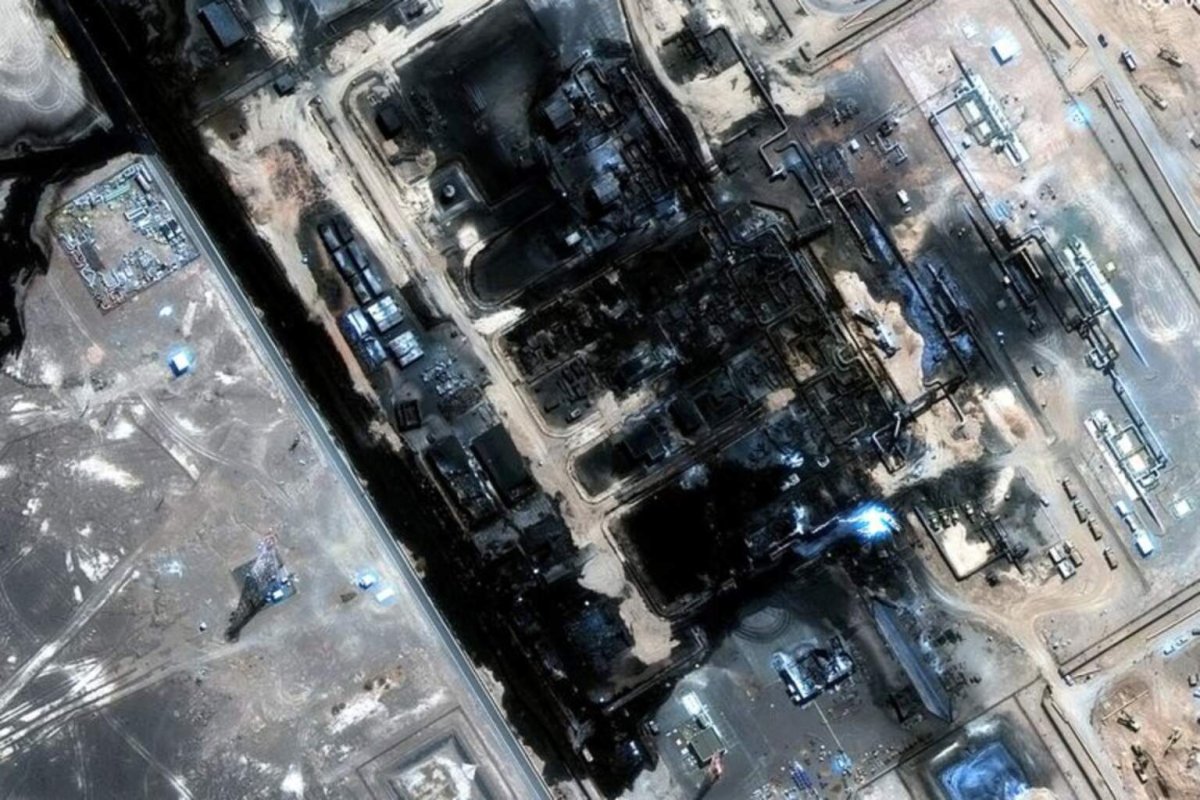
West Texas Intermediate crude oil settled at $105.83 per barrel on Tuesday, marking a gain of $4.44, or 4.4%, as market participants grappled with sharply divergent estimates for when Saudi Arabia's East-West Pipeline might resume full operations. The conflicting outlooks have injected a fresh wave of uncertainty into an already volatile oil market.
U.S. Energy Secretary Chris Wright, in a Reuters report published Tuesday, expressed optimism that crude would flow through the damaged line within a matter of days. However, regional officials told the Associated Press that much of the system could remain out of commission for weeks. Saudi Aramco, the state-owned oil giant, has yet to provide a definitive repair timeline, leaving traders to speculate on the duration of the disruption.
The disagreement over the repair schedule is the immediate driver of oil prices. Tuesday's settlement represented the largest one-day move for the October WTI contract this week. Meanwhile, November Brent crude was last quoted at $108.75, up $3.07, or 2.9%, according to market data from MarketScreener.
The East-West Pipeline is a critical piece of infrastructure, transporting Saudi crude from the kingdom's eastern producing region to the Red Sea port of Yanbu, thereby bypassing the Strait of Hormuz. Before the current disruption, approximately one-fifth of global oil supply transited through Hormuz, as reported by the Associated Press. Rystad Energy estimated that between 2.6 million and 4 million barrels per day had recently flowed through the pipeline and out of Yanbu, below the line's nameplate capacity of 7 million barrels per day but still significant enough to tighten an already stressed market.
While Aramco's west-coast network includes other infrastructure, it cannot immediately substitute for the damaged route. The company notes that its Yanbu South Terminal added 3 million barrels per day of loading capacity in 2018, but export capacity at the coast is of little use if crude cannot reach the terminal at the expected rate.
The broader physical picture remains complicated beyond this single pipeline. Houthi attacks have targeted Saudi infrastructure and shipping in the Red Sea, while tanker traffic through Hormuz remains constrained. A separate protest at a Libyan pipeline added another supply concern on Tuesday, with the possibility of force majeure looming. Wright's shorter repair estimate is the clearest counterweight to these risks, as even a partial resumption of Saudi flows would reduce the number of barrels the market must replace.
Energy equities participated in the rally but with less intensity than crude. The Energy Select Sector SPDR Fund (XLE) closed at $65.36, up 1.29%, according to Investing.com data. Chevron (CVX) finished at $216.12, up 1.86%. The broader S&P 500 fell 0.4% to 7,585.73, while the 10-year Treasury yield returned to about 5%, as reported by the Associated Press after the close.
The divergence between oil and equities highlights why $100-plus crude is not an uncomplicated boon for energy investors. Higher realized prices can boost upstream cash flow, but a prolonged shock also raises operating costs, revives inflation pressures, and keeps interest rates elevated. Refiners and oilfield-service companies have different exposures, so the WTI move cannot be mapped evenly across the sector.
The Energy Information Administration's September outlook, published before the latest pipeline attack, projected Brent spot crude averaging near $90 per barrel in the second half of 2026. Tuesday's November Brent indication was roughly 21% above that baseline. This gap underscores how much physical supply assumptions have shifted, though it is not a forecast that today's premium will persist.
Investors now require operating evidence rather than additional repair estimates: confirmed throughput on the East-West line, loading rates at Yanbu, and tanker movements through Hormuz. A resumption measured in days could quickly erase part of Tuesday's premium. An outage measured in weeks would keep the market dependent on already limited alternative routes.