Amazon's Project Kuiper satellite internet constellation is set to expand further on November 23, as the company prepares to launch 36 additional broadband satellites aboard an Ariane 6 rocket. This comes just days after a United Launch Alliance (ULA) Vulcan mission resulted in the loss of 40 Kuiper spacecraft, marking a significant setback for the network's deployment efforts.
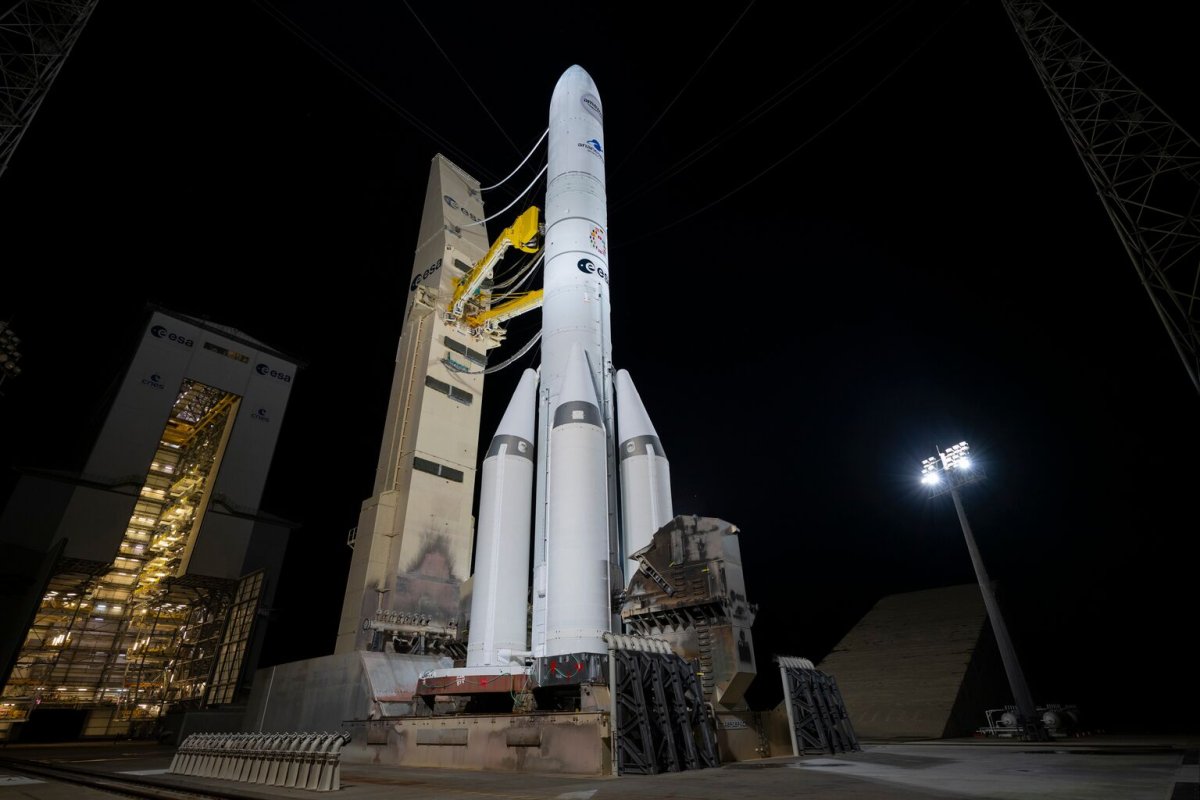
The upcoming mission, designated LE-04 and known as VA271 by Arianespace, will lift off from the Guiana Space Centre in Kourou, French Guiana, during a 29-minute window starting at 11:09 UTC (08:09 local time). The flight will utilize an Ariane 64 configuration with four P160C solid-propellant boosters, according to the launch operator's mission announcement on November 18.
This launch is part of a broader 24-launch agreement between Amazon and Arianespace. If successful, Arianespace will have delivered a total of 136 Kuiper satellites to orbit, contributing to the constellation's build-out. The LE-04 mission follows a June flight that also carried 36 satellites, underscoring the steady cadence of deployment despite the recent Vulcan failure.
Vulcan Investigation Findings
The November 15 loss of the Vulcan mission, which carried 40 Kuiper satellites, has prompted an ongoing investigation by ULA, with oversight from the Federal Aviation Administration (FAA). In a preliminary update released on November 18, ULA indicated that the root cause likely lies in an inadequate fuel supply from the vehicle to its BE-4 engines, leading to reduced booster thrust. The company emphasized that the issue appears to be related to the fuel delivery system rather than engine performance itself.
ULA noted that the upper stage's RL10 engines operated normally, but could not compensate for the earlier thrust shortfall. The solid rocket boosters, which had undergone nozzle improvements, also appeared to perform as expected. However, these assessments remain preliminary, and the investigation is still active, with the FAA required to approve the final report and any corrective actions.
Mission Profile and Satellite Deployment
During the LE-04 mission, the 36 satellites are scheduled to separate from the upper stage at an altitude of approximately 465 kilometers above Earth. Following separation, Amazon's operations center in Redmond, Washington, will establish contact with the spacecraft, perform health checks, and then raise them to their operational altitude of 630 kilometers. Once at the target orbit, the satellites will undergo commissioning before entering service.
These planned milestones are detailed in Amazon's mission log, which was updated on November 15. The successful deployment of these satellites is crucial for Amazon to begin offering broadband services to customers, particularly in underserved regions. However, the impact of the Vulcan loss on the overall timeline for customer availability remains unclear, as ULA has not yet provided a date for Vulcan's return to flight.
Market Context and Implications
The Kuiper constellation is a key component of Amazon's strategy to compete with SpaceX's Starlink in the growing satellite internet market. The loss of 40 satellites on Vulcan represents a temporary setback, but Amazon's diversified launch strategy, which includes Ariane 6 and other providers, helps mitigate such risks. The upcoming Ariane 6 launch demonstrates the resilience of the program, even as the investigation into the Vulcan failure continues.
Investors and industry watchers will be closely monitoring the outcome of the ULA investigation, as it could affect future launch schedules and the pace of Kuiper deployment. The FAA's involvement adds a regulatory layer that could lead to additional scrutiny and potential delays for ULA's Vulcan rocket.
For now, Amazon remains focused on expanding its satellite network, with the LE-04 mission serving as a critical step toward achieving global broadband coverage. The company's ability to maintain launch cadence despite setbacks will be a key factor in its competitive positioning against Starlink and other emerging satellite internet providers.