In a move to strengthen the resilience of satellite laser communications, Japan's NTT and Sweden's SSC Space have signed a memorandum of understanding (MoU) to explore the coordination of optical ground stations across multiple locations. The agreement, announced on November 20, 2026, and signed on November 11, aims to address one of the key vulnerabilities of optical satellite links: cloud cover.
Optical ground stations use telescopes to transmit and receive data via laser light, offering higher bandwidth than traditional radio-frequency systems. However, clouds can disrupt the optical path, causing communication outages. The proposed solution involves 'site diversity'—using geographically dispersed stations and switching to a station with clear skies when weather interferes. NTT's expertise in optical communications and network control will be paired with SSC Space's operational experience and ground infrastructure to study this approach.
The MoU outlines exploratory work on interoperability, geographically distributed stations, and future service integration. Both companies emphasize that the agreement is a study framework, not a commercial launch. No financial terms or launch dates have been disclosed, and no specific new station locations have been identified.
Why site diversity matters
For satellite operators, reliable connectivity from orbit to terrestrial networks is critical. Optical links promise high data rates, but their susceptibility to atmospheric conditions has been a limiting factor. By coordinating stations, operators can mitigate the impact of cloud cover, potentially improving service availability. The study will also examine interoperability—ensuring equipment and services from different providers can work together through common interfaces.
NTT envisions a complete chain linking space terminals, optical ground stations, terrestrial optical networks, and data centers. The companies will also share customer requirements and technology trends as part of the collaboration.
Existing infrastructure provides a foundation
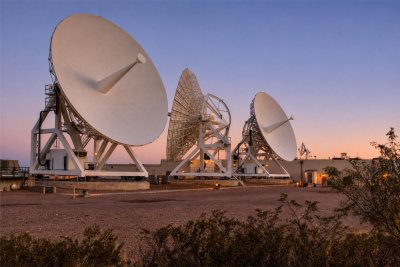
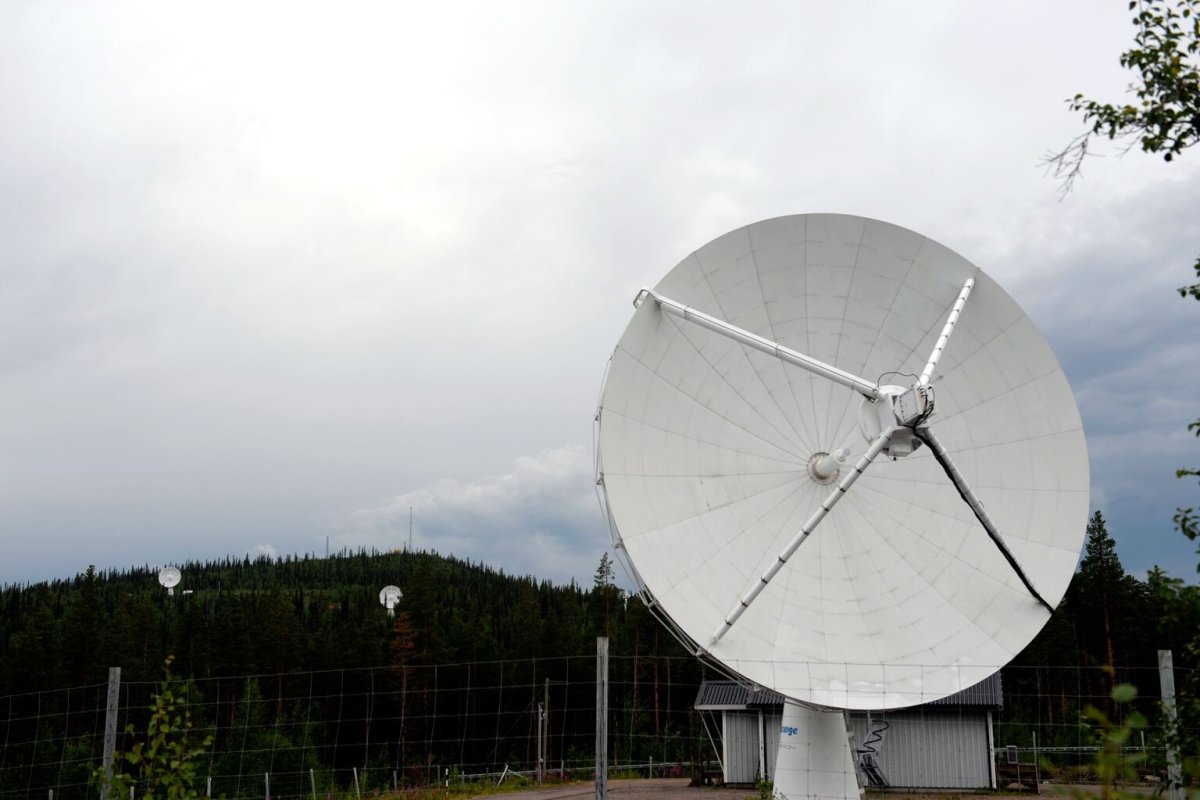
The new agreement builds on prior investments in optical ground infrastructure. In March 2026, the European Space Agency (ESA) confirmed that SSC's Santiago station in Chile had passed site acceptance testing and was ready for operations. Built by Safran Space under the ESA-supported NODES project, the station offers two-way laser-link capability and joins an installation in Western Australia that began testing in 2025.
SSC's optical stations support data rates of up to 10 gigabits per second (Gbps) each and are compatible with CCSDS O3K and SDA OCT protocols. These specifications, however, represent maximum capabilities and do not guarantee performance of a future integrated NTT-SSC service.
Market context and implications
The growing demand for high-throughput satellite communications, driven by constellations and data-intensive applications, has accelerated interest in optical intersatellite links. However, the ground segment remains a bottleneck, particularly for low-Earth-orbit (LEO) satellites that require frequent handovers. Coordinated ground stations could enhance network robustness and reduce downtime, making satellite services more competitive with terrestrial infrastructure.
For investors, this collaboration signals confidence in optical technology's commercial viability, but tangible outcomes are still pending. The study phase means no immediate revenue impact for NTT or SSC Space. Industry analysts will watch for demonstrated switching between sites, published availability figures, and a service timetable as indicators of progress.
As the satellite communications market evolves, partnerships like this one could become more common, as companies seek to overcome technical hurdles and deliver reliable services. The NTT-SSC initiative, while exploratory, represents a step toward more resilient optical ground networks.