Bill Ackman's Pershing Square (NYSE:PS) has quantified its bullish stance on artificial intelligence infrastructure. In a shareholder letter dated November 2, the firm projected that new data center capacity could generate annual pretax operating returns of 15% to 25%. That estimate hinges on achieving a 50% incremental operating margin on revenue.
However, a sensitivity analysis by TechStock² demonstrates how sensitive those returns are to margin assumptions. Holding revenue and construction costs constant, if the incremental margin drops to 30%, the projected return range falls to 9% to 15%. The analysis compares annual operating income to initial investment, rather than calculating a lifetime return.
The core question for investors is straightforward: how much of each revenue dollar ultimately becomes operating profit? Pershing Square's model assumes that half of incremental revenue converts to operating income. The sensitivity test shows that a 20-percentage-point reduction in that margin assumption cuts the return by roughly 40%.
Margin Sensitivity Drives Returns
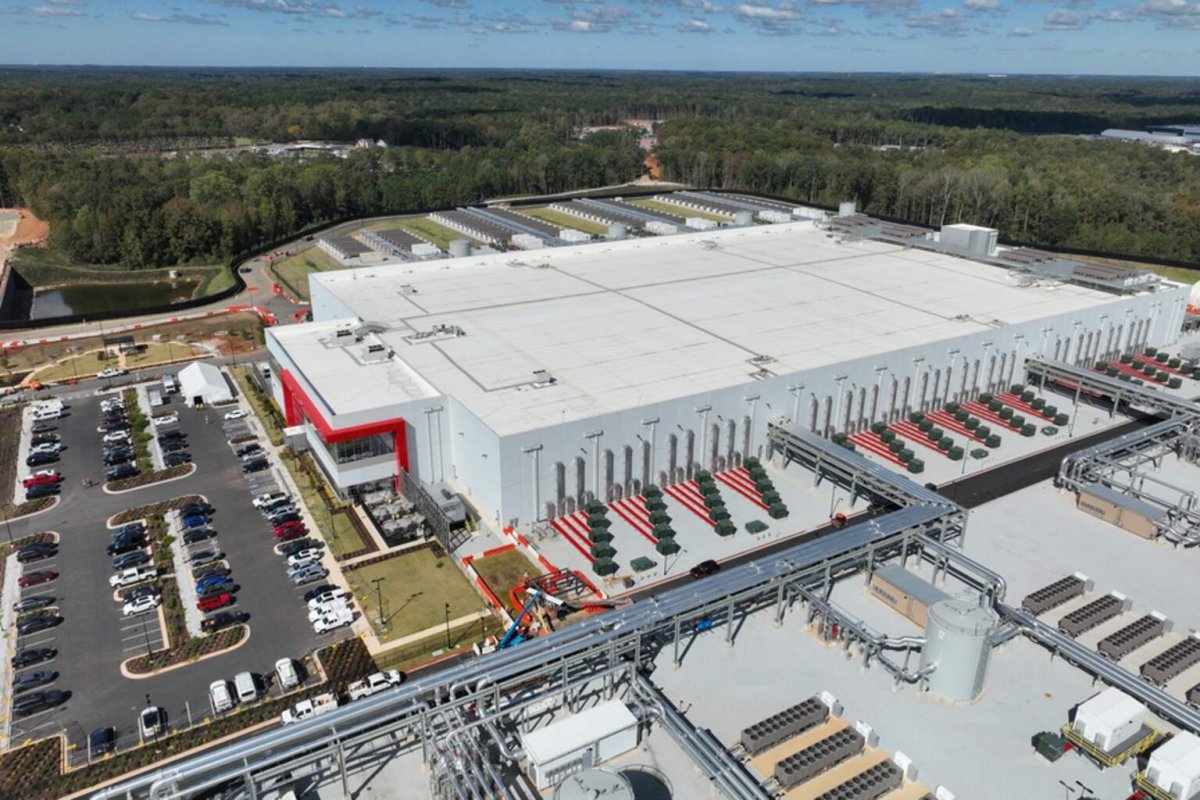
The table below summarizes the relationship between incremental margin and projected returns for a one-gigawatt facility, based on Pershing Square's assumptions and TechStock² calculations.
- 50% margin: 15%–25% return
- 40% margin: 12%–20% return
- 30% margin: 9%–15% return
Build costs are estimated at $40–$50 billion, with annual revenue of $15–$20 billion. Return is calculated as revenue multiplied by margin, divided by cost. The endpoints pair low revenue with high cost, and vice versa.
In the letter, CEO Bill Ackman and CIO Ryan Israel wrote, "We believe that the hyperscalers' capital spending is offensive rather than defensive." They characterize the spending as an investment to accelerate growth. Stocktwits reported on the argument on November 3, noting that cloud-platform shares have trailed semiconductor and hardware stocks despite earnings growth—an investor assessment of market pricing, not company guidance.
Amazon's AWS: A Useful but Imperfect Comparison
Amazon (NASDAQ:AMZN) offers a relevant benchmark. Its October 29 earnings report showed AWS's third-quarter operating margin at 38.7%. That is a blended segment margin, not the incremental margin on new capacity. AWS generated $46.0 billion in quarterly revenue and $17.8 billion in operating income, with revenue up 39.3% year-over-year. These figures demonstrate strong demand but do not establish the economics of each new facility.
Amazon's cash flow picture is less encouraging. Free cash flow over the trailing twelve months through September 30 was an outflow of $42.4 billion, compared with an inflow of $14.8 billion a year earlier—a deterioration of $57.2 billion.
Microsoft's Capital Spending and Funding Position
Microsoft (NASDAQ:MSFT) reported a different funding position on October 28. Quarterly free cash flow was positive at $18.6 billion, while capital expenditure totaled $45.2 billion, including finance leases. CFO Amy Hood attributed part of the spending pattern to delayed capacity deliveries. Approximately three-quarters of capital spending went toward short-lived assets, mainly CPUs and GPUs. These disclosures highlight equipment-replacement needs and the timing gap between spending and revenue generation.
Microsoft expects capital spending to exceed $50 billion in the quarter ending December 2026. Some third-party GPU capacity has shifted into the fiscal second half. The key question: can those deliveries generate revenue before equipment and financing costs squeeze returns?
What the Evidence Establishes
The shareholder letter supplies assumptions; company disclosures supply realized results. Blended and incremental margins are different measures and should not be conflated. Risks include delays in GPU capacity, shorter equipment lives, and lower utilization—any of which could reduce returns. A facility can incur depreciation and financing costs before customers fill it. Neither the letter's margin nor the sensitivity scenarios establishes future realized profitability.
As of November 3, 2026, the debate over AI infrastructure spending continues. Pershing Square's model provides a framework, but the ultimate returns will depend on execution and market conditions.