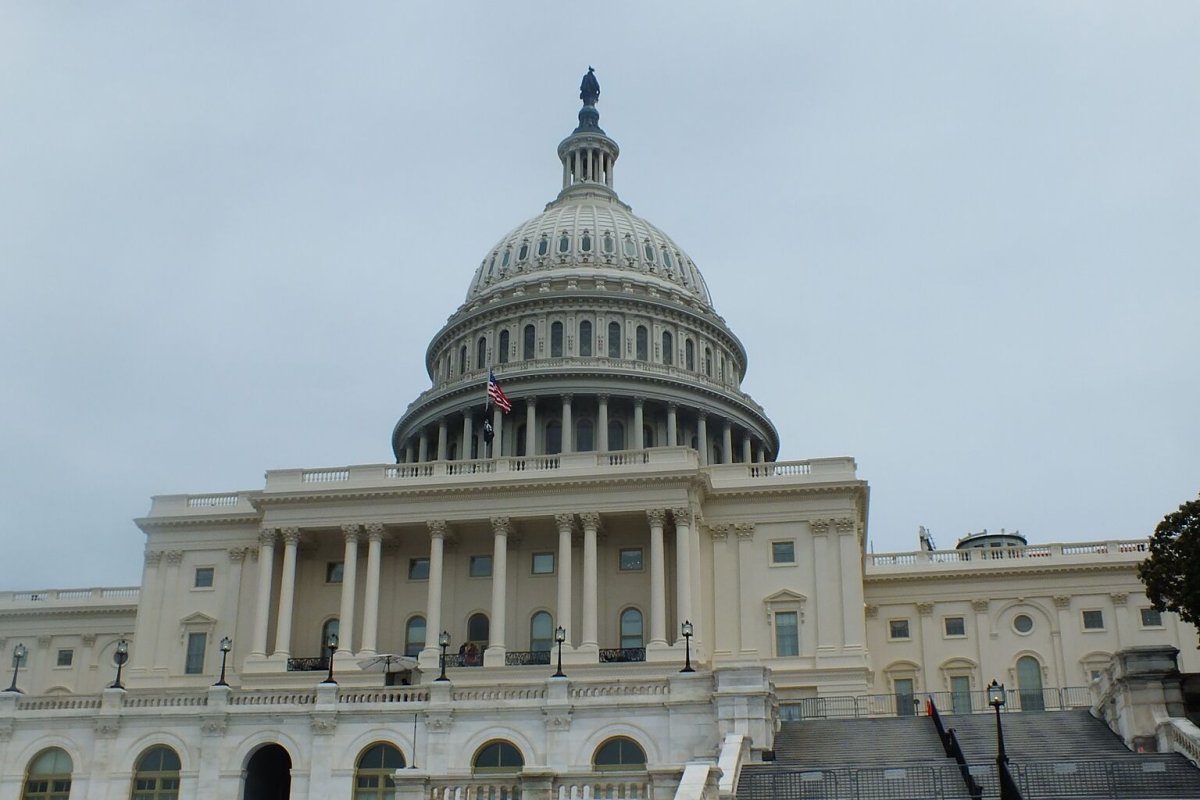
On U.S. Election Day 2026, prediction market Polymarket saw significantly higher trading activity in its House-control contract compared to its Senate counterpart. As of 19:01 UTC on November 3, the House market had accumulated $45,694,592 in dollar volume, while the Senate market recorded $20,663,299. That made House turnover 2.21 times larger, accounting for 68.9% of the combined $66.4 million traded across the two markets.
Both markets launched in July 2025 and track which party will control each chamber. The volume figures are cumulative and exclude separate state races, seat-count contracts, and other election-related questions. They also do not indicate which market saw more trading on Election Day itself, as the totals include all activity since launch. Moreover, cumulative volume reflects repeated buying and selling and does not necessarily represent the amount of money currently at risk.
At the same timestamp, the displayed buy-Yes quotes for Democratic control stood at 95 cents for the House and 75 cents for the Senate. These prices imply different market-implied probabilities and potential payoffs. For instance, purchasing 100 Democratic House Yes shares at 95 cents each would cost $95 and return $100 if successful, yielding a $5 profit before fees. The equivalent Senate position would cost $75 and also pay $100, offering a $25 profit. However, both positions would lose their entire cost if the outcome fails.
Independent reporting corroborated the gap between the two chambers. Reuters noted that BetInt's Monday aggregate implied a 95% chance of Democratic House control and 76% for the Senate. Those figures come from different times and an aggregated dataset, providing context rather than a synchronized comparison. The distinction between market-implied odds and actual election outcomes remains crucial. While prediction markets have generally been well calibrated across large samples, a favored outcome can still fail, as Carlos Hardenberg of MCP Emerging Markets told Reuters: “But they should not be confused with certainty.”
Settlement mechanics also differ. Kalshi's Senate contract allows early resolution based on a consensus of media calls, or otherwise uses the party of the Senate's president pro tempore on February 1, 2027. Polymarket listed November 3 as the end date for both control markets, but that does not guarantee a payout was completed. The next test is whether actual results confirm the House's higher Democratic price while the Senate remains less firmly priced.
Risks include close races, delayed counts, and disputed outcomes that could cause sharp price moves or delay settlement. A favorable quote does not prevent a total loss. Contract wording, available liquidity, and execution costs also affect realized results. As election odds become financial positions, traders must weigh these factors carefully.
