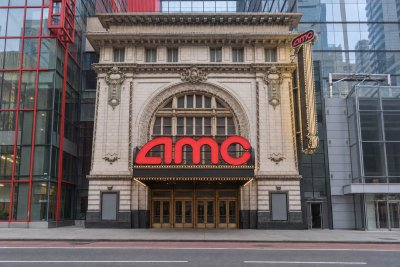
AMC Entertainment Holdings Inc. (NYSE: AMC) shares were trading near $2.66 in premarket activity Wednesday, down 0.4% from Tuesday’s close. The modest pullback comes after the stock surged 17.6% over the prior two trading sessions, fueled by a credit rating upgrade from S&P Global Ratings and optimism ahead of the upcoming release of Spider-Man: Brand New Day.
S&P Global Ratings, a division of S&P Global Inc. (NYSE: SPGI), raised AMC’s corporate credit rating to B- from CCC+, citing operational improvements and stronger credit metrics. The agency maintained its stable outlook, acknowledging that while AMC’s balance sheet has strengthened, a full shift to equity health is not yet complete. S&P projects the domestic box office will approach $10 billion in revenue this year, but still anticipates AMC will post a small cash shortfall in 2026, with consistent positive free cash flow expected to begin in 2027.
AMC’s second-quarter results highlighted the company’s operating leverage. Revenue rose 14.2% year-over-year to $1.597 billion, while adjusted EBITDA surged 69.6% to $321.4 million, pushing the adjusted EBITDA margin to 20.1% from 13.6% a year earlier. Chief Executive Adam Aron attributed the performance to “the inherent operating leverage in our business model,” as noted in SEC filings.
Premium formats continued to drive gains. The film The Odyssey delivered the best-ever opening two weeks for an AMC title in IMAX Corporation (NYSE: IMAX) formats. AMC controls roughly half of all IMAX screens in the United States, giving it a distinct advantage in capturing premium box office revenue.
Despite the operational improvements, the company’s stock price remains under pressure from massive equity dilution. The number of shares outstanding surged 74% over the past six months, rising to 892.6 million from 512.9 million. Net principal debt, however, declined 12.8% to $3.136 billion, aided by a $350 million increase in cash. The restructuring has pushed significant maturities to 2029 and reduced interest rates on a large portion of liabilities, though S&P projects annual cash interest payments will remain above $450 million.
AMC generated $190.1 million in free cash flow during the second quarter, bringing first-half free cash flow to just $15.4 million—a significant improvement from the negative $328.1 million in the same period last year. The first quarter alone saw a $174.7 million cash outflow, underscoring the uneven nature of the recovery.
Tuesday’s 6.37% rise outperformed competitors. Cinemark Holdings Inc. (NYSE: CNK) advanced 4.16%, while Marcus Corporation (NYSE: MCS) added 1.88%. AMC’s trading volume reached 61.8 million shares, well above its 50-day average, indicating strong investor interest.
The outlook for sustained cinema demand remains a topic of debate. “Strong quarters, like this one, will happen now and again. But the industry’s struggles will remain,” said eMarketer analyst Ross Benes. The next major test comes Friday with the debut of Spider-Man: Brand New Day, while The Odyssey continues its run on premium screens. Cinemark is scheduled to report its second-quarter earnings on Thursday.
Risks persist. AMC faces approximately $850 million in annual rent obligations in addition to its interest expenses. The company’s filings also caution that future share issuance could lead to further dilution for shareholders. At present, AMC’s credit profile has strengthened more rapidly than its per-share performance, and Wednesday’s session will reveal whether investors are willing to bridge that gap.