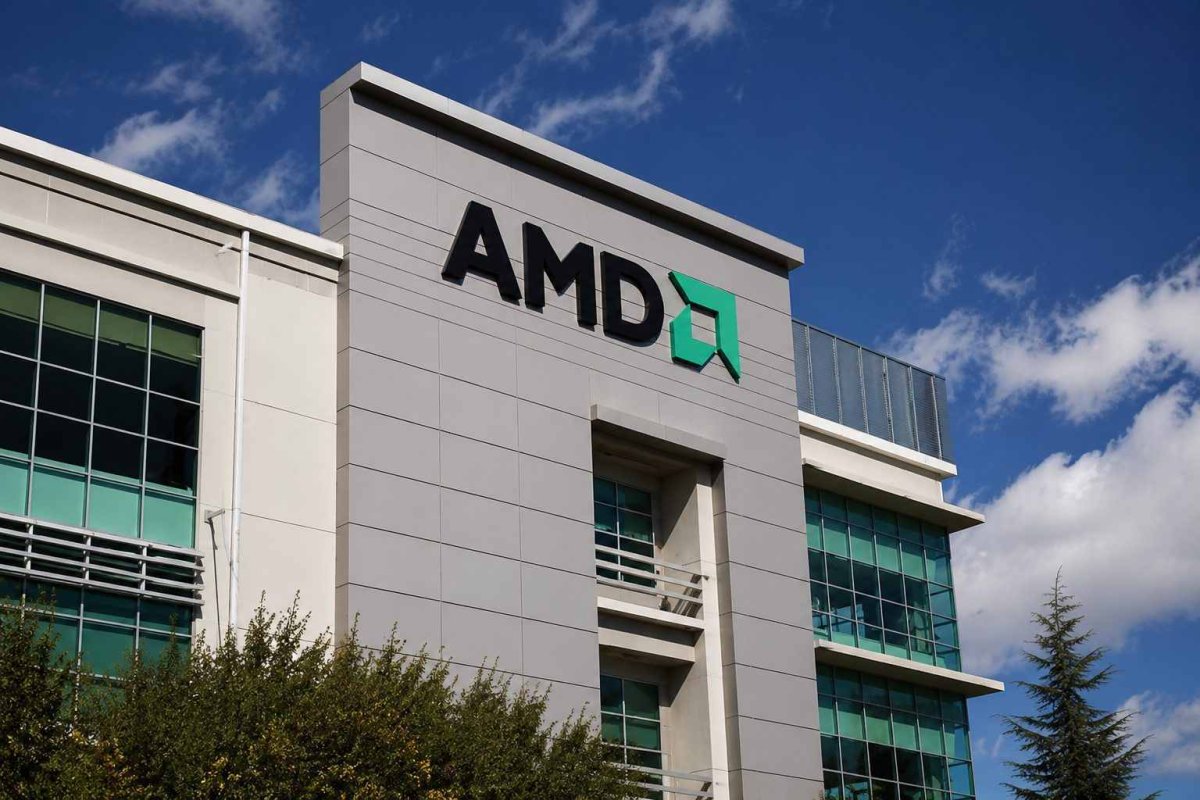
Advanced Micro Devices experienced a significant decline on Friday, with shares dropping approximately 9.3% to $474.34 in afternoon trading. The selloff was part of a broader retreat in semiconductor stocks, triggered by a stronger-than-expected U.S. jobs report that cast doubt on the sustainability of the artificial intelligence-driven rally that has dominated markets this year.
The trigger was the May nonfarm payrolls report from the Bureau of Labor Statistics, which showed an increase of 172,000 jobs, well above market expectations, while the unemployment rate held steady at 4.3%. This robust labor market data dampened hopes for imminent interest rate cuts, as a hot jobs market could keep inflationary pressures alive. Treasury yields rose sharply following the report, with the benchmark 10-year note climbing, which typically pressures growth stocks by reducing the present value of future earnings.
Charlie Ripley, senior investment strategist at Allianz Investment Management, commented that the strong jobs data gave investors reason to take some profits off the table, particularly in high-growth sectors like AI chips. The Philadelphia semiconductor index fell 5%, while the Nasdaq Composite dropped 2.37%. Nvidia, another key AI beneficiary, lost 2.5% in the same period.
Adding to the sector's woes, Broadcom reported fiscal second-quarter revenue of $22.19 billion, up 48% year-over-year, and AI semiconductor revenue surged 143% to $10.8 billion. CEO Hock Tan expressed confidence, forecasting AI semiconductor revenue of $16 billion in the third quarter. However, the stock sold off as investors judged the outlook against already stretched expectations, sending a negative signal across the AI chip ecosystem.
AMD's own recent news has been focused on long-term compute demand. On June 3, the company announced a London quantum-AI research collaboration with OQC and JPMorganChase, with AMD providing high-performance computing resources. Chief Technology Officer Mark Papermaster emphasized the need for tightly integrated compute platforms across quantum systems, AI infrastructure, and classical computing.
The company's most recent quarterly report remains a backdrop. AMD posted first-quarter revenue of $10.3 billion, up 38% from a year earlier, with data-center revenue rising 57% to $5.8 billion, driven by demand for EPYC server processors and Instinct GPUs. CEO Lisa Su attributed the quarter to accelerating demand for AI infrastructure.
The selloff was not limited to AMD. Intel fell 8.7%, and the iShares Semiconductor ETF sank 7.8%, suggesting a broader sector rotation rather than a company-specific repricing. Investors are now weighing two key factors: bond yields and confidence in the AI chip cycle. If yields stabilize and cloud customers continue ordering AI accelerators, dip buyers may return. However, higher rates, profit-taking in Broadcom and Nvidia, or any sign that AMD's data-center ramp is slower than expected could further pressure the stock.
AMD's next major event is its 'Advancing AI 2026' conference on July 23 in San Francisco, where executives, customers, and partners will discuss building and scaling AI systems powered by AMD. Until then, the stock's direction will largely depend on macroeconomic factors and the broader AI chip narrative.