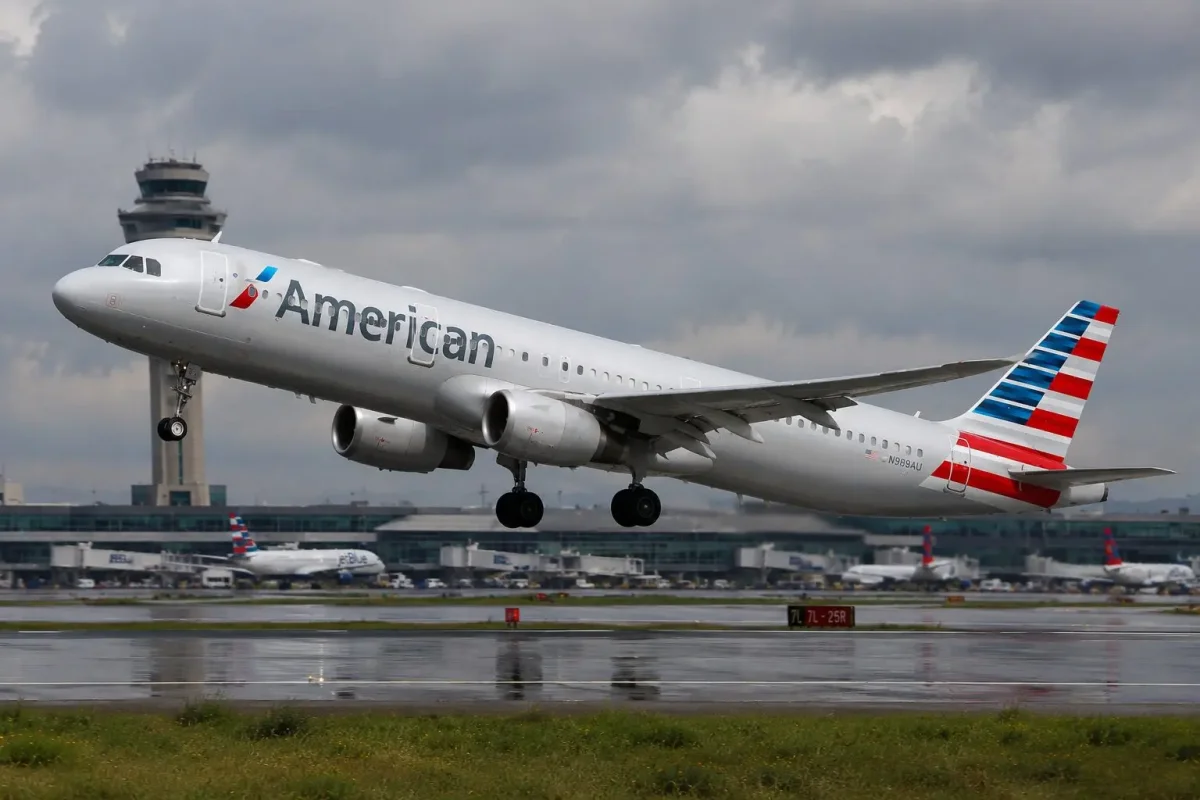
American Airlines Group (NASDAQ: AAL) is recalibrating its upgrade strategy, a move designed to shield premium cabin revenue while the carrier contends with soaring fuel expenses. Starting August 25, eligible Main Cabin elite members will see their complimentary upgrades directed to Premium Economy on nine specific domestic routes, rather than business class. This targeted adjustment comes as the airline reports robust premium demand but faces significant margin pressure from fuel costs.
Premium Revenue Outperforms Main Cabin
In the second quarter, premium passenger unit revenue surged 13.4% year-over-year, outpacing Main Cabin growth of 8.8% by a notable 4.6 percentage points. This disparity underscores the strategic importance of premium cabins in American's revenue mix. However, the airline's operating margin took a substantial hit, with estimated operating margin falling to 2.7% from 7.9% a year earlier, a decline of 5.2 percentage points. The primary culprit: aircraft fuel and related taxes, which skyrocketed 83.3% to $4.881 billion from $2.663 billion in the prior-year quarter.
Fuel Costs Dampen Earnings
The fuel price surge has been a dominant theme for airlines this year, and American is no exception. Total operating revenue climbed 16.3% to $16.735 billion, but operating income plummeted 60.7% to $446 million. The carrier has guided to a third-quarter adjusted loss of $0.70 to $0.10 per share, with full-year guidance spanning a loss of $0.65 to a profit of $0.65. These figures highlight the delicate balance between revenue growth and cost pressures.
Upgrade Policy Changes
Under the new policy, Main Cabin elite members on the affected routes will clear into Premium Economy instead of business class, provided space is available. Purchased Premium Economy tickets remain eligible for business class upgrades, and systemwide upgrades are unaffected. Already confirmed business upgrades will be honored. The change applies only to complimentary upgrades, with existing clearance priorities and processing windows unchanged.
Route Concentration
The initial rollout covers nine routes, with a heavy focus on Hawaii—six of the nine routes are to or from the islands. Transcontinental routes like JFK–LAX, JFK–SFO, and BOS–LAX make up the remaining three. This concentration on long domestic sectors is a deliberate test of the policy's impact on premium yield and elite member satisfaction.
Competitive Landscape
American's move stands in contrast to Delta Air Lines (NYSE: DAL), which continues to offer complimentary domestic upgrades to Delta One and Premium Select for its Medallion members. United Airlines (NASDAQ: UAL) does not offer complimentary upgrades on its Polaris business class routes, according to travel analyst Zach Griff. This divergence could influence loyalty program dynamics, especially as American's AAdvantage enrollment grew more than 30% in the second quarter and co-brand credit card spending increased 8%.
Analyst Reactions and Market Sentiment
Points expert Gary Leff noted the change offers "clearly less value to status members," raising concerns about retention. Shares of American Airlines fell 3.32% Thursday to $16.03, though they had risen 5.5% in the week ended July 31 and another 5.0% through Thursday. Analyst recommendations remain mixed, with price targets ranging from $13 to $24, reflecting uncertainty around fuel, margins, and commercial execution. Wells Fargo reiterated a Hold rating on Aug. 6 with a $17 target, while JPMorgan maintains a Buy with a $24 target.
Looking Ahead
Investors will watch upcoming economic data, including July consumer prices on Aug. 12, producer prices on Aug. 13, and retail sales on Aug. 14, as well as the next federal petroleum report, to gauge travel demand and fuel pressure. American's first nine routes represent a controlled experiment in premium yield versus loyalty value, with the airline indicating more routes could follow. The outcome will be critical in determining whether this policy becomes a broader strategy or remains a niche adjustment.