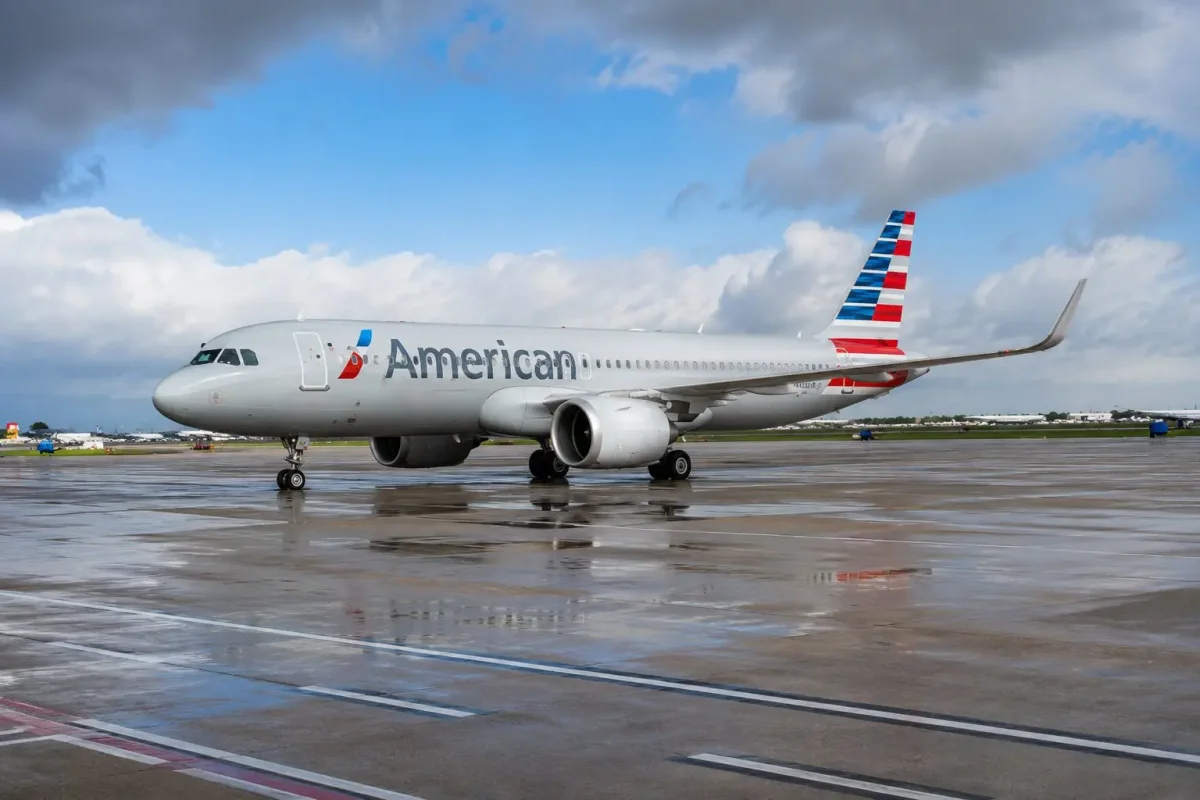
American Airlines Group (AAL) shares traded near $13.60 on Monday, edging up about 10 cents, as the market weighed the dual headwinds of surging jet fuel costs and the apparent collapse of merger discussions with United Airlines (UAL). The Fort Worth-based carrier, listed on the Nasdaq, now holds a market capitalization of roughly $9 billion.
Fuel Costs Hit Record Levels
Rising fuel prices are squeezing the entire airline industry just as the summer travel season begins. According to data released Monday by the U.S. Transportation Department, U.S. airline fuel bills soared 78% in April compared to the same month last year, reaching nearly $6.5 billion. Airlines paid an average of $4.11 per gallon, a sharp increase that threatens margins across the sector.
Fuel represents one of the largest operating expenses for airlines, and even modest price fluctuations can significantly impact profitability. The International Air Transport Association (IATA) has responded by slashing its net profit forecast for the global airline industry in 2026 to $23 billion, down from a prior estimate of $41 billion. IATA Director General Willie Walsh noted that “airlines are bearing the brunt of the fuel price shock.”
Merger Prospects Fade
Adding to the uncertainty, United Airlines CEO Scott Kirby told Reuters on Sunday that a major merger is now unlikely after American Airlines failed to respond to overtures. “I think consolidation is unlikely for United,” Kirby said, adding that a deal requires “a willing partner.” He suggested United could still pursue the acquisition of airport slots, gates, or other assets if weaker rivals begin to struggle.
American Airlines had previously stated in April that merging with United would harm competition and consumers, and regulatory hurdles were widely expected to block any such combination.
Profit Outlook Slashed
The financial impact of higher fuel costs is already evident. In April, American Airlines slashed its 2026 profit outlook, warning that its jet fuel bill could jump by more than $4 billion this year. The carrier now expects full-year results ranging from a loss of 40 cents per share to a profit of $1.10, a sharp downgrade from its previous forecast of $1.70 to $2.70 per share.
Despite these headwinds, CEO Robert Isom highlighted strong demand in the first quarter, noting that “American delivered record revenue in the first quarter.” The company still reported a GAAP net loss of $382 million, with total debt standing at $34.7 billion. GAAP refers to standard U.S. accounting rules.
Market Reaction and Sector Trends
American Airlines managed to outperform some rivals in late trading. Delta Air Lines (DAL) fell approximately 1.5%, United Airlines (UAL) lost 0.4%, and Southwest Airlines (LUV) declined 1.2%. The U.S. Global Jets ETF (JETS), which holds a basket of airline stocks, traded down about 0.8%.
Broader equity markets posted gains on Monday, led by a rebound in semiconductor stocks. The Nasdaq Composite added 0.86%, and the S&P 500 advanced 0.30%. However, airline and transport stocks lagged, with movements in oil and jet fuel prices remaining the clearest signal for industry margins.
Risks Ahead
The risks for American Airlines are clear. If fuel prices remain elevated and travelers resist higher fares, the carrier may be forced to absorb additional costs or reduce flight capacity after the summer season. Such a scenario could pressure cash flow and weigh on the stock, even if travel demand holds up.
Elsewhere in the industry, JetBlue Airways (JBLU) received another credit downgrade from S&P on Monday, pushing its debt rating further into junk territory. The agency cited high jet fuel prices as a factor that will weigh on JetBlue’s results for at least the next year.
For U.S. investors, the focus this week shifts from merger speculation to the fundamental question of whether higher fares and tighter capacity can offset rising fuel costs without dampening demand. That challenge may prove more difficult to navigate than chasing a deal headline.