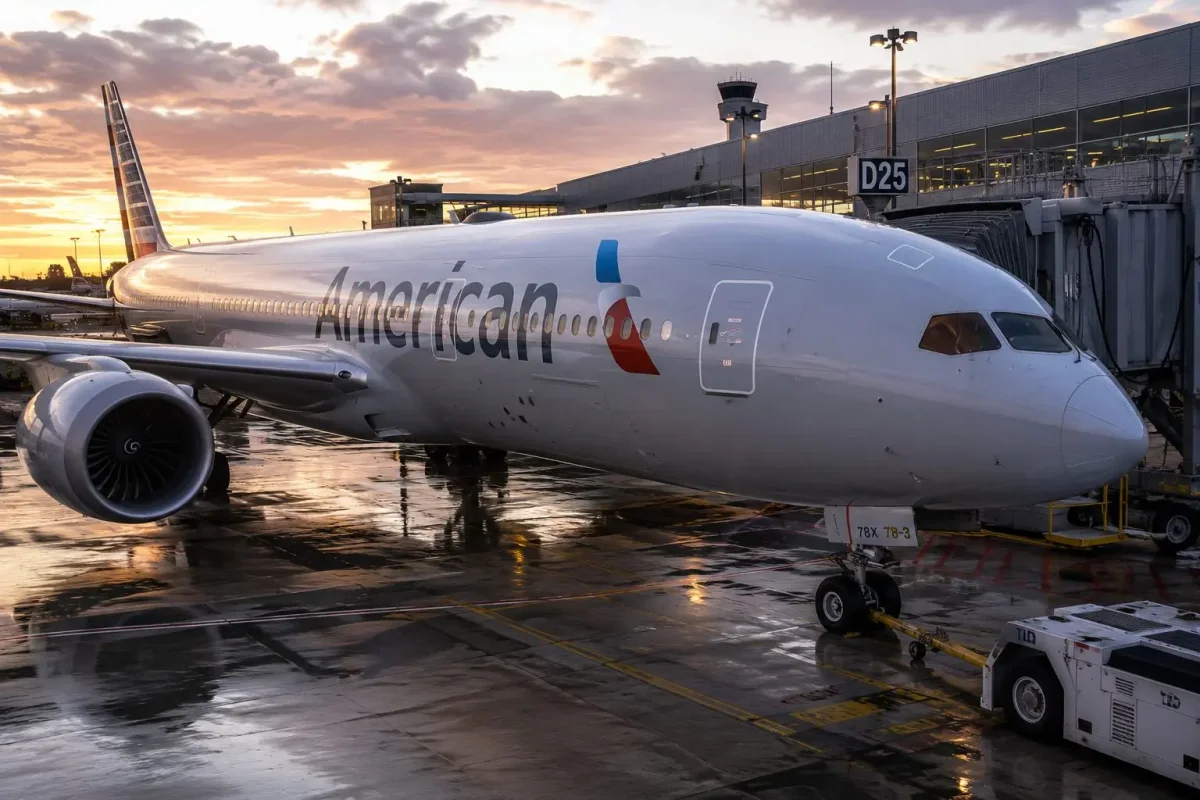
American Airlines Group (NASDAQ:AAL) is poised to report record second-quarter revenue, but profit margins are expected to remain razor-thin, underscoring the intense cost pressures facing the carrier. The company is scheduled to release its quarterly results on Thursday before the market opens, with analysts and investors closely watching for guidance on fuel costs and pricing power.
Projections indicate earnings per share (EPS) in the range of $0.03 to $0.05, a dramatic decline of 95% to 97% from the $0.95 adjusted EPS reported in the same period last year. Revenue is estimated at approximately $16.7 billion, up about 16% from $14.39 billion a year ago, marking a new record for the airline. However, the implied net profit of $20 million to $33 million represents a margin of just 0.12% to 0.20% of sales, highlighting the challenge of converting top-line growth into bottom-line results.
The disconnect between revenue and profit is largely attributable to elevated fuel costs and competitive pressure on fares. As of March 31, American had no fuel hedges in place, leaving it fully exposed to rising jet fuel prices. Each one-cent increase in the price of fuel adds approximately $45 million to annual expenses, meaning a 10-cent swing translates to roughly $450 million—nearly the entire profit target for the second half of the year.
CEO Robert Isom stated in April that the airline was “on track for another record” in revenue, but achieving that record has not insulated the company from margin erosion. The company’s own guidance for Q2 ranges from a loss of $0.20 per share to a gain of $0.20, with consensus estimates sitting near the midpoint. This wide range reflects the uncertainty around fuel prices and demand trends.
For the full year, American’s guidance midpoint stands at $0.35 per share, implying that the bulk of earnings must come in the second half. Based on the first-quarter share count of 661.2 million shares, the company needs to generate $0.70 to $0.72 per share in the final six months to hit that target. This amounts to roughly $463 million to $476 million in net income, nearly double the airline’s total adjusted net income for 2025.
The challenge is compounded by the performance of peers. United Airlines (NASDAQ:UAL) reported Q2 adjusted net income of $649 million on revenue of $17.7 billion, recovering about half of its fuel cost increases. Delta Air Lines (NYSE:DAL) posted adjusted net income of $1.03 billion on $17.7 billion in revenue, with an operating margin of 8.8%. Meanwhile, Alaska Air Group (NYSE:ALK) issued a warning on Tuesday, noting it recouped only a small portion of its Q2 fuel cost surge and expects to recover about half in Q3. Alaska’s Q3 EPS guidance midpoint of $0.50 fell well short of the $1.38 consensus, sending a cautionary signal to the sector.
American shares have already fallen 11.6% over the past week, compared with declines of 8.4% for United and 3.7% for Delta. The stock traded at $15.28 at Tuesday’s close and slipped another 0.8% in premarket action to $15.16. Investors are now focused on Thursday’s earnings call, set for 7:30 a.m. Central time, where key topics will include the Q3 fuel outlook, recapture rates, and trends in non-fuel unit costs.
Risks remain substantial. Another surge in fuel prices could offset any improvements in fares, while weaker demand or rising non-fuel expenses would further pressure margins. With $34.7 billion in debt at the end of March, American has limited room for error. Even a record revenue figure may not be enough to reassure markets unless the company presents a credible path to achieving the roughly $0.70 per share in second-half earnings that the full-year guidance implies.