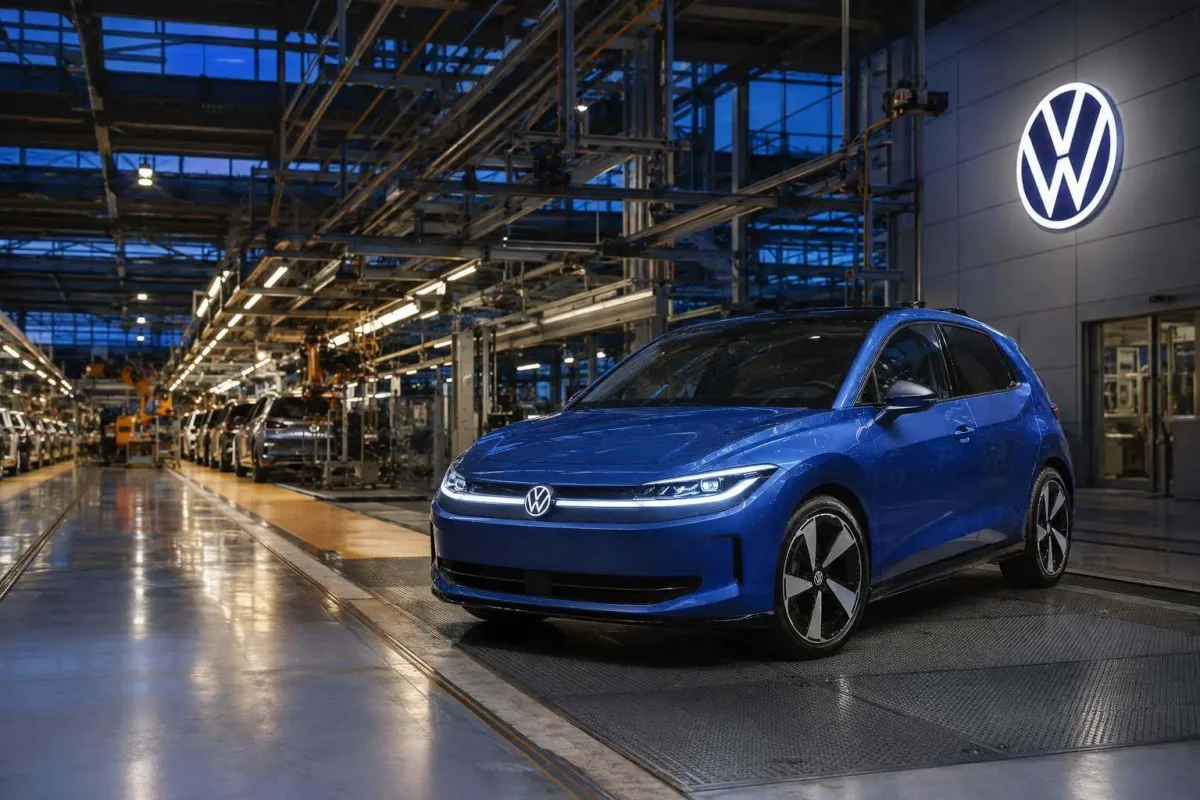
Volkswagen AG (ETR:VOW3) experienced its most significant single-day share price surge in recent memory on Friday, climbing 6.47% to close at €81.30 on the Xetra exchange. The sharp rally followed the company's supervisory board unanimously endorsing the most extensive operational overhaul in its history, a decision that investors had previously considered unlikely given the deep divisions among management, labor representatives, and the state of Lower Saxony.
The market's positive reaction was immediate and pronounced. Intraday trading saw the stock touch €83.76 before settling at €81.30, with trading volume reaching 3.28 million preferred shares—more than triple the average of the preceding four sessions. This surge effectively eliminated what analysts had termed a "governance discount," reflecting the market's relief that the boardroom deadlock had been broken.
The Ambitious Future Plan 2030
At the heart of the announcement is the "Future Plan 2030," a comprehensive strategy targeting a 9% operating margin and approximately €31 billion in annual operating profit by the end of the decade. This represents a monumental leap from the company's current performance. Volkswagen reported operating profit of €5.9 billion in the first half of 2026, which annualizes to roughly €11.8 billion—a figure that falls €19.2 billion short of the 2030 target, requiring a 2.6-fold increase in profitability.
The challenge is underscored by recent financial results. While first-half revenue remained robust at approximately €158.1 billion, operating profit declined 11.6%, resulting in a slim 3.8% operating margin. Chief Financial Officer Arno Antlitz acknowledged the urgency, stating that the margin "remains too low and underlines the call to action."
Twelve Initiatives to Reshape the Company
The approved plan encompasses twelve distinct initiatives designed to fundamentally restructure Volkswagen's operations. Key measures include halving the vehicle model range, reducing component variety by 75%, eliminating approximately 50,000 positions, and trimming the investment portfolio by roughly one-third. Capital expenditure and research spending are slated to total €135 billion from 2027 through 2031, representing a 16% reduction compared to previous planning rounds.
The scale of the transformation is evident in the production footprint. Volkswagen acknowledges that its European factories possess excess capacity of more than 500,000 vehicles annually, equivalent to 5.6% of its projected nine-million-vehicle sales volume. Four plants—Emden, Zwickau, Hanover, and Neckarsulm—lack secured competitive allocations for the 2031-2034 period, with alternative uses to be developed within six to twelve months.
Labor and Cost Considerations
Bank of America estimates suggest annual labor savings could exceed €2.5 billion by 2030, though gross restructuring costs might reach €10 billion. These figures remain analyst projections, as Volkswagen has not disclosed a complete restructuring expense. Works council chair Daniela Cavallo emphasized that job security and economic viability "carry equal weight as shared corporate goals," highlighting the delicate balance the company must strike.
China presents an additional complication. Volkswagen's first-half vehicle sales in the world's largest auto market plummeted 31.6%, even as the broader Chinese market contracted 20%. While reducing global model count may yield cost savings, the company must still maintain competitive software and pricing for its local product lineup.
Market Reaction and Analyst Outlook
The stock's surge reflects growing investor optimism, yet analyst price targets reveal significant divergence in expectations. The median target stands at €100, representing a 23% upside from Friday's close. However, the range spans from €75 at the low end to €151 at the high end, illustrating the uncertainty surrounding execution. Citigroup characterized the agreement as "a brave plan and a realistic decision for all concerned," describing it as existential for Volkswagen.
Looking ahead, the first critical test will be Planning Round 75, where each investment and research item must be validated before the supervisory board approves the €135 billion envelope. A European production blueprint is expected by June 2027. Investors will require concrete quarterly evidence of margin improvement, cash flow generation, and Chinese market stabilization rather than further strategic pronouncements.
Risks remain substantial: labor negotiations could slow savings, tariffs may compress North American returns, and intensifying Chinese price competition could erode volume assumptions. Restructuring charges may also materialize before benefits become apparent. German trading resumes Monday, while U.S. markets observe Labor Day. Volkswagen's investor conferences in Paris and New York on September 9 offer an early opportunity for management to substantiate their projections.
