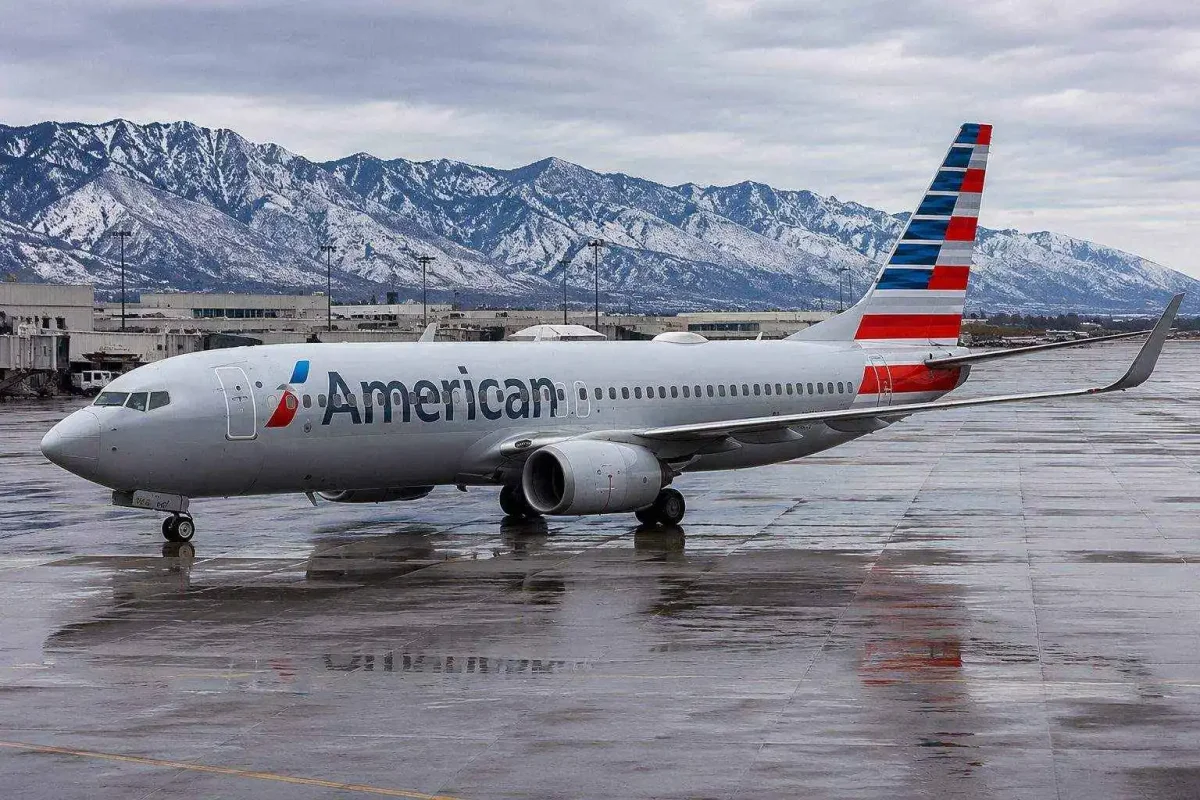
Shares of American Airlines Group Inc. (NASDAQ:AAL) rallied 4.7% to $15.99 in after-hours trading on Monday, buoyed by a sharp decline in crude oil prices that promises to reduce fuel expenses. The drop in Brent crude, which fell 4.8% to $83.74 per barrel, came after Washington called off a planned strike on Iran, easing geopolitical tensions in the Middle East. This development provided a welcome reprieve for the airline, which has been grappling with the narrowest profit margins among its major U.S. peers.
The market reaction was swift, with the initial estimate suggesting that American's equity value increased by approximately $477 million on Monday. This gain is particularly significant when viewed through the lens of the company's fuel sensitivity. American has noted that a one-cent increase in fuel costs translates to an additional $46 million in annual expenses. Monday's surge, therefore, effectively offset about 10.4 cents of fuel price impact, offering a tangible, though temporary, boost to the carrier's financial outlook.
Margin Differential Remains a Key Concern
Despite the positive momentum from lower oil prices, American's fundamental profitability challenge remains unresolved. The company reported an adjusted operating margin of just 2.7% for the second quarter, a figure that trails its principal competitors by a significant margin. Delta Air Lines (NYSE:DAL) posted an adjusted operating margin of 8.8%, while United Airlines (NASDAQ:UAL) achieved 5.4% and Southwest Airlines (NYSE:LUV) came in at 6.7%. This performance gap underscores the structural issues that continue to weigh on American's earnings potential.
The second-quarter financial results highlight the pressure fuel costs have placed on the airline's bottom line. While operating revenue climbed 16.3% year-over-year to $16.735 billion, fuel expenses surged 83.3% to $4.881 billion. This disproportionate increase in costs led to a 60.7% decline in operating income, which fell to $446 million from $1.135 billion in the same period last year. The adjusted operating margin contracted by 5.5 percentage points year-over-year, reflecting the challenging cost environment.
Fuel Price Dynamics and Forward Guidance
CFO Devon May acknowledged the headwinds posed by the current fuel price environment. "The current fuel curve has dampened our near-term expectations," May stated, though he expressed confidence that margin expansion would resume once fuel prices return to more typical levels. This cautious outlook is reflected in the company's guidance, which projects an adjusted loss for the third quarter, a stark contrast to the profitability expected by its peers.
American's third-quarter adjusted EPS guidance ranges from a loss of $0.70 to a loss of $0.10, with a full-year 2026 adjusted EPS midpoint at break-even. This stands in sharp contrast to Delta's Q3 guidance of $2.00 to $2.50 per share and United's $2.50 to $3.50 range. The company's fuel assumption for Q3, at approximately $3.75 per gallon, does not fully reflect Monday's oil price drop, suggesting there may be room for upside if current prices persist.
Commercial Trends and Strategic Outlook
On the demand side, American continues to see strength in key commercial segments. Managed corporate revenue increased 26%, while premium passenger unit revenue advanced 13.4%. The company's loyalty program, AAdvantage, saw enrollments expand by over 30%, and co-branded card spending rose 8%. These metrics indicate robust consumer demand, particularly among business travelers and premium customers, which could support revenue growth in the coming quarters.
American maintains its third-quarter revenue forecast, expecting growth of 16% to 19% year-over-year, with capacity projected to increase between 3% and 5%. However, the midpoint of this guidance is two percentage points lower than the initial forecast, reflecting the impact of higher fuel expenses. The company ended June with available liquidity of $11.3 billion and anticipates positive free cash flow at its guidance midpoint, along with reduced net debt by year-end.
Risks and Market Implications
While Monday's surge was driven by relief over lower fuel costs, several risks could undermine this positive momentum. Oil prices could recover if geopolitical tensions in the Middle East escalate once again. Additionally, any attempt to raise fares to offset higher costs might dampen demand, particularly in the price-sensitive leisure segment. Further capacity cuts could push unit costs higher, and the company's significant debt load restricts its financial flexibility to weather unexpected shocks.
The airline sector as a whole benefited from the oil price decline, with Delta shares rising 4.4%, United up 5.6%, and Southwest gaining 3.8%. However, American's performance continues to be viewed through the lens of its margin differential. Analysts note that while lower fuel costs provide a temporary tailwind, the company will need to demonstrate sustained revenue-to-profit conversion to achieve a lasting rerating. For now, Monday's rally reflects a cost relief, not a fundamental shift in the company's profitability trajectory.