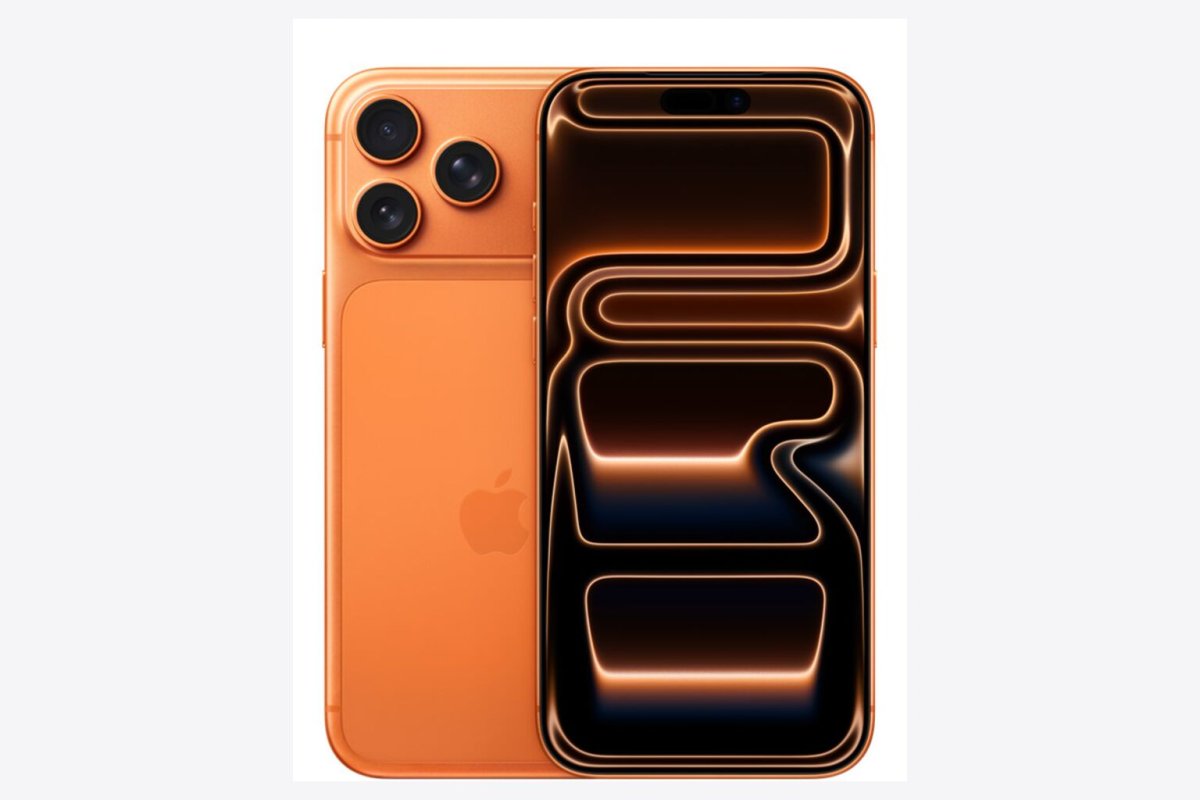
Apple has officially pulled the iPhone 17 Pro Max from its U.S. online store, just a day after revealing its successor. This isn't a recall or an end to software support; it's the company's standard annual transition at the premium tier. For investors, the real headline is the price: the new iPhone 18 Pro Max starts at $1,299, a $100 jump from the previous model's launch price, despite both offering a base storage of 256GB.
That clean 8.3% increase transforms the new product cycle into a test of Apple's pricing power. The storage ceiling remains at 2TB, so the higher entry point can't be blamed on a storage upgrade. If consumers accept the price, average selling prices and iPhone mix could rise. However, if shoppers gravitate toward discounted iPhone 17 Pro Max inventory, the increase could shift demand into retailer clearance channels, potentially eroding value for Apple rather than enhancing it.
Is the iPhone 17 Pro Max Discontinued?
For direct sales from Apple, yes. The dedicated product page now redirects to the current iPhone lineup, which includes the iPhone 18 Pro, iPhone Duo, iPhone Air, iPhone 17, and iPhone 17e—but the iPhone 17 Pro and Pro Max are notably absent. MacRumors independently confirmed the removal of both Pro models on September 9.
However, “discontinued” requires context. Owners still have fully supported devices, and carrier or authorized-retailer stock may remain available while supplies last. What has changed is Apple's active retail lineup. Investors should therefore view the iPhone 17 Pro Max as a channel-inventory variable, not as a continuing alternative to the new flagship in Apple's own stores.
AAPL Gains While Broader Market Falls
Apple shares closed Thursday at $326.57, up $11.23, or 3.56%, according to market data captured after the Nasdaq close. Trading volume reached 69.4 million shares, well above the three-month daily average of 53.4 million. The rally lifted Apple's market capitalization to roughly $4.77 trillion.
The relative performance was striking: the Nasdaq Composite fell 0.7% and the S&P 500 lost 0.6% as oil and Treasury yields rose. That divergence suggests a favorable reaction to Apple's product event, but it doesn't prove the iPhone 17 Pro Max retirement caused the rally. A one-day stock move reflects expectations for the entire lineup, including the new foldable iPhone Duo, as well as positioning and broader news flow.
It's also a useful reality check. A 3.56% gain added about $164 billion in equity value—far more than a $100 price increase on one handset could explain on its own. The market is making a larger bet that premium pricing, a broader form-factor range, and stronger upgrade demand will lift the economics of Apple's biggest product franchise.
The 0 Increase Matters More Than the Retirement
Apple's iPhone 17 Pro Max launched at $1,199 in September 2025 with 256GB, 512GB, 1TB, and 2TB configurations. The company's new iPhone 18 Pro Max announcement lists the same four storage steps but a $1,299 starting price.
The successor does offer tangible upgrades: an A20 Pro processor, a variable-aperture main camera, Apple's C2 cellular modem, and a larger battery. Apple says the Pro Max can deliver up to six more hours of video playback than the iPhone 17 Pro Max. The investor question isn't whether the spec sheet improved; it's whether those changes are compelling enough to preserve unit demand at a higher price.
Apple has room to benefit if the answer is yes. In the June quarter, iPhone sales were $54.252 billion, up 21.7% from $44.582 billion a year earlier. That represented 49.6% of Apple's $109.417 billion total revenue, according to the company's fiscal third-quarter statements. Even a modest improvement in mix can matter at that scale.
But list price isn't realized revenue. Carrier subsidies, trade-ins, geographic mix, wholesale pricing, and the share of buyers choosing different storage capacities all intervene. Apple also doesn't disclose iPhone unit shipments. Investors will ultimately see the outcome through product revenue and margins, not a neat unit-times-price calculation.
What Would Confirm—or Break—the Thesis?
Preorder lead times: The iPhone 18 Pro models open for preorder September 12 and reach stores September 18. Long lead times across colors and storage levels would be an early demand signal, though constrained supply can create the same appearance.
Discounts on the old model: A widening gap between discounted iPhone 17 Pro Max stock and the $1,299 successor could reveal price resistance. Rapid clearance without heavy promotions would be healthier.
Mix rather than launch-day noise: The important data will be iPhone revenue growth and company gross margin through the holiday cycle. A higher price helps only if it doesn't push too many customers toward cheaper models or delay upgrades.
The counterargument is straightforward: Apple retires prior-generation Pro phones every year, so the disappearance of the iPhone 17 Pro Max is operationally routine. The non-routine part is asking $100 more without adding entry storage. AAPL's rally says investors are willing to give that strategy an early vote of confidence. Preorders, channel discounting, and the next holiday-quarter numbers will decide whether that confidence was earned.