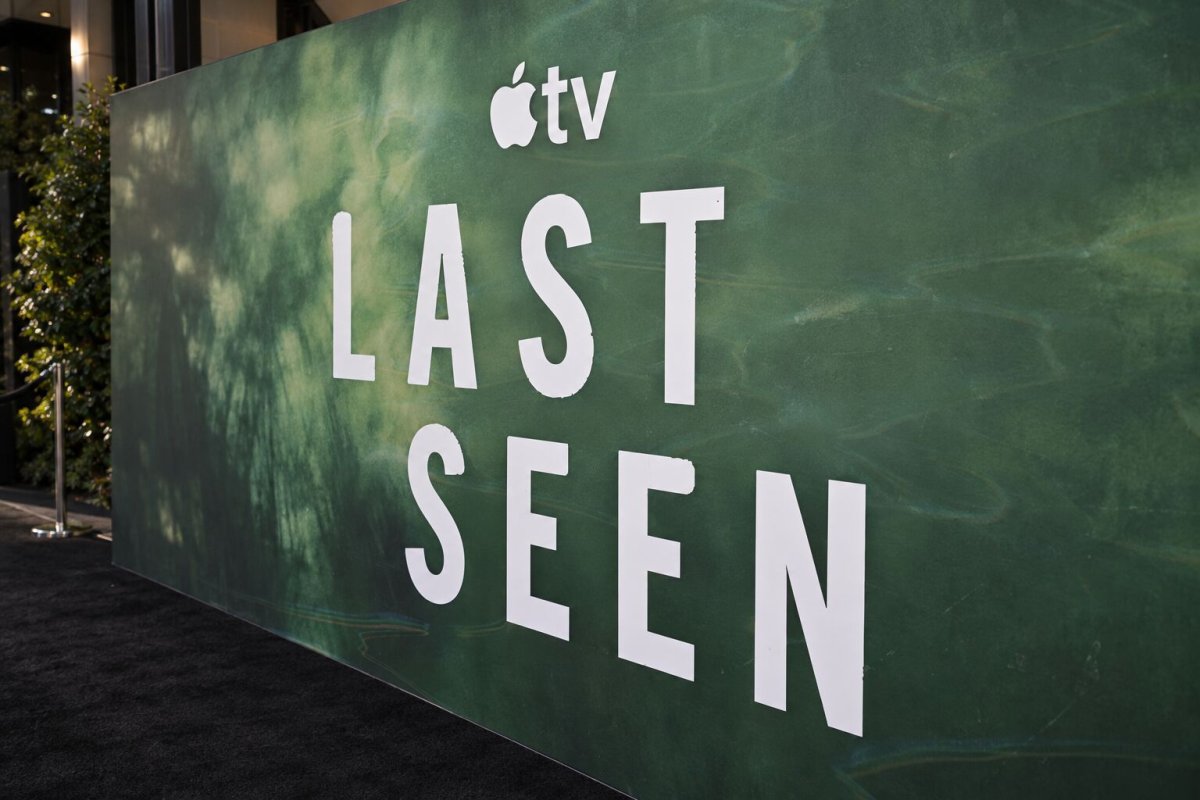
Apple TV's new thriller series, "Last Seen," has arrived with a wave of critical acclaim, yet for investors, the real question lies in its ability to drive subscriber retention rather than mere viewership. The six-episode show premiered Wednesday with two episodes, and early reviews have been favorable. However, Apple Inc. (AAPL) shares closed at $315.34 on September 9, down 0.28%, reflecting a muted market response that suggests a single streaming debut is unlikely to move the needle for the tech giant.
What "Last Seen" Brings to Apple TV
The series follows Ian Ridley, a former detective turned emergency dispatcher, who receives a call from a teenager he believes might be his daughter, missing for over a decade. Adapted from Ryan David Jahn's novel "The Dispatcher," the show is set and filmed in Victoria, Australia, featuring a cast led by Patrick Brammall alongside Maxine Peake, Brendan Cowell, and Daniel Henshall. Production credits go to 60Forty Films and Werner Film Productions, though Apple has not disclosed the budget or licensing terms.
Early critical reception has been positive, with The Guardian calling it one of the year's standout shows, praising performances and emotional depth. RogerEbert.com offered a more measured take on the plot but lauded the character-driven approach. Such reviews can boost discovery, but they are not a substitute for audience data.
The Retention Challenge
Apple TV+ costs $14.99 per month in the U.S. after a seven-day free trial. This pricing structure makes the release schedule of "Last Seen" particularly telling. A viewer who starts a trial on September 9 would face their first paid charge around September 16. The finale on October 7 arrives before the second monthly charge on October 16, meaning the show alone can convert a trial into one paid month, but its weekly cadence does not compel a second month.
For investors, this is a critical distinction. A strong launch can attract new trials, but a durable hit is needed to retain subscribers after the finale. "Last Seen" must hand off viewers to other Apple TV content, such as sports or films, to justify its value. Apple's broader weekly release strategy provides that opportunity, but the company does not publish title-level conversion or churn metrics.
Services Growth and Disclosure Gaps
Apple's latest Form 10-Q highlights why retention matters. Services revenue rose 12% year-over-year to $30.739 billion in the quarter ended June 27, representing 28.1% of total sales. Services generated $23.245 billion in gross margin at a 75.6% rate, about 42% of Apple's total gross margin dollars. Yet, the filing attributes this growth primarily to advertising and cloud services, with no separate disclosure of Apple TV revenue, subscriber numbers, churn, or viewing hours.
This lack of transparency cuts both ways. Bears cannot prove Apple TV is losing money title by title, while bulls cannot turn favorable reviews into a defensible earnings estimate. Even a breakout hit would be a small part of a Services line that grew by $3.316 billion year-over-year.
What Would Change the AAPL Thesis
The first signal to watch is staying power. Sustained positions on third-party streaming charts over several weeks would be more meaningful than launch-day buzz, given the weekly release schedule is designed to encourage repeat visits. The second is evidence of a handoff: viewers who come for "Last Seen" need another reason to stay after October 7.
Some argue that direct monetization understates the strategy. A prestige Australian production could broaden Apple TV's international appeal, enhance perceived value, and support Apple One bundles without ever showing up in quarterly filings. While plausible, without budget or audience figures, investors cannot calculate a return on this title.
Conclusion
"Last Seen" appears to be a credible addition to Apple TV, with a five-week run built for engagement. For AAPL, the investable proof would be retention beyond the first $14.99 month or a measurable lift in Services. Reviews are just the opening signal, not the final result.