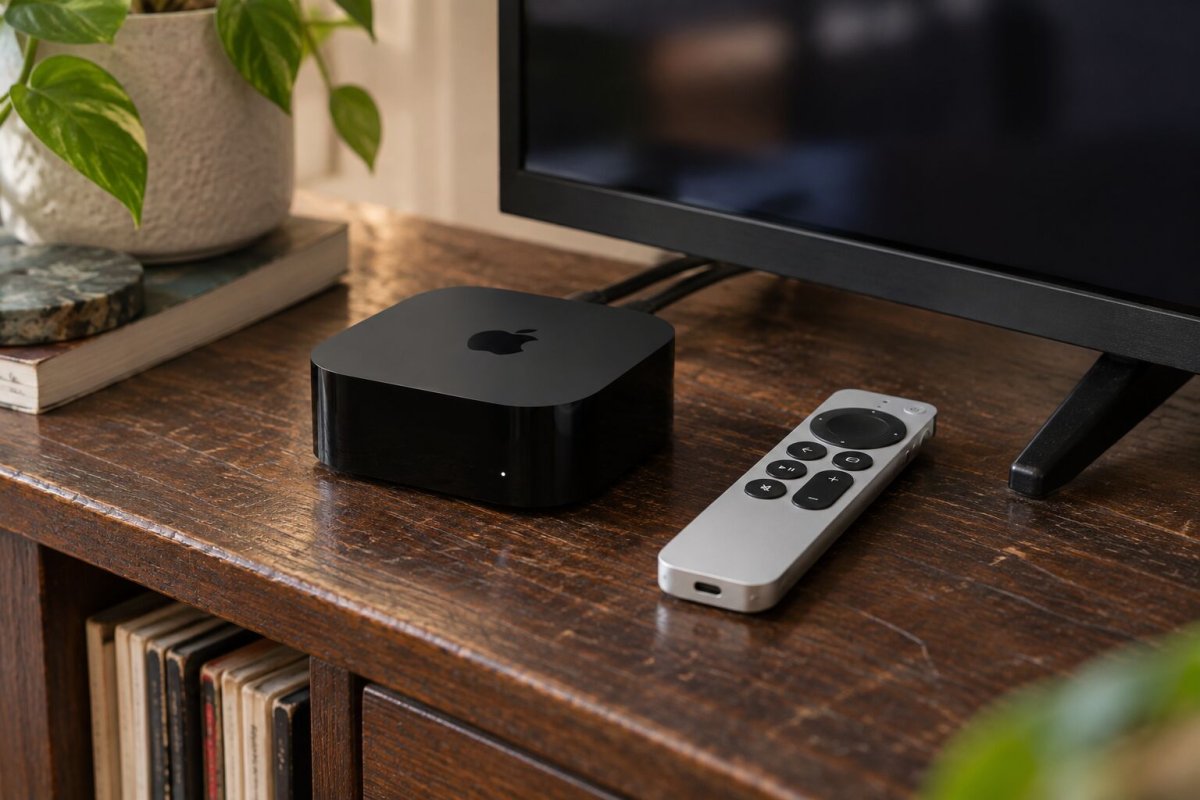
Apple’s September 9 product showcase concluded without a new Apple TV 4K, leaving the nearly four-year-old A15 Bionic-powered model as the current offering. This absence, while notable, does not appear to have rattled investors, as AAPL shares traded up 0.82% to $318.82 by 2:55 PM ET on the day of the event.
The lack of a refresh is strategically significant but not a clean earnings disappointment. Apple does not disclose unit sales or revenue for Apple TV, which is grouped under the broader Wearables, Home, and Accessories category. That segment generated $7.883 billion in the fiscal third quarter, up 6% year-over-year, yet it represents only 7.2% of total revenue. The company’s most recent 10-Q filing attributes the category’s growth to higher accessories and wearables sales, with no mention of home products as a driver.
Current Apple TV 4K Specs Remain Unchanged
The Apple TV 4K currently listed on Apple’s website still features the A15 Bionic chip, 64GB and 128GB storage options, Wi-Fi 6, and Bluetooth 5.0—specifications that match the October 2022 generation. Apple has not announced a discontinuation, but the absence from this event means any refresh would come later in the fall, a possibility that should be treated as a potential catalyst rather than a confirmed product.
Minimal Near-Term Earnings Impact
For investors, the missing box is unlikely to create a measurable revenue shortfall. The Wearables, Home, and Accessories category, which includes Apple TV, grew 2% to $27.277 billion in the first nine months of fiscal 2026, but the growth was driven by accessories and wearables, not home hardware. Apple’s Services segment, which posted $30.739 billion in quarterly revenue (up 12% with a 75.6% gross margin), could benefit from a more capable living-room device, but the company provides no data linking Apple TV ownership to services usage.
The Strategic Cost: Time
The bearish interpretation is not about missing a quarter of box sales; it’s about Apple’s failure to demonstrate how its latest silicon and Siri AI will transform the television accessory into a stronger home platform. The current Apple TV 4K already supports 4K, Dolby Vision, HDR10+, and Dolby Atmos, making it a capable streaming device that can serve as a low-friction gateway to high-margin services without requiring frequent hardware upgrades.
What Would Change the AAPL Thesis
- Genuine home-platform launch: New hardware paired with useful on-device Siri AI would elevate Apple TV beyond a routine chip refresh.
- Pricing strategy: A lower entry price could expand the installed base and boost services usage, while a premium price would require a clear capability jump.
- Financial disclosure: Unit, subscriber, or engagement data linking home hardware to Services would allow investors to value the strategy instead of guessing.
Until one of those signals emerges, the conclusion is limited: Wednesday’s event extended the current Apple TV 4K cycle, but it did not remove a disclosed growth driver from Apple’s near-term numbers. For shareholders, the opportunity cost is a slower home-and-AI narrative—not a quantifiable earnings hole.