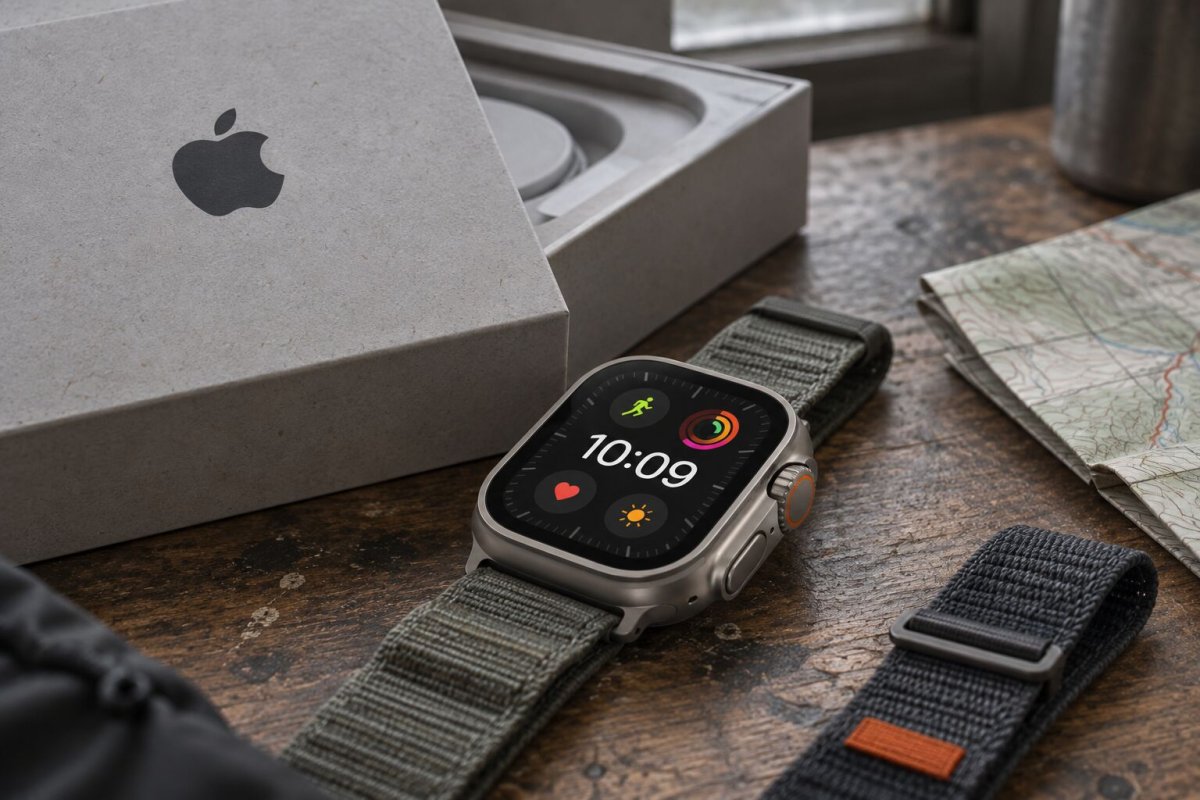
Apple Inc. (NASDAQ: AAPL) unveiled the Watch Ultra 4 at its annual hardware event, maintaining the $799 starting price while focusing on endurance and health-tracking improvements rather than a price increase. The decision is seen as a strategic move to encourage upgrades from existing Ultra owners, but the watch's impact on the company's stock was minimal, with shares sliding 1.2% on Wednesday.
The new flagship device, available for preorder now and hitting stores on September 18, boasts up to 50 hours of everyday battery life—a roughly 19% improvement over the Ultra 3's 42 hours. In Low Power Mode, the watch extends to 84 hours. This tangible upgrade, coupled with a rebuilt health-sensing system, aims to provide concrete reasons for users to upgrade without the sticker shock of a price hike.
What's New in the Apple Watch Ultra 4
At the core of the Ultra 4 is Apple's new S11 chip, which works with optical and electrical sensors to take heart-rate and heart-rate-variability readings more frequently. A new Readiness score uses recent activity, sleep, and vital signs to advise wearers on whether to recover or push harder. Apple claims a study of over 1,000 participants found its system more accurate than competing wearables, though independent verification is still needed.
For athletes, the Extended Workout mode promises 25 hours of continuous GPS and heart-rate tracking, with a lower-power setting extending selected outdoor tracking to 45 hours. A 15-minute charge adds up to 18 hours of use. These improvements directly address the primary concern for endurance users: battery longevity during long events.
The design remains familiar—a 49-millimeter titanium case in natural or black finishes—so the commercial bet is on functionality, not aesthetics. Apple is betting that better sensing, endurance, and software features, including upcoming audio-intelligence capabilities, will drive upgrades.
Why the 9 Price Tag Matters for AAPL
Apple does not break out Watch revenue separately; it is grouped under Wearables, Home, and Accessories, which generated $7.883 billion in the June quarter, up 6% year-over-year. However, this category represents only 7.2% of Apple's $109.417 billion quarterly revenue. Even a stellar Ultra 4 launch cannot single-handedly move the stock. Its value lies in product mix: a premium watch can support hardware margins, deepen user engagement in Apple's Health and Fitness ecosystem, and reinforce demand for iPhones and services.
Holding the price at $799 signals pricing discipline, even as component costs rise across the consumer electronics industry. Apple is betting on volume, mix, supply-chain efficiency, and attached services to protect margins rather than a higher entry price.
Market Reaction and the Upgrade Test
Apple shares traded at $312.45 at 2:28 p.m. ET, down 1.19% from Tuesday's close of $316.22, after ranging from $309.90 to $318.13. The decline reflects the broader market's reaction to Apple's full product lineup and macroeconomic conditions, not just the watch.
The bull case is that the same price, longer battery life, and more health data give Ultra 1 and Ultra 2 owners compelling reasons to upgrade. The bear case is that Ultra 3, released just a year ago with satellite connectivity, 5G, and a larger display, may already satisfy many users, making the new features refinements rather than necessities.
Investors will be watching September 18 availability, shipping times, and any commentary on Watch upgraders in Apple's next earnings call. The key question is whether Apple can convert these improvements into faster growth for its $7.9 billion quarterly category without sacrificing product margins.