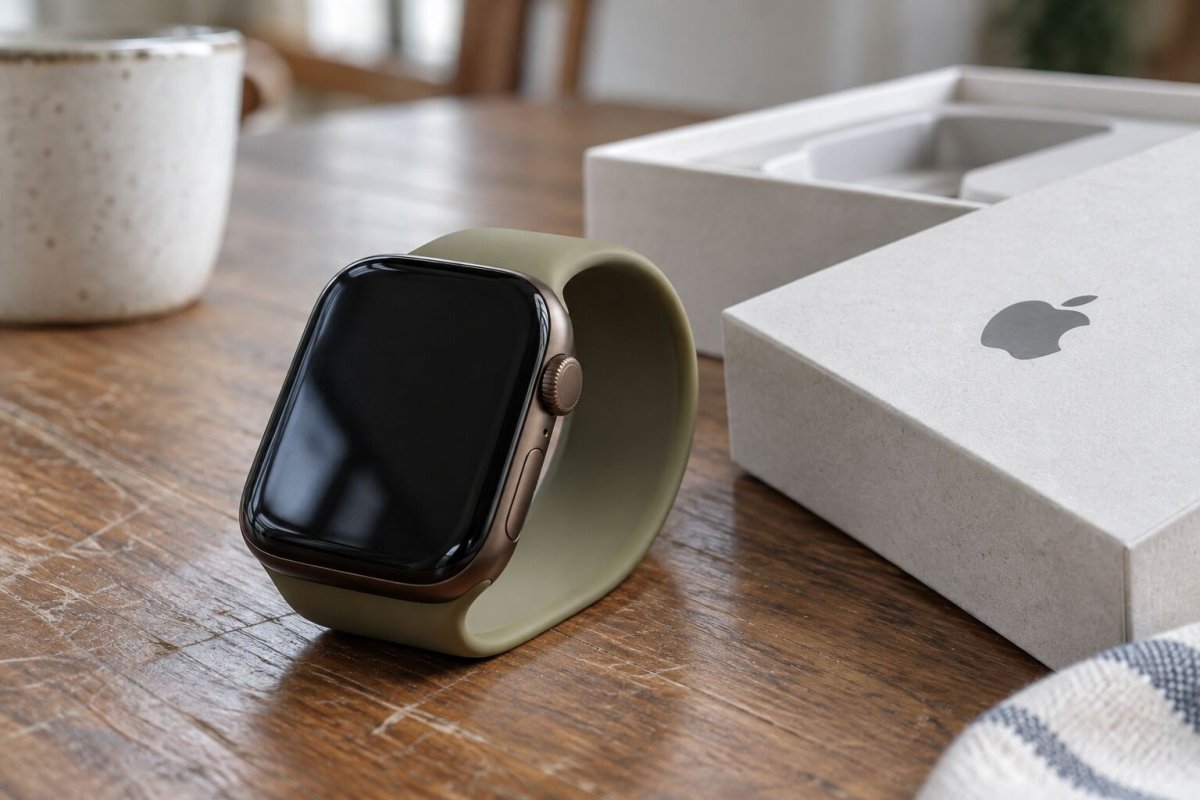
Apple Inc. (AAPL) unveiled its latest wearable lineup on Wednesday, with the Watch Series 12 positioned as the volume driver at a starting price of $399. The new model is not a stripped-down version of the $799 Ultra 4; rather, it brings the company's flagship health-monitoring features to a broader audience. The question for investors is whether these upgrades—including a redesigned sensor system and more durable glass—can reignite growth in Apple's wearables business, which generated $7.9 billion in revenue last quarter.
Pricing and Availability
The Series 12 is available in 42-millimeter and 46-millimeter case sizes, with options in aluminum, titanium, and ceramic. Preorders opened on September 9, with in-store availability slated for September 18. The $399 entry point is notably lower than the Ultra 4's $799 price tag, making the Series 12 the primary volume product in Apple's new lineup.
Health and Durability Upgrades
The centerpiece of the Series 12 is a redesigned optical and electrical sensor system, powered by Apple's new S11 chip. This system measures heart rate every five seconds throughout the day and takes heart-rate-variability readings more frequently. The data feeds into a new Readiness score, which combines activity, sleep, and vital signs to offer daily guidance. Apple claims that a study of over 1,000 participants showed the Series 12 is more accurate than competing wearables for heart-rate sensing, though investors should treat this as a manufacturer claim until independent testing confirms it.
In addition to health features, aluminum models now include Ceramic Shield 2, which Apple says is 60% tougher than the Ion-X glass used on earlier models. Battery life remains up to 24 hours for everyday use, but outdoor workout tracking time has increased 25% to 10 hours—a meaningful improvement for runners, though still far short of the Ultra 4's 50-hour claim.
Financial Context
Apple does not break out Watch revenue separately, but the Wearables, Home, and Accessories segment—which includes AirPods and other devices—posted $7.883 billion in revenue for the June quarter, up 6% year-over-year from $7.404 billion. That segment accounted for 7.2% of Apple's total quarterly sales of $109.417 billion. While the Series 12 alone won't dictate the stock's direction, its lower price point expands the addressable market and could attract users to services like Fitness+, AppleCare, and the redesigned Health app arriving later this year.
The payoff is two-fold: immediate hardware sales and a larger installed base that supports recurring services revenue and increases switching costs for iPhone users. However, some of the most ambitious software features, including new health guidance and audio intelligence, won't be available until later, meaning buyers are being asked to value a roadmap as much as the hardware shipping next week.
Market Reaction
Apple shares traded at $312.45 at 2:28 p.m. ET, down 1.19% from Tuesday's close of $316.22, after ranging between $309.90 and $318.13. The stock's decline reflects the broader market and the full launch event, not just the Series 12. The bull case is that a $399 starting price, improved durability, and richer passive health data give owners of older watches a compelling reason to upgrade. The bear case is upgrade fatigue: the design is familiar, battery life is still one day, and recent model owners may receive enough software improvements through watchOS 27 to hold off for another year.
September 18 shipping times will offer the first demand clue, but the real test comes in Apple's holiday-quarter results, where category growth, product margins, and management's comments on new versus upgrading buyers will be key. For shareholders, the Series 12 succeeds if it expands volume without sacrificing the premium mix—not merely if its sensors win a spec comparison.