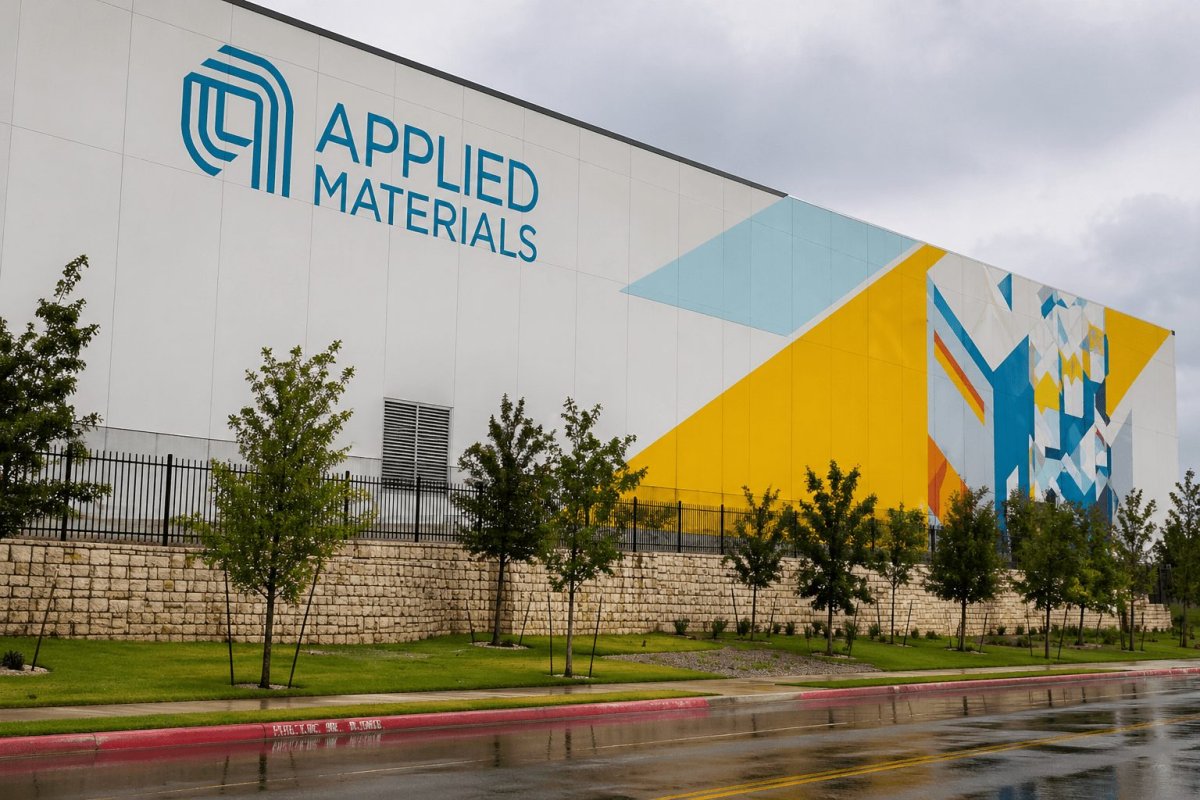
Shares of Applied Materials (AMAT) fell sharply on Tuesday, declining 5.5% after a Reuters report indicated that the U.S. Commerce Department had ordered certain semiconductor equipment manufacturers to halt some shipments to Hua Hong, China's second-largest chipmaker. The news reignited concerns over the impact of U.S. export controls on the company's significant revenue exposure to China.
According to sources cited by Reuters, the Commerce Department sent letters last week to several chip equipment companies, including Applied Materials, Lam Research (LRCX), and KLA Corporation (KLAC), instructing them to stop sending specific tools to Hua Hong facilities. The move targets what U.S. officials believe could be used for advanced chip production. Hua Hong's subsidiary, Huali Microelectronics, has been developing a 7-nanometer process at its Shanghai site, a high-end technology that signals dense chip architecture.
Applied Materials derived 30% of its revenue from China in its most recent fiscal quarter, amounting to $2.095 billion. That figure is down from $2.243 billion, or 31%, in the same period a year earlier, but still represents a substantial portion of its overall business. The company's stock closed at $382.79, down $22.07, while Lam Research and KLA each slid approximately 3.3%, dragging on the broader semiconductor sector.
The selloff comes despite a generally bullish outlook for chip equipment makers, driven by surging demand for artificial intelligence (AI) chips. Bank of America recently highlighted Applied Materials, Lam Research, and MKS Instruments as key beneficiaries of wafer-fab equipment growth. However, the bank also warned of potential downside for Applied Materials due to U.S. government-related risks.
Applied Materials' CEO Gary Dickerson has repeatedly emphasized AI as a growth driver, stating in February that semiconductors are "the heart of the AI technology stack" and that the company was on track for over 20% growth in its semiconductor equipment business this calendar year. However, the current export control issues could undercut that momentum before AI demand fully materializes.
The company has already faced compliance challenges. In its most recent quarterly filing, Applied Materials disclosed a settlement with the Commerce Department's Bureau of Industry and Security, agreeing to pay $253 million and commit to internal audits over past shipments to Chinese customers and export compliance lapses. The company also warned that obtaining export licenses for China-related sales has become increasingly difficult, potentially leading to lost sales and increased competition from Chinese or other foreign rivals.
Investors are now looking ahead to Applied Materials' fiscal second-quarter earnings report, scheduled for May 14. Analysts expect management to address the Hua Hong development and its potential impact on the company's China outlook and AI-driven growth strategy. The broader market will be watching closely for any signs that U.S. export controls are tightening further, which could have ripple effects across the entire semiconductor ecosystem.