Archer Aviation Inc. (NYSE: ACHR) closed the trading week on Friday at $4.77, posting a 7.4% gain for the period. However, the weekly advance masked a sharp reversal in momentum, with the stock surrendering 62% of its Monday surge after market participants learned that the company's newly unveiled Halo platform lacked disclosed order values.
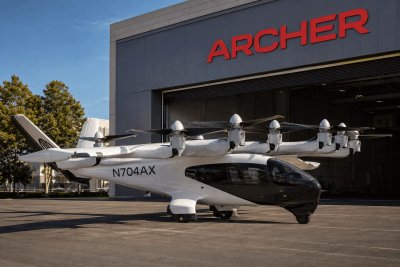
The stock climbed 19.6% on Monday, rising 87 cents to close at $5.31, following the announcement of the Thunder autonomous hybrid-electric rotorcraft developed in partnership with Anduril Industries. Designed for military attack, cargo transport, and remote logistics operations, Thunder is slated for its maiden flight in 2027. Investor enthusiasm quickly cooled, however, when Archer introduced Halo, the commercial variant of Thunder, alongside strategic launch partner Marubeni Aerospace, without specifying the number of aircraft, pricing, or confirmed order value.
By Friday, Archer had given back 54 cents of its Monday gains, resulting in a 6.7% decline for the session. The weekly performance nonetheless outpaced its closest publicly traded competitors. Joby Aviation (NYSE: JOBY) fell 4.1% to close at $6.93, while Eve Holding (NYSE: EVEX) rose 5.0% to $2.29. Archer outperformed Joby by 11.6 percentage points and Eve by 2.4 points. In contrast, the Nasdaq Composite dropped 2.1% for the week, underscoring that Archer's gains were not part of a broader air-taxi sector rally.
Archer CEO Adam Goldstein emphasized that Anduril identified a clear military need, which led to the development of a purpose-built aircraft. "They identified a need, and we built a very specific aircraft for that need," Goldstein told Reuters. The defense-focused pivot has been a key catalyst for the stock, but market participants are now seeking more concrete evidence of contract wins.
The company's balance sheet provides a buffer as it pursues certification and defense contracts. As of March 31, Archer reported $1.7759 billion in cash, cash equivalents, and short-term investments, representing 48.6% of its $3.66 billion market capitalization as of Friday's close. During the first quarter, operating cash outflows totaled $149.1 million, with capital expenditures adding $32.6 million, together consuming 10.2% of its liquid assets.
For the second quarter, Archer expects an adjusted EBITDA loss between $170 million and $200 million, with a midpoint of $185 million, equating to 10.4% of its March cash holdings. The company noted that adjusted EBITDA differs from actual cash burn, but the financial runway remains sufficient to support ongoing development and certification efforts.
Looking ahead, investors will focus on economic indicators and any announcements regarding additional Halo partners or incremental government contract wins. A firm order would carry significantly more weight than merely naming another launch partner, as the market has demonstrated with the post-announcement pullback. Risks include potential delays in certification, an extended award process, or faster-than-expected cash burn, which could undermine the defense premium currently priced into the stock. Archer reported first-quarter revenue of just $1.6 million, highlighting the early stage of its commercial operations.
In summary, Archer Aviation's weekly gain reflects optimism around its defense strategy, but the market's reaction to the Halo announcement underscores that further upside depends on converting partnership disclosures into binding contracts rather than simply unveiling new aircraft.