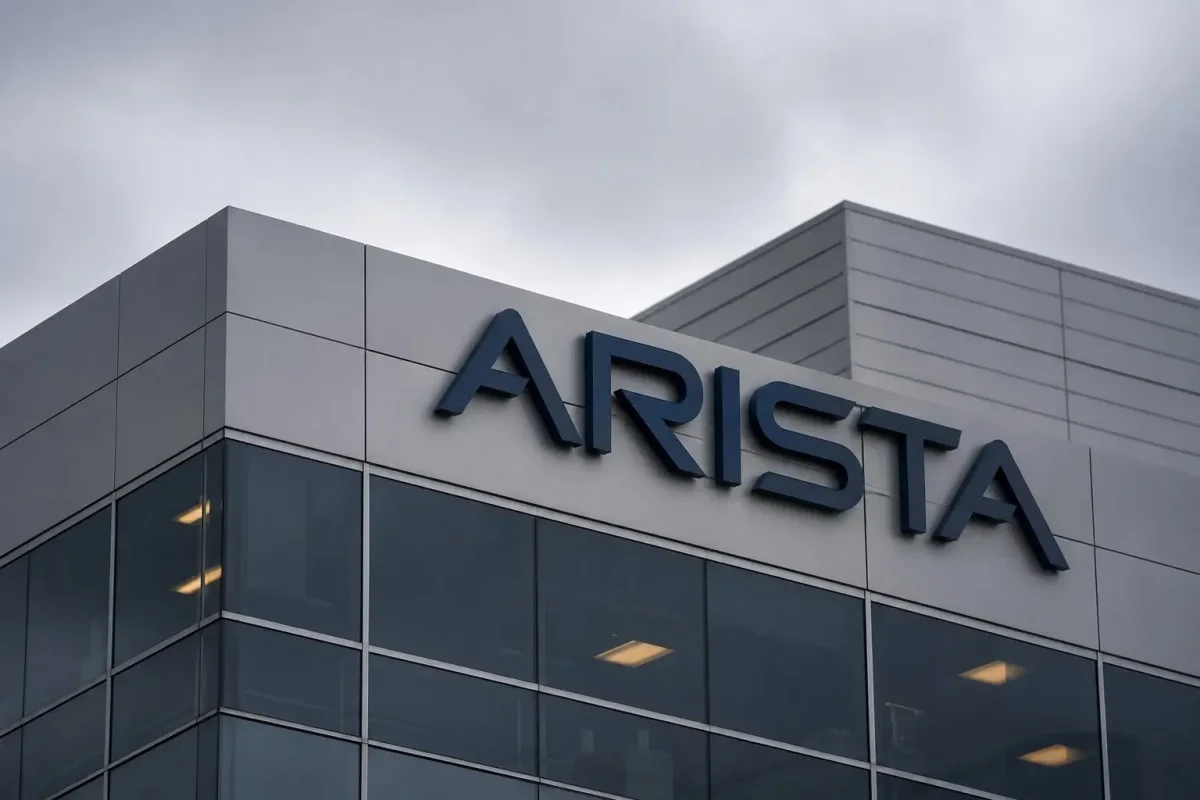
Arista Networks (NYSE: ANET) saw its shares jump more than 10% in premarket trading on Wednesday, following the release of a quarterly outlook that significantly exceeded Wall Street expectations. The company's third-quarter revenue projection of approximately $3.3 billion came in roughly 12% above consensus estimates, while management also raised its full-year 2026 revenue forecast to $12.6 billion, implying a year-over-year growth rate of about 40%.
The upbeat guidance extends beyond the typical artificial intelligence (AI) earnings boost, signaling broad-based strength across Arista's core product lines. CEO Jayshree Ullal attributed the incremental demand to the company's "core Arista product line," a sentiment echoed by analysts at Raymond James, who noted that most of the forecast increase stems from general-purpose networking products rather than AI-specific offerings.
Record Second-Quarter Results
Arista's second-quarter performance was equally impressive. Revenue climbed to $3.036 billion, a 37.7% increase compared to the same period last year, and surpassed analyst expectations by approximately 7.6%. Adjusted earnings per share came in at $1.02, up 39.7% year-over-year and beating consensus by nearly 16%. The company's non-GAAP operating margin remained exceptionally robust at 49.9%, despite a slight decline in gross margin due to shifts in customer and product mix.
The company's operating leverage continues to be a standout feature, with adjusted operating margins holding near 50% even as gross margins dipped 220 basis points to 63.4%. This resilience underscores Arista's ability to maintain profitability while scaling its operations to meet surging demand.
Raised Guidance and Strong Forward Visibility
Looking ahead, Arista projects third-quarter revenue of approximately $3.3 billion, representing an 8.7% sequential increase and nearly 43% growth year-over-year. The company also expects adjusted EPS in the range of $1.06 to $1.08, comfortably above the consensus estimate of $0.91. Management's raised 2026 outlook—up $1.1 billion from the May projection—reflects anticipated expansion across data-center, campus, routing, and AI-related product segments.
Visibility into future demand has also improved significantly. Deferred revenue climbed to roughly $6.9 billion, while purchase commitments totaled $9.7 billion—about 3.2 times the company's quarterly revenue. These figures provide a strong backlog that supports management's confidence in sustained growth through the remainder of the year and into 2027.
Analyst Reactions and Price Target Revisions
Wall Street responded swiftly to the earnings beat and guidance raise. At least three analysts updated their price targets ahead of the market open, with the new targets ranging from $240 to $280. Rosenblatt's Mike Genovese maintained a Buy rating and raised his target from $210 to $280, implying potential upside of nearly 33% from the premarket price of $210.90. Needham's Ryan Koontz and Bank of America's Tal Liani also lifted their targets to $260 and $240, respectively.
Despite the bullish revisions, the consensus price target of $201.25 remains below the current market level, suggesting that many analysts have yet to fully incorporate the latest guidance into their models. The broader analyst community still holds 24 Buy ratings and only one Hold, reflecting overwhelming optimism about Arista's growth trajectory.
Risks and Challenges Ahead
While the outlook is undeniably strong, risks remain. Purchase obligations have surged to approximately 2.7 times their level from a year ago, and management expects industry-wide supply constraints to persist through 2028. If demand were to soften, the company could face inventory buildup or additional pressure on gross margins. Moreover, with the stock trading at elevated levels, there is limited room for error in upcoming quarterly results.
Arista's ability to sustain its momentum will depend on continued strength in core networking demand and successful execution of its AI-related product roadmap. Investors will be watching closely for evidence that the accelerated growth observed in the first half of 2026 can be maintained in the second half and beyond.