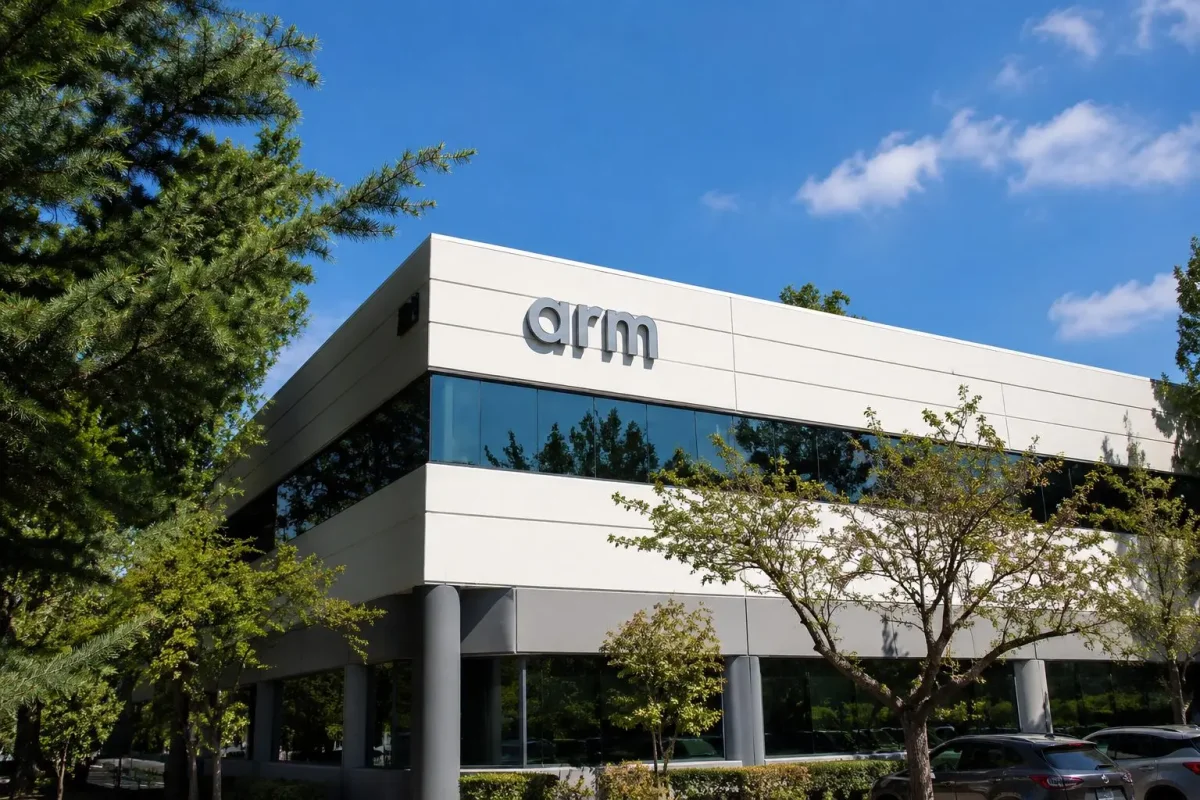
Arm Holdings is accelerating its push into the artificial intelligence chip market, with CEO Rene Haas expressing strong confidence that the company will reach its $15 billion annual revenue target for AI chips sooner than anticipated. Speaking at the Computex trade show in Taipei, Haas highlighted that demand for Arm's data-center central processing units (CPUs) is surpassing initial projections, driven by major clients such as ByteDance and Oracle.
Strong Demand and Strategic Shifts
Haas noted that demand for Arm's AGI CPU, a chip designed specifically for agentic AI applications, has more than doubled since its launch in March. Customer demand for the fiscal years 2027 and 2028 now exceeds $2 billion, a significant increase from the initial figures. This surge is part of Arm's broader strategy to transition from its traditional licensing model to selling finished chips, which could allow the company to capture a larger share of AI infrastructure spending.
Arm's fiscal 2026 revenue reached $4.92 billion, and reaching $15 billion annually from chip sales would represent a major transformation. The company's shares surged 15.73% to close at $408.85 on Monday, reaching an all-time high, after Nvidia launched its RTX Spark PC superchip, built on Arm's architecture. The RTX Spark combines a Blackwell RTX GPU with a 20-core Grace CPU and up to 128GB of unified memory, targeting local AI agents, content creation, and gaming.
Market Implications and Competitive Landscape
Nvidia's move into Arm-based PCs is intensifying competition with traditional x86 chipmakers like Intel and AMD. However, analysts at Mizuho, led by Vijay Rakesh, believe the market is not a winner-take-all scenario. Rakesh maintains Outperform ratings on both Arm and AMD while keeping Intel at Neutral, suggesting that AI demand will support both Arm and x86 architectures.
Arm's growing presence in the AI infrastructure space is drawing attention from investors. Jim Cramer noted that Arm's stock could continue to rise, linking its recent gains to its collaboration with Nvidia's CEO Jensen Huang at Computex. Cramer emphasized that AI agents will require a significant number of advanced CPUs, a trend that could benefit Arm, Intel, and AMD alike.
Risks and Challenges
Despite the optimistic outlook, Arm faces several risks. The company must convert strong demand into actual chip shipments, secure manufacturing capacity, and manage relationships with its long-standing licensees. Reports following May earnings flagged potential supply constraints, even as new chip sales are projected to double by early 2028.
Export controls present another hurdle. Haas told Reuters that restricting the export of AI-ready CPUs to China would be challenging due to their widespread use. "CPUs are kind of like oil relative to the application space," he said, adding that regulators "would have to limit everything" to effectively target these chips.
For now, Arm is trading more like an AI infrastructure company than a traditional royalty-based business. The key question for the market is whether Arm can sustain investor focus on real orders and revenue growth rather than just stock price momentum.