Shares of GE Aerospace (NYSE:GE) climbed 3.1% on Friday morning to $356.52, recovering most of the prior session's 4.1% decline. The rebound came as investors shifted focus from order growth to the company's ability to meet demand at its repair facilities.
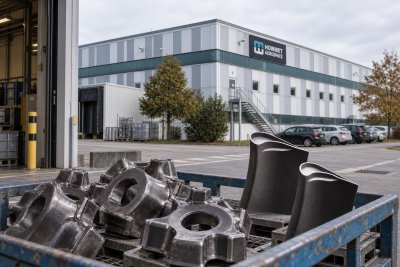
According to the company, over 95% of spare-parts revenue for the third quarter is already booked in backlog, while shop visits are oversubscribed by 40%. This indicates that output, not demand, remains the primary constraint.
GE Aerospace's order growth slowed to 17% in the second quarter from 87% in the first quarter, but commercial services orders still rose 22%. The aftermarket continues to show strong demand, with spare-parts backlogs increasing 20% from the previous quarter.
The company reported robust second-quarter results, with adjusted earnings of $2.02 per share beating analyst expectations of $1.86. Adjusted revenue rose 24% to $12.63 billion, and free cash flow jumped 43% to $3.03 billion. Management raised its 2026 adjusted earnings forecast to $7.65-$7.85 per share and boosted its free-cash-flow outlook to $8.9-$9.2 billion, a 10.4% increase at the midpoint.
Despite the positive news, valuation remains elevated. The stock trades at 46 times projected 2026 earnings, implying a free-cash-flow yield of approximately 2.45%. This leaves little room for any performance shortfall.
CEO Larry Culp told analysts, "We do not have a demand problem," emphasizing that the outlook beyond 2026 is largely limited by supply. The commercial-services backlog is close to $170 billion. However, adjusted operating margin declined by 130 basis points to 21.7%, with the commercial division's margin slipping 160 basis points to 27.3% due to growth in installed engines, ongoing investments, and inflation.
Vertical Research analyst Robert Stallard noted that the second-half outlook might reflect "some conservatism," with additional gains dependent on suppliers maintaining recent output increases. Risks include potential conflict-driven fuel price increases reducing travel demand, supplier delays, and the LEAP durability retrofit continuing into the early 2030s.
The recovery on Friday bolsters the demand outlook but does not address execution challenges. Further upside depends on accelerating parts flow, boosting shop throughput, and maintaining stable margins.