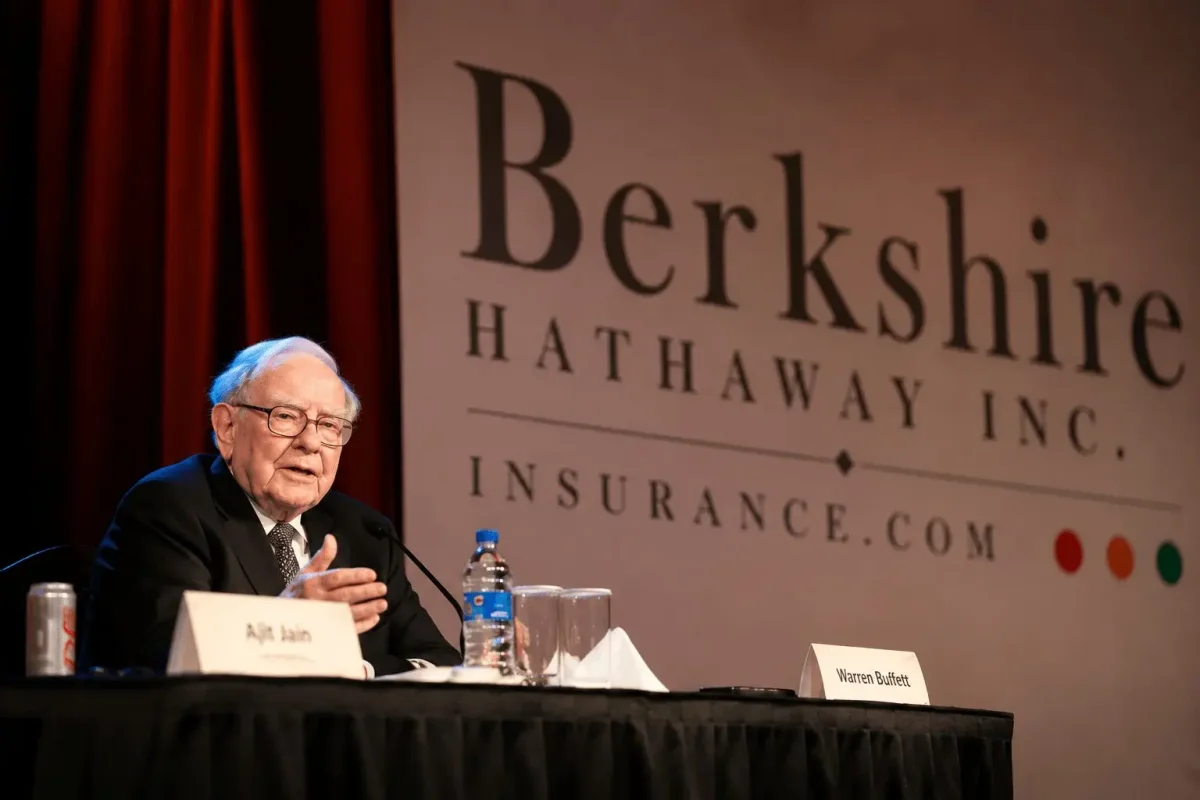
Warren Buffett's recently disclosed plan to sell all of his remaining Berkshire Hathaway Inc. (NYSE:BRK.A; NYSE:BRK.B) shares by December 31, 2034, will accelerate the transfer of control over the conglomerate. The move highlights the governance implications of his gradual exit, as the timeline for the share disposal becomes a focal point for investors.
According to the latest filing with the Securities and Exchange Commission, Buffett holds a 13.2% economic interest in Berkshire, which grants him 29.7% of the voting rights. The disparity underscores the significance of the plan: as he converts his Class A shares to Class B shares, each conversion reduces the voting power of those shares by 85%. A Class A share carries 10,000 votes, while a Class B share has only 1,500 votes after conversion.
Buffett currently owns 188,290 Class A shares and 1,162 Class B shares, representing an economic equivalent of 282.4 million Class B shares. If he divides the disposal evenly over the eight-year period from 2027 to 2034, he would need to sell an average of 35.3 million Class B-equivalent shares each year. This pace is nearly three times the 12 million Class B shares he donated in July 2026.
The impact on voting rights is more pronounced than on economic interests. While the plan reduces his voting power, existing shareholders are not diluted because Buffett is transferring already outstanding stock rather than issuing new shares or using Berkshire's cash. However, the foundations that receive the shares may eventually sell them, increasing the tradable supply.
Berkshire's B shares were set to open 1.0% higher at $493.12 before markets opened on Friday. As of Thursday, A shares had declined about 2% for the year, while the S&P 500 had gained approximately 11%, according to Barron's. The delay in Buffett's exit has shifted attention to Greg Abel, who took over as chief executive on January 1, with Buffett continuing as chairman. Buffett told CNBC his trust in Abel was “100 percent.”
The interview indicated that Buffett still influences key decisions. He revealed that he was the one who initiated Berkshire's investment in Alphabet Inc. (NASDAQ:GOOG; NASDAQ:GOOGL), which now tops $31 billion, though Abel holds the ultimate authority. Buffett described his wealth as partly the result of chance, saying, “Out of eight billion people, I may be one of the 10 luckiest in the world.”
Buffett's most recent donation of 12 million shares was distributed to four family foundations, with nine million shares going to the Susan Thompson Buffett Foundation and one million each to three foundations overseen by his children. Notably, the Gates Foundation did not receive any funds, breaking a two-decade tradition. Buffett explained that his children are now prepared to handle the distribution of his wealth.
Berkshire's own share buybacks may offset some of the impact. Barron's estimates second-quarter buybacks at between $5 billion and $11 billion, compared to just $235 million in the first quarter. As of March 31, Berkshire's cash, equivalents, and Treasury bills totaled $397.4 billion, providing Abel with flexibility to absorb share supply, finance acquisitions, or hold the capital.
Risks remain: Buffett's timeline might not follow a set pattern, and foundations could still hold shares. Share buybacks might counteract supply, while valuation could be affected by insurance losses or changes in equity. The next key update will come with second-quarter results, expected in early August, which will indicate if Abel is reducing the share count as Buffett gradually hands over control. This detail is more significant than Buffett's personal reflections on luck.