Washington, October 23, 2026 – A widening rift between NASA's safety advisers and SpaceX leadership over the number of refueling flights required for the Artemis III lunar mission has cast a spotlight on the program's unresolved technical challenges. During an October 22 meeting of the Aerospace Safety Advisory Panel, member Charlie Precourt cited an estimate of roughly 22 orbital refueling launches needed to support the first crewed Moon landing since Apollo. SpaceX CEO Elon Musk, however, publicly disputed that figure, predicting that only six to eight flights would suffice.
The disagreement centers on the orbital supply chain that must deliver propellant to a Starship depot before astronauts descend to the lunar surface. A higher flight count implies more launch operations, more propellant transfers, and greater potential for storage losses. Neither estimate, however, provides a detailed breakdown of tanker payload capacities, reserve margins, or boil-off rates, leaving the true fuel-delivery requirement unclear. The counting boundary itself is ambiguous—whether the figures include depot deployment launches and the lander's own launch, or only dedicated fuel tanker missions, remains unspecified.
Artemis III Test Limitations
NASA's planned Artemis III rehearsal, known as the crewed Earth-orbit docking test, is designed to evaluate spacecraft interfaces and docking procedures. The mission design calls for three launches and a series of docking tests in low Earth orbit. While these operations can validate the docking systems and communication links, they do not replicate the full lunar fueling campaign. The test will not involve a complete orbital fuel transfer demonstration, leaving a critical gap in verifying the propellant delivery infrastructure.
The engineering concerns are not new. NASA's Office of Inspector General, in a March 10 audit, identified cryogenic fluid management as a key development challenge for the lunar landers. The audit also noted that the agency missed opportunities to apply flight-representative testing principles, which could have de-risked the systems earlier.
Divergent Estimates and Their Implications
Precourt's estimate of 22 flights was reported by SpacePolicyOnline, while Musk's six-to-eight figure came from an exchange with Ars Technica's Eric Berger on X (formerly Twitter). Both statements were made on October 22, 2026. Neither party provided a comparable calculation to support their numbers, and the estimates have no established common accounting basis. This lack of transparency makes it impossible to determine a reliable campaign duration or cost projection.
Musk's assertion that the actual number will be closer to six to eight suggests SpaceX is confident in its Starship's fuel transfer efficiency and reduced boil-off rates. However, without published data on tanker payload mass or storage performance, the claim remains unsubstantiated. The panel, according to SpacePolicyOnline, plans to issue a formal recommendation urging NASA to reconsider Artemis IV objectives and potentially its architecture, with a call for detailed testing and data-collection plans covering both ground and flight demonstrations.
Scheduled Tests and Milestones
NASA's October 5 development presentation outlined a series of upcoming milestones. The Starship orbital fuel transfer demonstration is targeted for the first quarter of 2027, followed by the crewed Earth-orbit docking test for Artemis III in the third quarter of 2027. An uncrewed Starship lunar landing is planned for the fourth quarter of 2027, with Blue Origin's Blue Moon lander demonstration set for the first quarter of 2028. The crewed Artemis IV landing is targeted for early 2028, though the lander provider has not yet been decided.
These are planning targets, not completed milestones. The Artemis III prototypes have deliberately different capabilities. NASA's July mission description says SpaceX will add a docking system to a Version 3 Starship, but astronauts will not enter the vehicle during the test. Blue Origin, meanwhile, plans a crew-cabin demonstration where up to two astronauts could enter its Mark 2 test article wearing Orion survival suits.
The launch sequence for Artemis III is designed to test coordination: Blue Moon will launch first, with the capacity to wait in orbit for up to 30 days. Orion follows, then Starship after the Blue Moon docking phase. Each vehicle can reach the demonstration orbit in a single launch.
Market and Industry Impact
The dispute has implications for the broader space industry. SpaceX (NASDAQ: SPCX) is a key player in NASA's Artemis program, and any delays or cost overruns could affect its commercial launch business. Blue Origin, a private company, is also a major contractor. The uncertainty around fuel delivery estimates could influence investor sentiment toward space-related stocks, though SpaceX is not publicly traded. The outcome of the panel's recommendation could shape future procurement decisions.
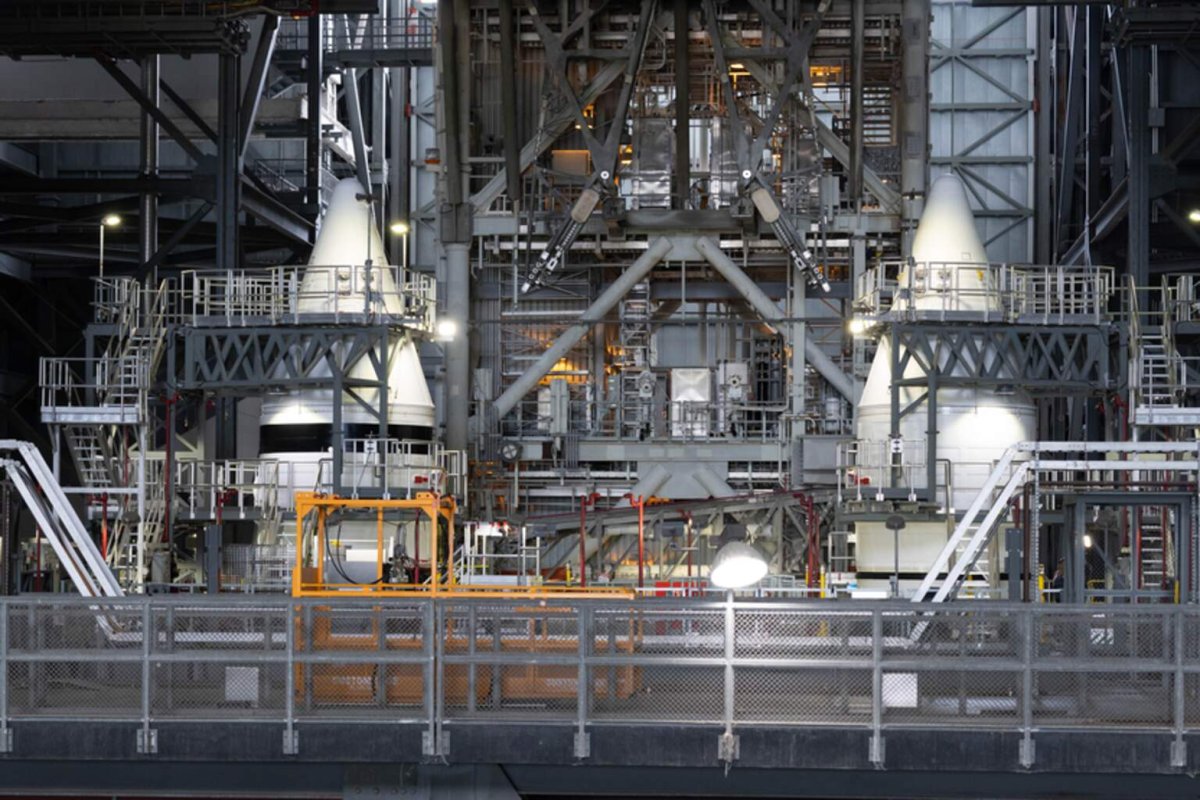
NASA's October 13 hardware update reported that booster stacking is complete and four core-stage engines are installed, with tanking tests still ahead. The next measurable test in NASA's October baseline is the orbital transfer demonstration targeted for early 2027. Its results will need to establish transferred mass and storage performance. What usable propellant delivery per flight will NASA accept when certifying the crewed lunar campaign? That question remains open, and the answer will determine the feasibility of the Artemis III timeline.