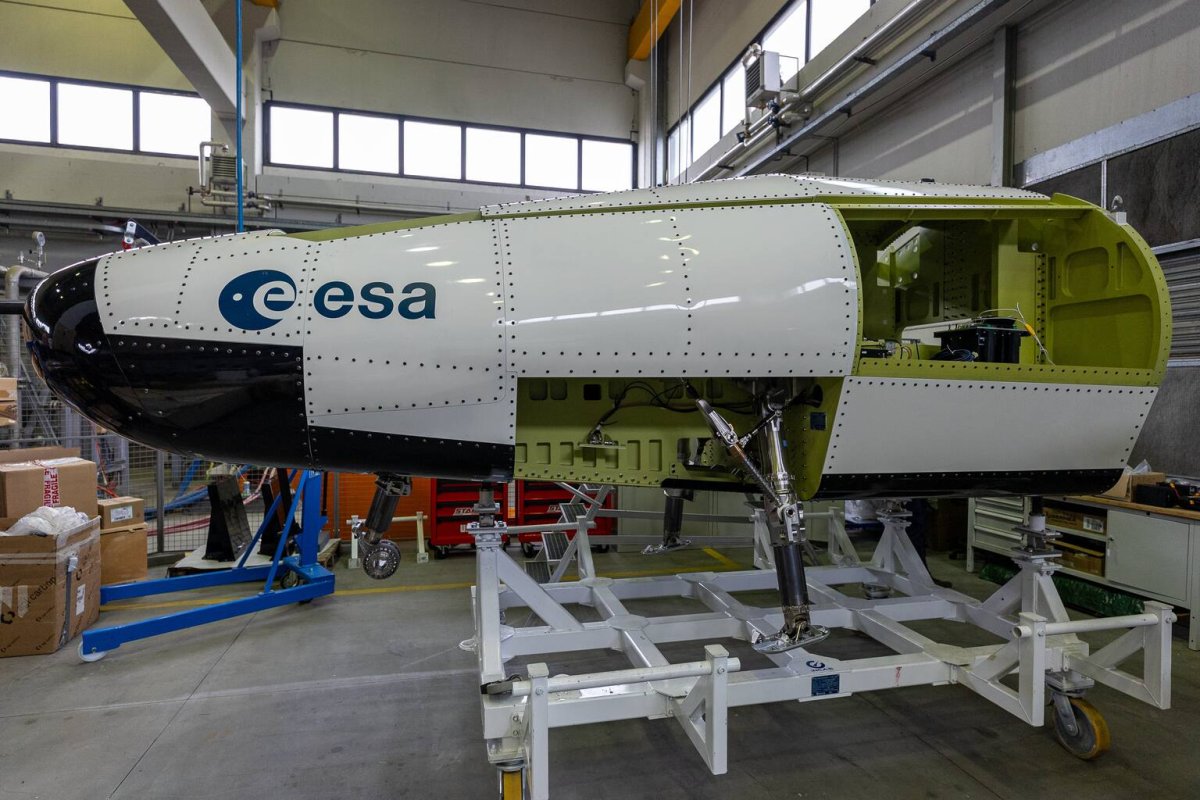
The European Space Agency (ESA) has disclosed that its Space Rider program suffered a significant setback during a full-scale landing test on October 6, 2026. The test, conducted approximately 3 kilometers above Sardinia, ended when the vehicle's steerable parafoil detached from the mock-up during deployment, resulting in the loss of the test model. The agency confirmed the incident on October 22, noting that investigators have yet to determine the root cause of the failure.
Test Details and Immediate Aftermath
The October test was designed to validate the integrated landing system of Space Rider, combining the spacecraft's mass, aerodynamic profile, and landing gear for the first time. According to ESA's space transportation director, Géraldine Naja, the drogue parachute deployed as intended, but the parafoil separated from the mock-up, causing the model to crash to the ground. Recovery teams have since retrieved the wreckage for analysis.
This failure marks a critical gap in the program's qualification process. Earlier tests in June 2025 had successfully demonstrated individual components: three drops validated the parachute extraction and inflation sequence, while another three tested autonomous guidance on a separate, simpler model. That guidance model, which flew for 12 minutes from an altitude of 2.5 kilometers, achieved a reported landing accuracy of 150 meters and a touchdown speed of 2 meters per second. However, those results were achieved with a less representative vehicle, leaving full-scale landing performance unverified.
Technical Specifications and Challenges
The full-scale model is designed to mimic the actual reentry module, which measures 4.6 meters in length and is intended to support a load of 2,950 kilograms. Its parafoil, measuring 27 meters by 10 meters, is operated by two winches that adjust the steering lines under onboard computer control, allowing the vehicle to navigate wind conditions without human intervention. The integration of the parachute system required three weeks of meticulous packing and preparation.
The drop test did not cover all aspects of the landing sequence. The landing gear remained permanently open during the test, meaning gear deployment will require separate verification. Additionally, the helicopter drop could not simulate the extreme thermal conditions of atmospheric reentry, which ESA has addressed through separate tests that exposed thermal protection materials to temperatures up to 1,600°C earlier this year.
Program Timeline and Range Constraints
The test campaign has already faced logistical hurdles. A May 2026 attempt was aborted before release due to a sensor anomaly, and the Italian military range used for the tests was unavailable from June through September. While the May abort preserved the test model, the October failure resulted in its loss.
ESA's Naja indicated that other qualification activities are not currently determining the program's completion date. The schedule will be reviewed following the investigation, but she cautioned that her assessment is provisional. The agency still targets the first half of 2028 for Space Rider's inaugural flight aboard a Vega-C rocket, according to European Spaceflight's October 22 report.
Implications for Space Rider's Mission
Space Rider is designed to remain in orbit for approximately two months, supporting research within a 1,200-liter cargo bay. The ability to return experiments to Earth is central to its business case, as payload recovery and vehicle refurbishment are key operational features. Without a proven landing system, the program's viability is uncertain.
The unresolved deployment failure could necessitate hardware modifications and the construction of another full-scale test model. Range availability may also constrain retesting. Until investigators establish the cause and implement corrective measures, the timeline for completing landing qualification remains unclear.
Investors and stakeholders in the European space sector will be watching closely as ESA works to resolve this technical challenge. The outcome will determine whether Space Rider can meet its ambitious 2028 launch target and fulfill its role as a versatile platform for in-orbit research and technology demonstration.
