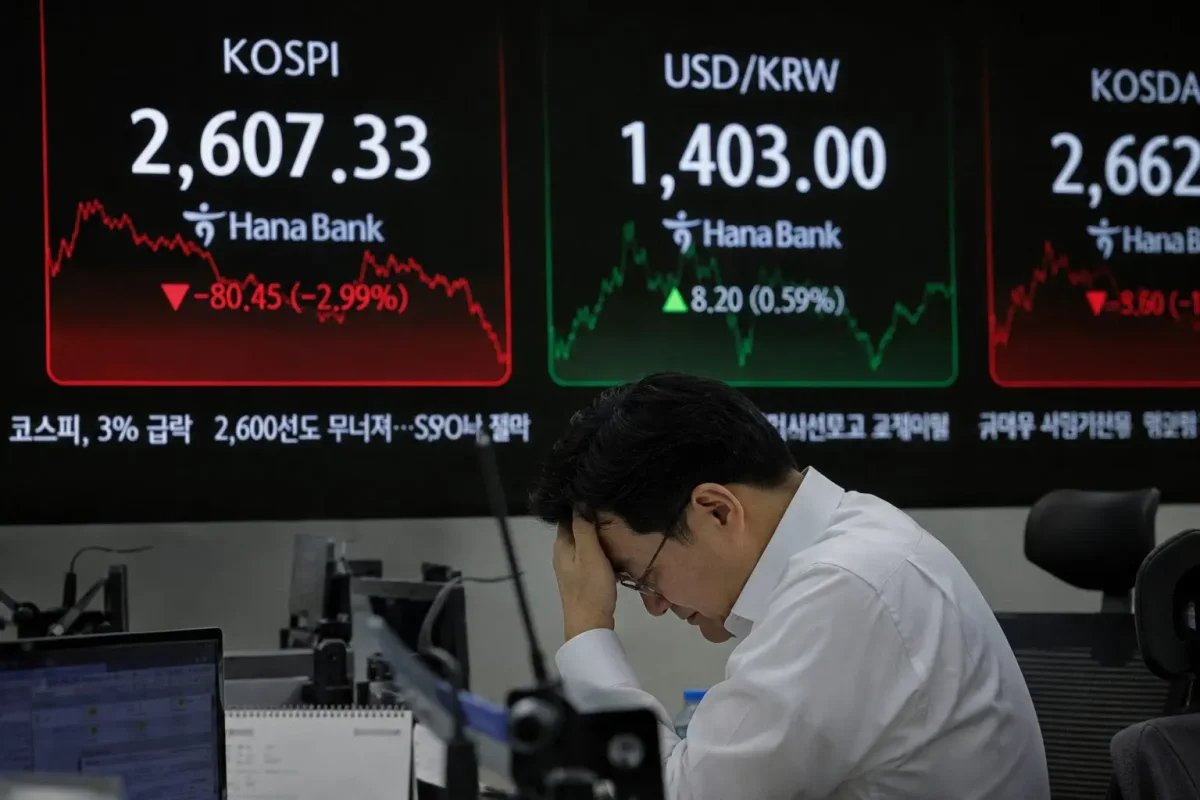
Asian equities experienced a broad selloff on Monday, with South Korea's KOSPI index suffering its steepest decline in the region, dropping 8.3% and triggering circuit breakers. The selloff was driven by a sharp pullback in AI-related semiconductor stocks, as escalating Middle East tensions pushed oil prices higher and revived expectations of further Federal Reserve rate hikes.
Regional Market Declines
Japan's Nikkei 225 slid nearly 4%, while Taiwan's Taiex lost 3.5%. Hong Kong's Hang Seng Index fell 1.22%, and the Shanghai Composite declined 1.70%. The broad-based selloff reflects growing investor anxiety over the confluence of rising energy costs, tighter monetary policy, and elevated valuations in the tech sector.
AI Chip Stocks Lead Losses
In Seoul, Samsung Electronics tumbled 10.2%, and SK Hynix dropped 7.7%, contributing significantly to the KOSPI's decline. The index fell so sharply at the open that trading was halted as circuit breakers were triggered. "Increased volatility is inevitable," said Han Ji-young, an analyst at Kiwoom Securities, though she noted that semiconductor earnings momentum remains strong.
Oil Surge and Fed Rate Bets
Brent crude oil rose 4.4% to $97.19 per barrel following strikes between Israel and Iran, stoking fears of sustained inflationary pressure. Meanwhile, stronger-than-expected U.S. nonfarm payrolls data for May, which showed an increase of 172,000 jobs, has led traders to price in a higher likelihood of a Fed rate hike in December. The CME FedWatch tool now shows a 70% probability of a December rate increase, up from 45% last week. The U.S. 10-year Treasury yield stood at 4.57%, continuing to weigh on high-growth stocks.
Concentration Risk in Focus
The selloff has highlighted the heavy concentration of Asian equity indices in a handful of tech giants. According to Reuters, TSMC, Samsung, and SK Hynix now account for nearly a third of the MSCI Asia Pacific ex-Japan index. Rupal Agarwal, Asia quant strategist at Bernstein, described this level of concentration as "never seen before," underscoring the vulnerability of regional markets to a reversal in the AI trade.
Impact on Other Markets
India's Nifty 50 and Sensex indices also declined in early trading, pressured by weakness in financial and IT stocks. "Near-term sentiment is likely to remain cautious until tech shares, crude oil, and global markets stabilize," said Hariprasad K, research analyst and founder of Livelong Wealth. The U.S. dollar remained near a two-month high, putting additional pressure on Asian currencies. The Japanese yen traded near 160 per dollar, keeping traders on alert for potential intervention by Japanese authorities.
Outlook and Risks
The selloff may extend beyond a single session if further negative catalysts emerge, such as another strong U.S. inflation print, a further spike in oil prices, or hawkish comments from the Fed. Goldman Sachs noted that steady economic activity and jobs data "lower the bar for a rate hike," though the bank still does not expect one. Conversely, if oil prices retreat, U.S. inflation comes in below forecasts, and chip earnings remain solid, some fund managers may view Monday's decline as a reset rather than the end of the AI rally. For now, Asia's most crowded trades are bearing the brunt of the selloff.