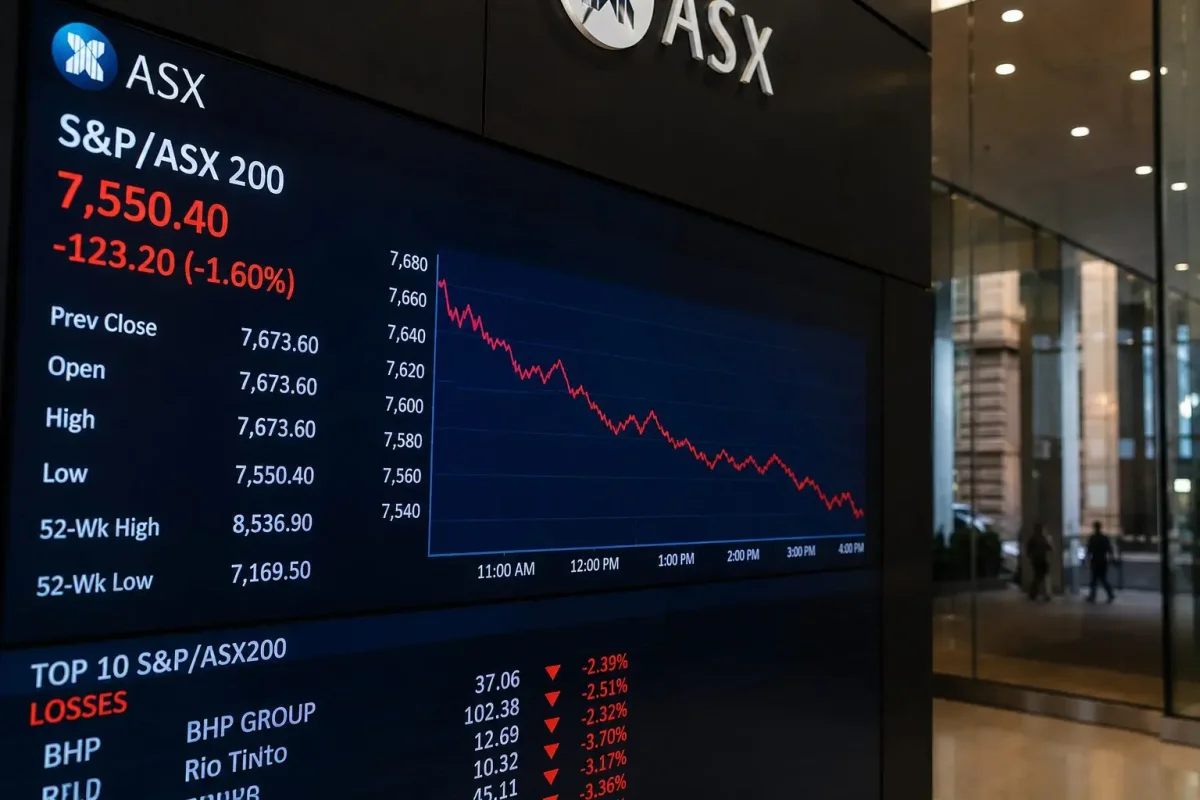
The Australian stock market extended its losing streak on Wednesday, with the S&P/ASX 200 index closing at its lowest level in nearly four weeks. The benchmark declined 23.7 points, or 0.27%, to settle at 8,687, marking the seventh consecutive session of losses—the longest such run since mid-2022. The slide came as a fresh inflation shock reignited concerns about the Reserve Bank of Australia's monetary policy trajectory.
The consumer price index surged to 4.6% for the twelve months through March, up sharply from February's 3.7% reading and the highest since September 2023, according to the Australian Bureau of Statistics. The trimmed mean measure, which strips out volatile items, held steady at 3.3%. Both indicators remain above the RBA's 2%–3% target band, keeping the central bank firmly in focus ahead of its May 5 policy decision.
Market pricing for a rate hike at next week's meeting dropped to around 71%, down from 86% earlier, as traders digested the data. IG market analyst Tony Sycamore noted that while the headline figure came in on the high side, it did not exceed the most pessimistic forecasts. The RBA's cash rate currently stands at 4.10%, and a 25-basis-point increase to 4.35% remains a live possibility.
Kai Chen, director at MPC Markets, described the market's reaction as a "relief versus feared worse" scenario, with the ASX paring earlier losses. However, he cautioned that underlying inflation pressures persist, citing elevated oil prices and sticky services inflation. "Without a genuine resolution, oil stays elevated, services inflation stays sticky, and the RBA stays hawkish into H2," Chen said.
Sector performance was mixed. Utilities led the gainers, rising 2.18%, while energy stocks added 1.27%. Woodside Energy was a standout, climbing after reporting first-quarter revenue that exceeded expectations. Stronger realized prices helped offset output disruptions caused by cyclone-related outages. CEO Liz Westcott highlighted that lagged contract pricing would further boost results in coming quarters. On the downside, healthcare dropped 1.36%, financials slipped 0.61%, and materials lost 0.38%.
Among miners, BHP, Fortescue, and Rio Tinto all declined as a stronger U.S. dollar and rising oil prices weighed on commodity sentiment. The materials index trimmed some losses but still finished roughly 0.4% lower. In the banking sector, three of the big four banks fell, with Commonwealth Bank leading the decline. ANZ bucked the trend, rising after its deal to acquire the remaining stake in its payments joint venture with French partner Worldline.
Healthcare continued to lag, with CSL sliding to levels not seen since August 2017, dragging the sector down 1.4%. Persistent selling pressure followed a rocky period for major health names, with Cochlear's recent guidance downgrade still weighing on sentiment.
The broader All Ordinaries index slipped 19.3 points, or 0.22%, to finish at 8,915.7. The Australian dollar was trading near 71.6 U.S. cents in late trade. Investors now turn their attention to U.S. interest rate movements overnight, with the RBA's decision scheduled for next Tuesday. Analysts noted that a sharp decline in fuel prices or a reassessment by the RBA that the oil shock is not spilling into broader price pressures could still open the door for a pause.