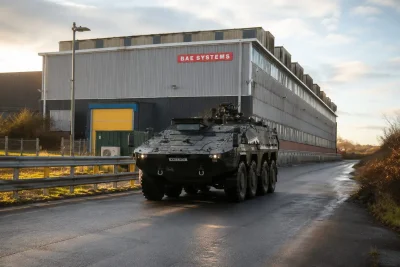
BAE Systems announced on Monday that its OneArc division has been awarded a significant seven-year contract by the Danish Army to modernize its military training software infrastructure. The agreement, which deepens the British defense contractor's involvement in simulation technology, includes the provision of the VBS4 platform, VBS Builder Edition, Blue IG, TerraTools Platinum, along with comprehensive software support and on-site training services. Financial specifics of the arrangement were not disclosed.
European Defense Landscape Intensifies
The contract award occurs against a backdrop of rapidly evolving security dynamics in Europe. Data released Monday by the Stockholm International Peace Research Institute (SIPRI) indicates that Europe has become the world's leading arms-importing region over the past five years. Analyst Mathew George noted that increased transfers of major weapon systems to European nations contributed to a nearly 10% rise in global arms transfers. Concurrently, NATO initiated extensive Arctic military exercises involving Denmark and thirteen other member states, underscoring an alliance-wide push to enhance operational readiness under pressing timelines.
BAE's Strategic Positioning and Financial Outlook
BAE Systems recently pointed to what it termed "a new era of defence spending," anticipating sustained growth following a record order backlog of £83.6 billion. The company has projected sales growth of 7% to 9% and an operating profit increase of 9% to 11% by 2026. Chief Executive Charles Woodburn stated that BAE is "well positioned" to deliver on both its legacy platform programs and emerging technological capabilities.
The Role of Synthetic Training
Synthetic training serves as a digital mission rehearsal, conducted before personnel engage in live field exercises. Rahul C. Thakkar, President of OneArc, described the Danish contract as "a major investment in future-ready synthetic training." He emphasized that the planned upgrade is designed to deliver enhanced realism, operational flexibility, and multi-domain integration while maintaining seamless interoperability with the Danish Army's existing simulation systems.
Colonel Thomas Øgendahl Knudsen, head of the land division at Denmark's defence procurement agency, acknowledged that "there is no substitute for training in the real world." However, he highlighted that virtual rehearsal offers substantial potential to conserve time and resources while simultaneously elevating training standards for both fundamental tasks and complex advanced operations.
Denmark's Defense Spending Commitment
Following a period of military austerity, Denmark is now channeling significant funds into its armed forces. Prime Minister Mette Frederiksen declared last year that the country would adopt a strategy of "buy, buy, buy" regarding military equipment. Government projections indicate defense spending will climb to 3.2% of gross domestic product (GDP) by 2025, a sharp increase from the 1.37% recorded in 2022.
Broader Industry Momentum
BAE Systems is not the only defense firm benefiting from this sectoral upswing. According to recent reports, Sweden's Saab raised its medium-term sales growth target in February, citing expanding defense budgets. Italy's Leonardo also reported that it had already surpassed its 2025 financial targets, attributing the performance to robust demand for military and security equipment.
While strategically important, the Danish contract is not expected to materially impact BAE's near-term financials, as no value was disclosed and the company's substantial backlog is dominated by larger-scale projects such as Typhoon fighter jets and Type 26 frigates. Analysts note that political cycles and fluctuating budgets can disrupt procurement schedules, even within a rapidly expanding broader market.
Nevertheless, the agreement signals BAE's growing leverage in the digital training domain as military budgets swell across the continent. Monday's NATO exercise, which emphasized readiness and civilian support roles, further highlighted the increasing strategic importance of training within alliance planning frameworks. The confluence of these events illustrates a sustained pivot toward enhanced military preparedness and technological investment in Europe.