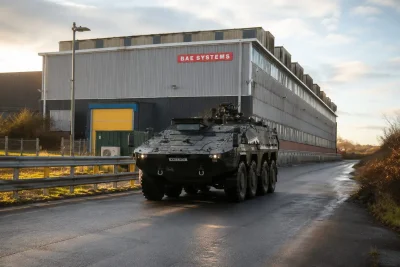
Shares of British defense contractor BAE Systems retreated in Thursday's session, closing at 2,150 pence. This decline marks a step back from recent peaks, occurring against a backdrop of renewed share buybacks by the company and a more optimistic price target from a key broker.
Buyback Activity and Broker Action
On March 4, BAE Systems purchased 97,895 of its own ordinary shares for cancellation, paying an average price of 2,237.12 pence per share. This transaction was part of the company's ongoing share repurchase program, bringing the total for the current phase to 18.3 million shares acquired.
Simultaneously, analysts at Berenberg adjusted their outlook on the stock. They raised their price target to 2,300 pence from 2,000 pence, citing the stock's strong performance, which has seen it climb 32% since the beginning of 2026. Despite this upward revision, the broker maintained its 'hold' rating on the shares, suggesting limited near-term upside from current levels.
Strong Fundamentals Amid the Pullback
The share price movement comes shortly after BAE reported record financial results for the full year 2025. The company posted a 12% increase in operating profit, with sales reaching a historic 30.66 billion pounds. Perhaps more significantly, its order backlog swelled to 83.6 billion pounds, providing substantial visibility for future revenue.
Looking ahead, management has provided robust guidance. The company is forecasting sales growth of 7% to 9% and operating profit growth of 9% to 11% for 2026. Chief Executive Charles Woodburn described the current environment as a "new era of defence spending," driven by geopolitical threats that have accelerated technological change.
Broader Market and Sector Pressures
The decline in BAE's share price was not isolated. The UK's FTSE 100 index fell to a three-week low on Thursday, pressured by rising bond yields and a spike in oil prices linked to ongoing Middle East tensions. These factors led investors to reassess the likelihood of an imminent interest rate cut from the Bank of England.
Within the defense sector, the rally that has propelled stocks like BAE higher this year showed signs of fatigue. Morgan Stanley, in a recent note, highlighted that European defense players, including BAE, Leonardo, Dassault Aviation, and Kongsberg, are well-positioned should U.S. military expenditures increase. The bank noted that approximately 45% of BAE's revenue originates in the United States, with close to 10% coming from the Gulf region.
Rivals Also in Focus
Other European defense contractors have also been active. Italy's Leonardo secured a 1 billion-pound contract from the UK on March 2 to manufacture 23 medium-lift military helicopters. Meanwhile, France's Thales reported that air-defense demand provided a boost to its earnings, with CEO Patrice Caine pointing to the latest Gulf crisis as evidence that nations are ramping up security budgets.
Risks on the Horizon
However, the path forward is not without potential obstacles. Analysts have flagged risks related to complex logistics, strained global supply chains, volatile energy prices, and disrupted air traffic in conflict zones. Thales' CEO Caine summed up the uncertainty bluntly, stating, "Nobody knows today how it will evolve." A slowdown in government orders or a rapid reversal of the conflict-driven rally in defense stocks could make further gains for BAE more challenging to achieve.
Despite the day's pullback, BAE Systems remains one of the top-performing European defense stocks year-to-date. The combination of a fortified balance sheet, a record order book, and a favorable geopolitical climate for defense spending underpins the long-term investment thesis, even as short-term market sentiment cools.