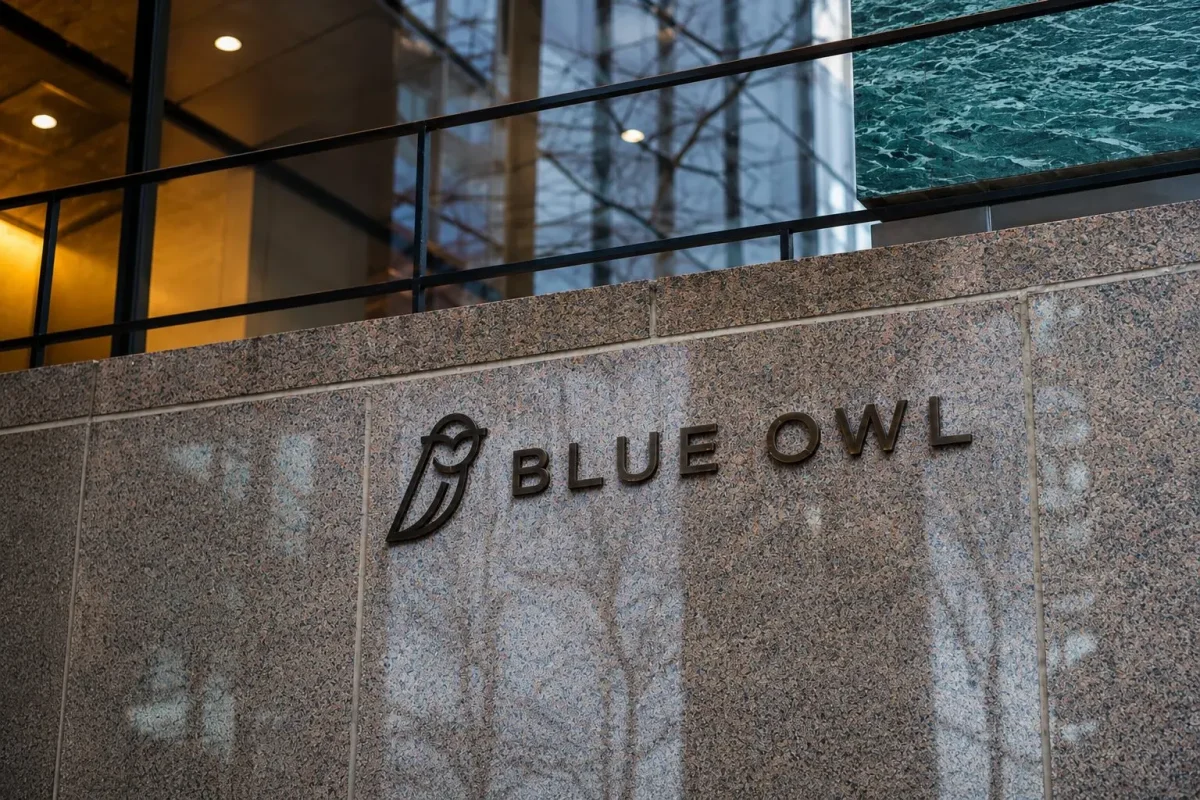
Blue Owl Capital Inc. shares experienced a significant surge on Thursday, rising approximately 5.5% to $10.225 in afternoon trading, as the broader private credit sector rebounded following Blackstone's recent decision to cap withdrawals at one of its major funds. This move helped alleviate investor concerns about widespread redemption risks across the alternative asset management industry.
Market Context and Sector Rebound
The rally in Blue Owl shares was part of a broader uptick in alternative-asset managers. Blackstone shares jumped 7.8%, while Ares Management climbed 5.5% and Apollo Global Management added 4.0%. The SPY ETF, which tracks the S&P 500, was up around 0.5%. Investors interpreted Blackstone's withdrawal cap as a measured response rather than a sign of systemic distress, providing a temporary reprieve for the sector.
Redemption Risks Still Loom
Redemption pressures remain the key risk for private credit funds. Blue Owl itself faced significant withdrawal requests in the first quarter. In April, Reuters reported that investors sought to pull $5.4 billion from two Blue Owl funds. One technology-focused fund received redemption requests for 40.7% of its shares, and a credit fund saw requests equal to 21.9% of its net asset value. Blue Owl set out to meet only 5% of these total requests, consistent with standard industry caps.
These funds operate under the business development company (BDC) structure, which are closed-end funds that invest in loans and equity stakes of smaller and mid-sized firms. Non-traded BDCs typically offer limited liquidity windows with caps on redemptions, making them susceptible to withdrawal pressures during market stress.
Blue Owl's Operational Focus
Blue Owl management has been emphasizing the firm's operating growth and diversification beyond direct lending. As of March 31, the company reported assets under management (AUM) of $314.9 billion, with $188.4 billion in fee-paying AUM. Fee-related earnings, which exclude certain accounting items and one-offs, came in at $393.6 million. Distributable earnings, a non-GAAP metric representing cash available for dividends or reinvestment, climbed to $292.5 million.
Co-CEOs Doug Ostrover and Marc Lipschultz stated in Blue Owl's first-quarter release that current market conditions favor firms with “patient capital and longer duration.” The company also declared a quarterly dividend of 23 cents per Class A share, paid in May.
Diversification Efforts
Blue Owl executives have been stressing that the firm is much larger than just direct lending. “Nearly 3/4 of equity capital” raised in the last year came from outside direct lending, Lipschultz told analysts in April. CFO Alan Kirshenbaum noted that Blue Owl was “working down” its software exposure and had not “seen no material negative developments” in its portfolios, according to Reuters.
Downside Risks and Analyst Views
Despite the positive sentiment, the risk of further redemption pressures remains. If second-quarter redemption numbers at Blue Owl's own funds or at rivals come in worse than traders expect, the recent rally could quickly reverse. TD Cowen analyst Bill Katz warned this week that negative updates could delay the sector's recovery until after Labor Day. Top asset-management executives have also cautioned that withdrawal requests could remain elevated throughout the year.
The downside scenario includes insufficient new buyers, increased redemption requests, and managers pulling back on cash deployments to preserve capital. Such conditions would squeeze a business model that relies on continuous fundraising and rising fee income. For now, Thursday's bounce represents a temporary reprieve rather than a definitive judgment on the sector's health.