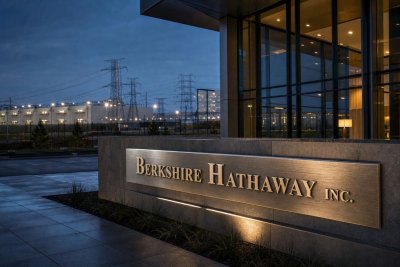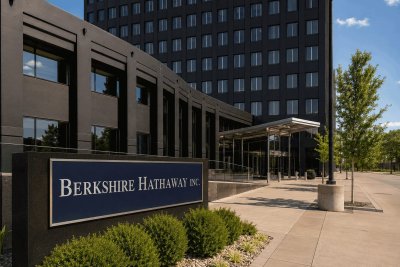
Berkshire Hathaway Inc. (NYSE: BRK.B) has delivered its clearest signal yet that Greg Abel, the conglomerate's designated successor, intends to put the company's massive cash reserves to more active use. The market's initial verdict arrives Monday, following Saturday's earnings release, which revealed a sharp acceleration in share repurchases and a notable shift toward net equity buying.
The headline numbers were strong, but the real story lies in capital allocation. Berkshire bought back approximately $7.8 billion of its own stock between April and July, a dramatic escalation from the first quarter's modest $235 million repurchase total. This represents a more than 14-fold increase in buyback activity, underscoring Abel's willingness to deploy capital when he believes shares are undervalued.
Equally significant, Berkshire ended its streak of 14 consecutive quarters as a net seller of stocks. During the second quarter, the company purchased nearly $20 billion more in equities than it sold, a clear departure from recent trends. This shift in strategy, combined with the buyback surge, reduced Berkshire's cash and Treasury-bill holdings by $15.5 billion over three months, though the company still retains a formidable $364.7 billion in reserves.
Earnings Breakdown
Operating profit for the second quarter rose 16% to $12.98 billion, up from $11.16 billion in the year-ago period, while net income more than doubled to $25.67 billion from $12.37 billion. The net income figure includes unrealized investment gains, which can be volatile, making operating earnings a more reliable gauge of underlying business performance.
Revenue increased 10% to $101.81 billion, driven by strength in several key segments. The manufacturing, service, and retailing operations posted the largest absolute gain, with operating earnings climbing 24.1% to $4.47 billion. Berkshire Hathaway Energy saw the highest growth rate, with earnings up 26.9% to $891 million. The BNSF railroad also performed well, with earnings rising 6.3% to $1.56 billion.
However, insurance operations were a drag. Insurance underwriting profit fell 13.1% to $1.73 billion, while insurance investment income declined 9.1% to $3.06 billion. Geico, Berkshire's auto insurer, saw pre-tax underwriting profit plummet 45% to $994 million, attributed to higher claims and marketing expenses.
Analyst Perspective
"It's a pretty healthy beat, and investors will be encouraged," said Cathy Seifert, an analyst at CFRA, who maintained a neutral rating on the stock. Seifert noted that Abel is gradually stepping up in his leadership role, a view echoed by many on Wall Street.
Despite the positive earnings, analysts remain cautious. FactSet's consensus rating was downgraded to Hold from Overweight three months ago, and the median price target of $481 sits below Friday's closing price of $521.80. The stock slipped 0.54% on Friday but still ended the week up 1.69%, and remains just 0.7% below its 52-week high.
Looking Ahead
The key question for investors is whether Abel's accelerated capital deployment can offset the ongoing pressures in the insurance business. Monday's trading will provide an initial answer, and later this week, Berkshire's quarterly portfolio filing is expected to offer more detail on its recent equity acquisitions.
Berkshire's buyback policy allows repurchases when the stock trades below a conservatively calculated intrinsic value, an assessment now made by Abel in consultation with Chairman Warren Buffett. The recent surge in buybacks suggests the company views its shares as undervalued at current levels.
While the earnings report was largely positive, Berkshire cautioned about significant macroeconomic and geopolitical risks, and noted that some consumer segments are experiencing weaker demand. The coming week will test whether investors see Abel's bold capital moves as a sign of strength or a response to challenges ahead.