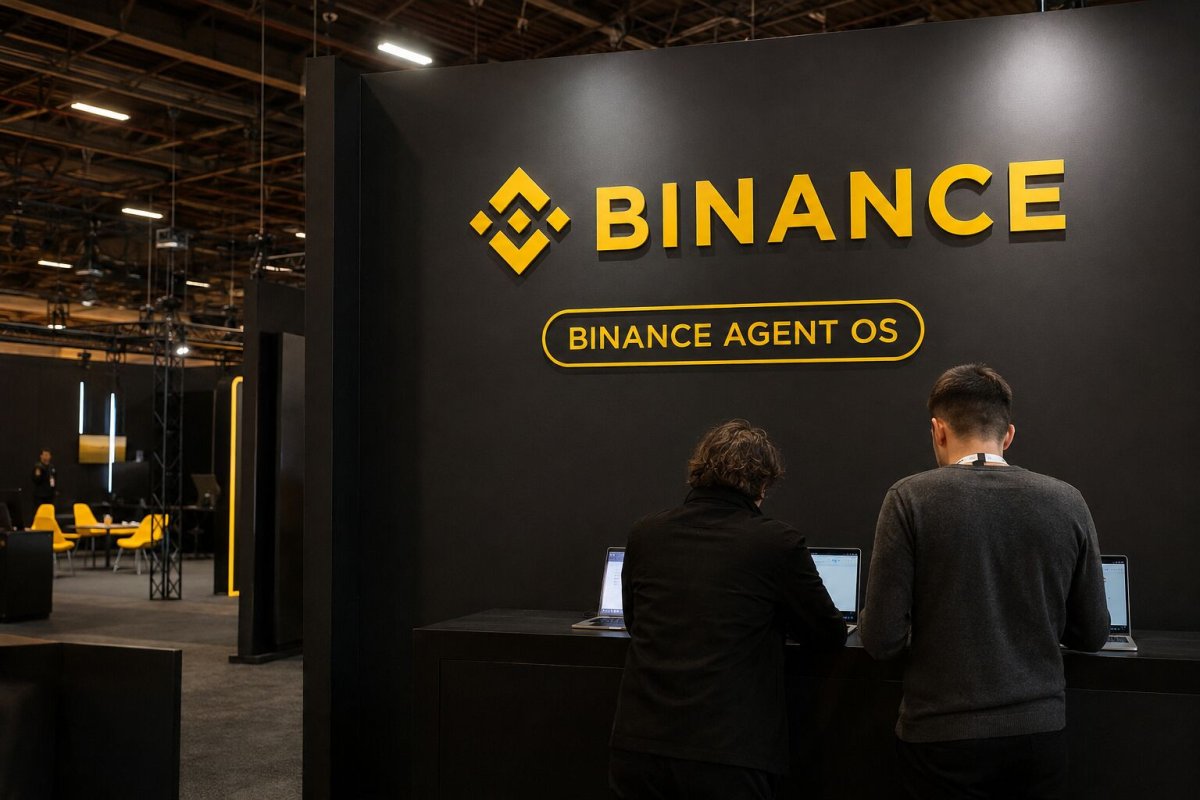
Binance, the world's largest cryptocurrency exchange by trading volume, has taken a significant step towards integrating artificial intelligence into its trading ecosystem. On September 2, 2026, the exchange launched Binance Agent OS, a platform that grants authorized AI agents direct access to trading infrastructure, including real-time market data and the ability to execute trades on behalf of users. This move positions Binance at the forefront of AI-driven trading, potentially reshaping how digital assets are traded.
The announcement was accompanied by a notable price movement in Binance's native token, BNB. As of 17:44 UTC on September 3, BNB was trading at $721.88, reflecting a 5.15% increase over the previous 24 hours. This uptick closely mirrored the performance of other major cryptocurrencies, with Bitcoin advancing 5.13% and Ether gaining 5.02% during the same period. The synchronized movement suggests that the rally was driven by broader market sentiment rather than specific news related to Binance's new offering.
What is Binance Agent OS?
Binance Agent OS is an access layer that allows users to deploy AI agents for trading on the exchange. These agents can view market data, including order books and price feeds, and submit orders on Spot, Futures, and Convert markets. The system is designed to provide reliable data, low-latency infrastructure, and standardized interfaces, as highlighted by Jeff Li, vice president of product at Binance. To ensure security and segregation, dedicated subaccounts keep agent funds and activities separate from the user's primary account.
Initial use cases are limited in scale and carefully selected by the company. In one instance, a user requested an agent to purchase BNB using USDT, with the agent subsequently confirming the suggested trade. Another user leveraged real-time order-book information to develop a Bitcoin trading strategy. These early examples demonstrate the potential of AI agents to automate and optimize trading strategies, but they also underscore the need for robust controls.
Market Context and Performance
The launch of Agent OS comes at a time when the cryptocurrency market is experiencing a broad-based upswing. BNB's 5.15% rise over 24 hours places it in line with Bitcoin and Ether, indicating that the move is part of a general market beta rather than a reaction to Binance's specific product. Trading data shows that BNB/USDT saw $111.13 million in rolling 24-hour turnover on Binance, accounting for approximately 920,600 trades.
Binance's dominant position in the exchange market is a key factor in the potential impact of Agent OS. According to TokenInsight, Binance accounted for 32.77% of all exchange volume in the first quarter of 2026, with OKX ranking second at 13.27%. This substantial market share means that any innovation by Binance could have far-reaching implications for the broader crypto trading landscape.
Controls and Risks
The introduction of AI agents raises important questions about risk management and regulatory oversight. Binance has established a framework where users set permissions, funding caps, and duration of access for their agents. The exchange receives the resulting orders but does not see the reasoning behind the agent's decisions. This design aims to balance automation with user control, but it also introduces potential risks.
Automation can lead to losses if agents make mistakes, if access is compromised, or if external data feeds are faulty. Additionally, adoption could be hindered by regional product restrictions and regulatory scrutiny. Binance has not yet disclosed details on Agent OS user numbers, trading volume, or fee income, which leaves a gap in assessing the product's early traction.
BNB continues to function as a utility token rather than an equity interest in Binance. It is used to cover BNB Chain transaction fees and plays a role in governance, while trading incentives from Binance establish an indirect connection. The token's price movement on launch day is a volatile indicator, but the next meaningful catalyst will be the release of product-level activity data.
Looking Ahead
As the cryptocurrency market evolves, the integration of AI agents into trading platforms could become a significant trend. Binance's move may prompt other exchanges to explore similar offerings, potentially increasing market efficiency but also raising new challenges for regulators. For now, the focus shifts to monitoring adoption and ensuring that the safeguards in place are effective in mitigating risks.
Investors and market participants will be watching closely for signs of sustained usage and measurable activity from Agent OS. While the launch has generated initial interest, the long-term impact will depend on how well the technology performs in real-world trading conditions and whether it can attract a meaningful user base without compromising security or regulatory compliance.