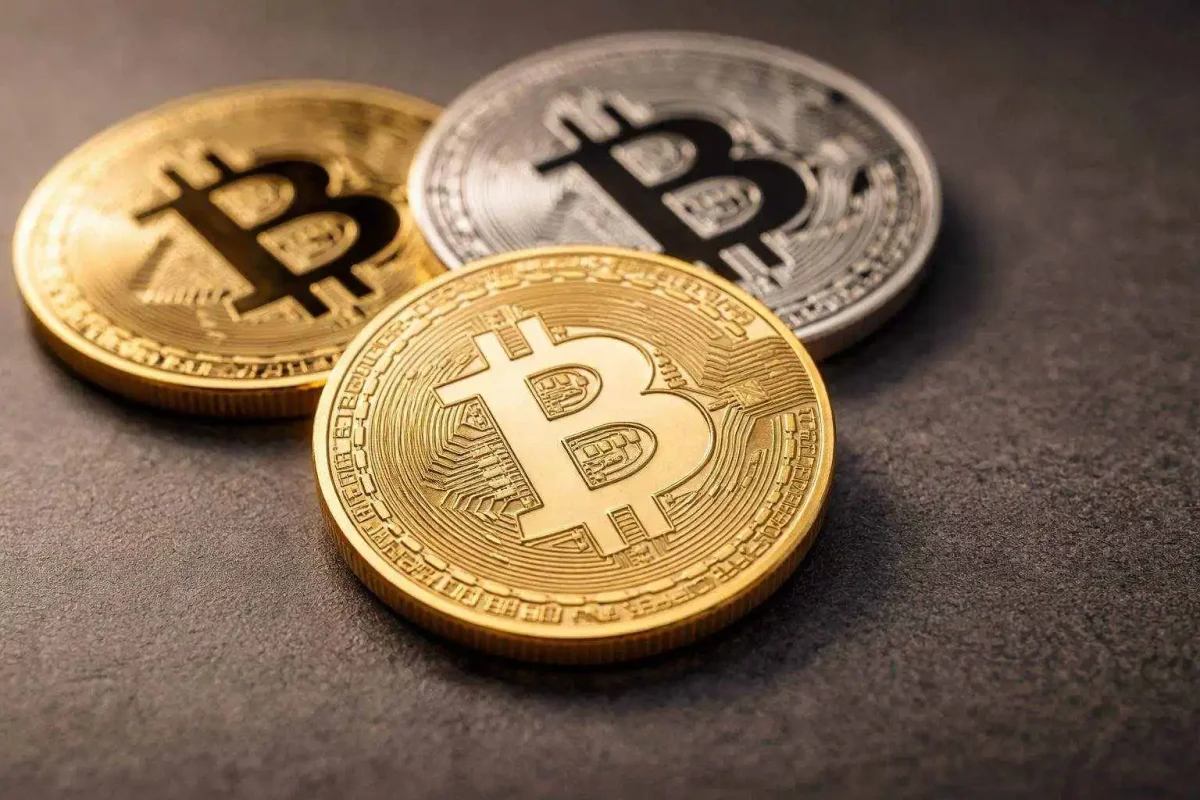
Bitcoin traded near $64,728 on July 30, 2026, up roughly 1.9% after briefly touching $65,040. Despite the modest gain, underlying demand from institutional investors appears to be softening, as evidenced by a sharp reversal in ETF flows and a persistent drag from the bond market.
ETF Flows Reverse Sharply
Data from Farside Investors reveals that between July 23 and July 29, net outflows from U.S. spot bitcoin ETFs wiped out 99% of the inflows recorded in the prior three sessions. A brief surge of $499.1 million in inflows from July 20-22 was completely reversed by $526.5 million in outflows over July 23-28. A small inflow of $32.1 million on July 29 did little to change the picture. The net result for the period July 23-29 was a loss of $494.4 million, leaving the month-to-date total at a modest $205.1 million through July 29.
Treasury Yields Outperform Bitcoin Carry
Since February, returns on three-month bitcoin futures have lagged behind those on two-year U.S. Treasury notes, eliminating a key incentive for market-neutral institutional investors who rely on the carry trade. The two-year yield stood at 4.223%, roughly 60 basis points above the midpoint of the Federal Reserve's target range. Glassnode noted that the only other comparable period was August 2022 to January 2023, which ended at the cycle low.
On-Chain and Volume Indicators Signal Caution
Spot trading volume denominated in bitcoin has fallen to its lowest level since 2019, and the combined volume of exchange deposits and withdrawals is among the least active in three years. Bitcoin's price remains within the $62,000–$68,000 cost-basis zone, with the short-term holder break-even point at $69,000. A move above $69,000 could relieve selling pressure, while a drop below $62,000 may test support.
Macro Backdrop: Inflation Eases, But Rate Hike Odds Rise
The Federal Reserve held rates at 3.50%–3.75% in its latest meeting, but futures pricing still implies a 64% chance of a hike in September. June headline PCE inflation eased to 3.7% year-over-year from 4.1% in May, and core PCE fell to 3.3%. However, second-quarter GDP grew at just 1.5% annualized, down from 2.1% in the prior quarter. The long end of the curve remains elevated, with the 30-year yield peaking at 5.2444%, its highest since mid-2007.
Analyst Perspectives
Andrei Grachev, managing partner at DWF Labs, described the environment as one of "tighter policy, less liquidity, more expensive carry." Can-Luca Köymen, investment strategist at Sygnum Bank, offered a more measured view, calling it "restrictive, not worsening." Both agree that for a sustained rebound, spot volume and ETF inflows need to recover. A break above $69,000 on heavy volume would be more significant, while a dip below $62,000 could accelerate losses in low-liquidity conditions.