BitMine Immersion Technologies Inc. (NYSE: BMNR) saw its shares climb 1.28% to $24.45 during early trading on Tuesday, August 25, 2026. Volume reached 10.2 million shares by 09:47 EDT, keeping the stock among the most actively traded issues on the exchange. The uptick came on the heels of the company's latest Ether treasury update, which revealed a striking alignment between its asset holdings and its market valuation.
According to the company's disclosure, BitMine reported gross holdings of $14.9 billion in crypto, cash, securities, and private investments. That figure nearly equals its $14.75 billion market capitalization at the current share price. The narrow gap underscores how sensitive the stock has become to fluctuations in the price of Ether, the second-largest cryptocurrency by market value.
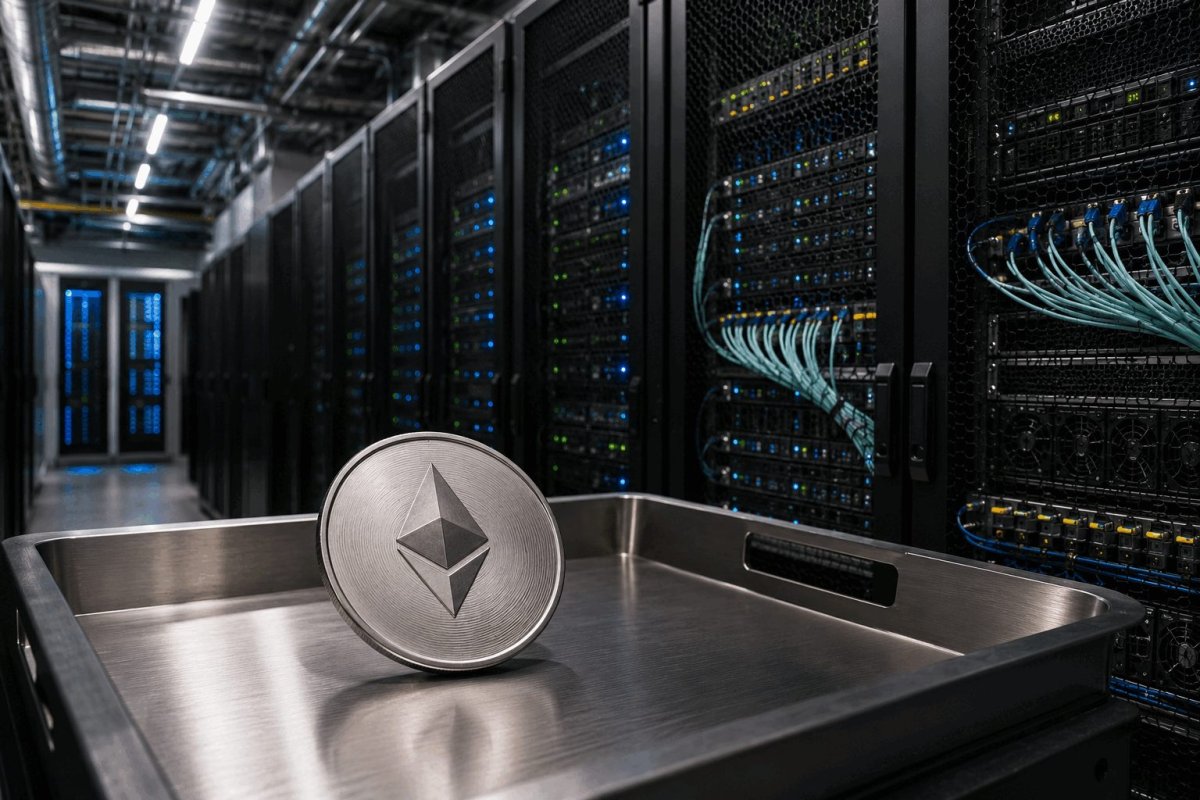
A 1% move in Ether's price would alter the value of BitMine's treasury by approximately $143 million, given its 5,847,611 tokens. The company valued Ether at $2,440 per token as of August 23, a 28.9% increase from the prior week's marker price of $1,893. This price appreciation drove most of the 30.7% weekly surge in total gross holdings, which rose from $11.4 billion to $14.9 billion. Ether holdings themselves increased only 0.6% during the period, indicating that market gains—not new purchases—were the primary catalyst.
Beyond the raw token count, BitMine's treasury includes $308 million in cash and marketable securities, up from $78 million the previous week—a 294.9% jump. The company also holds 210 Bitcoin, a $180 million stake in Beast Industries, and an $89 million position in Eightco Holdings Inc. (NASDAQ: ORBS). These diversified assets introduce valuation complexities beyond Ether alone.
Staking Revenue Adds a Second Stream
BitMine has staked 5,067,309 Ether, representing 86.7% of its total holdings. The seven-day annualized staking yield stands at 2.67%. Chairman Thomas Lee projected $330 million in annual staking revenue at the current scale, a figure that equates to roughly 2.2% of Tuesday's market value. However, this projection remains preliminary and is subject to fluctuations in token prices, validator uptime, reward rates, and network fees.
Lee noted that the company acquired 32,447 ETH over the past week, continuing a weekly buying pattern that began on June 30, 2025. This latest purchase, while meaningful in absolute terms, is relatively small compared to the $14.27 billion Ether position already on the books.
Analyst Sentiment and Share Dilution Concerns
Wall Street coverage of BitMine remains thin, with only three analysts providing ratings. The consensus recommendation is Strong Buy, with an average price target of $31.87, implying roughly 30% upside from Tuesday's early price. Targets range from $25 to $40. B. Riley Securities analyst Fedor Shabalin maintained a Buy rating but cut his target from $33 to $25 on July 16, 2026.
Share count is a growing concern. StockAnalysis lists 603.23 million shares outstanding, up 21.4% quarter over quarter. This dilution means gross holdings per listed share are approximately $24.70, before accounting for liabilities and preferred claims. The increasing share count could erode the per-share value of Ether holdings over time.
Market Structure and Risks
BitMine's equity now functions much like a leveraged Ether wrapper with a staking income component. The stock trades during limited market hours, while Ether trades around the clock, creating potential price dislocations. Additional risks include staking penalties, falling reward rates, or custody failures that could impair the projected income stream.
The next key signal for investors will not simply be the number of tokens acquired, but whether the Ether value per share can outpace new issuance. With the treasury nearly matching the market cap, the margin for error has narrowed considerably. Any significant Ether price decline could have outsized effects on the stock, while upside moves would be amplified in kind.
For now, BitMine remains a high-beta play on Ethereum's price trajectory, with staking revenue providing a modest secondary return. The company's ability to manage dilution and maintain its staking operations will be critical in determining whether the shares can deliver value to investors over the long term.