Intel Corporation (INTC) saw its shares climb in premarket trading on Thursday following a significant upgrade from Bank of America. The investment bank raised its rating on the chipmaker from Underperform to Buy and increased its price target to $135 from $96, signaling renewed confidence in the company's strategic pivot toward foundry services and its server CPU business.
The upgrade comes a day after Intel shares declined amid a broader selloff in technology stocks. On Wednesday, Intel closed at $107.04, down 0.82%, as the tech sector slipped into correction territory. However, Thursday's premarket activity reflected a shift in sentiment, with Intel joining other chip stocks like Nvidia and Micron in recovering some losses as investors sought bargains.
Foundry Ambitions and Customer Interest
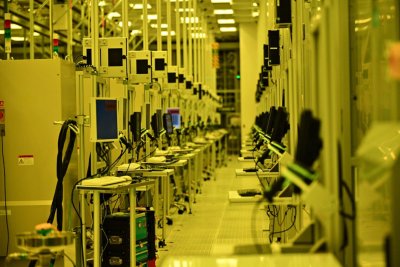
Bank of America's analyst team, led by Vivek Arya, highlighted that the upgrade was driven by increased visibility into Intel's foundry ambitions. The bank now estimates Intel's earnings per share could exceed $6 by 2030, up from a prior range of $3 to $4. This reassessment stems from potential revenue from both the server CPU segment and the foundry business, which involves manufacturing chips for external clients.
Recent reports have fueled optimism. According to Reuters, Alphabet's Google has placed an order for over 3 million TPUs (tensor processing units) from Intel for delivery in 2028. Additionally, Nvidia is reportedly evaluating Intel's technology for a multi-chip design. While neither Intel nor Nvidia have confirmed these discussions, the news underscores a growing interest in Intel as an alternative to Taiwan Semiconductor Manufacturing Co. (TSM), which is operating at capacity amid the AI boom.
Financial Performance and Risks
Intel's first-quarter results showed revenue of $13.6 billion, up 7% year-over-year, with its Data Center and AI segment contributing $5.1 billion, a 22% increase. The foundry division reported revenue of $5.4 billion, up 16%, but still posted an operating loss of approximately $2.44 billion. The company's second-quarter outlook projects revenue between $13.8 billion and $14.8 billion, with GAAP earnings per share of $0.08 and non-GAAP EPS of $0.20.
Despite the positive momentum, risks remain. Bank of America noted potential headwinds from competition with Arm-based chips and custom silicon, softening AI capital expenditure, and execution challenges in scaling advanced manufacturing. Intel's own SEC filings caution that heavy investments in research and production may not yield returns, and the company could delay or halt its 14A process node if demand fails to materialize.
Market Context and Implications
The upgrade from BofA represents a significant shift in sentiment, as the firm had previously been cautious on Intel. The new price target implies a potential upside of over 25% from Wednesday's close. However, the rally hinges on Intel's ability to convert customer interest into firm orders, particularly for its 14A node and other cutting-edge technologies.
Cadence Design Systems recently announced an expanded partnership with Intel Foundry to optimize the 14A process for high-performance computing and mobile chips, providing a tangible step forward. Still, Intel's path to profitability in foundry remains uncertain, and the stock's current valuation reflects expectations of a successful turnaround that may take years to materialize.
Investors are now watching for concrete customer commitments that could validate Intel's foundry strategy. Until then, the rally is built on potential rather than proven execution, leaving room for volatility as the company navigates this transformative period.