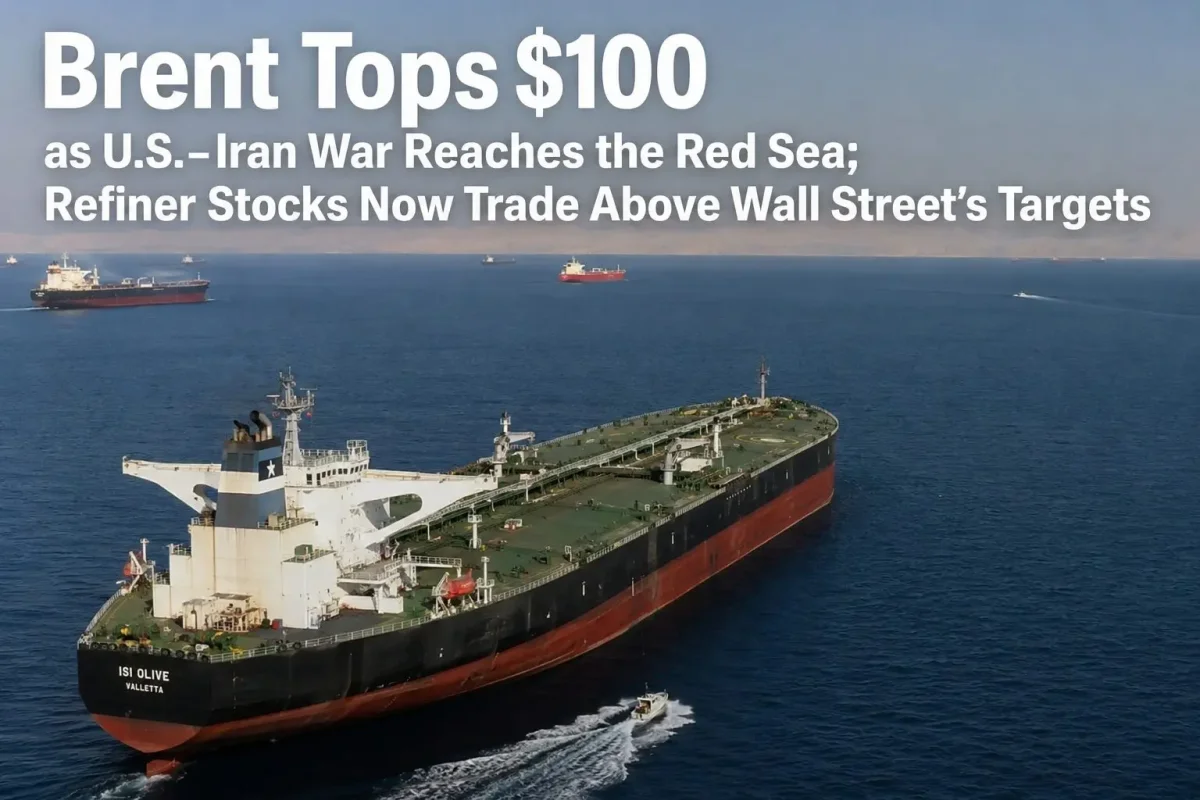
Brent crude oil retreated on Friday, closing at $96.78 per barrel, a decline of nearly 4% after reports emerged of China-backed peace efforts between the U.S. and Iran. Despite the pullback, the benchmark finished the week up approximately 10%, reflecting the persistent geopolitical tensions. West Texas Intermediate crude fell 3% to $89.31, but also posted a weekly gain of about 8%.
The drop on Friday followed a sharp surge earlier in the week, when Brent briefly topped $100 per barrel on Thursday. That spike came after Houthi rebels, backed by Tehran, claimed attacks on two Saudi oil tankers in the Red Sea and announced a maritime blockade against Saudi Arabia. The escalation has reignited fears of supply disruptions in a region critical to global oil flows.
U.S. refining margins, measured by the 3-2-1 crack spread, reached an unprecedented level above $70 per barrel, according to Bloomberg data. This metric, which tracks the profit from converting three barrels of crude into two barrels of gasoline and one of diesel, has nearly tripled from its January value. The surge in margins has disproportionately benefited independent refiners, whose shares have rallied well above consensus analyst price targets.
Marathon Petroleum (MPC) shares have nearly doubled in 2026, trading around $315, while the average analyst target stands at $255. Raymond James recently raised its target to $335, and Citigroup followed with a $303 target. Valero Energy (VLO) has also nearly doubled, with Goldman Sachs lifting its price target to $357 from $286. Phillips 66 (PSX) has gained 66% this year, with about a third of that advance occurring in the past month. The VanEck Oil Refiners ETF (CRAK) has risen 18.3% in July, on track for its best monthly performance since November 2020.
The broader energy sector now leads all S&P 500 sectors with a 29% year-to-date gain, surpassing technology. The S&P 500 itself is up about 11% total return. The rally has been fueled by tight supply conditions: U.S. gasoline inventories fell to 210.5 million barrels, the lowest seasonal level since 2012, while refineries operated at 96.2% capacity. Diesel prices at the pump average $5.11 per gallon, and the diesel crack spread has breached $91 per barrel this month.
Geopolitical risks continue to mount. The conflict, which began with U.S.-Israeli airstrikes on February 28, has expanded to include U.S. strikes on Iranian command centers and marine assets for 11 consecutive nights. Iran has retaliated by attacking a Kuwaiti power and desalination facility and a Malta-flagged vessel near Oman. The Strait of Hormuz, through which about 20% of global seaborne oil passes, saw crossings drop to just eight on July 17, the lowest in three weeks.
Looking ahead, the Federal Reserve's interest rate decision and EIA data are due Wednesday. Earnings from the second-largest U.S. refiner are expected Thursday, followed by reports from both major supermajors on Friday. The 10-year Treasury yield rose to 4.7% on Thursday, its highest since January 2025, as inflation concerns resurface. Gold futures climbed above $4,100, a two-week high, reflecting heightened demand for safe-haven assets.
Deutsche Bank's head of macro research, Jim Reid, noted that inflation has returned as a main concern for markets, with the U.S.-Iran strikes showing no signs of easing. The Nasdaq recorded its steepest loss in over a month amid the yield spike. Analysts are scrambling to update their price targets for refiners, but the underlying physical tightness—with about 2.1 million barrels per day of refining capacity still shut and Russian refined product shipments declining—suggests margins may remain elevated for some time.