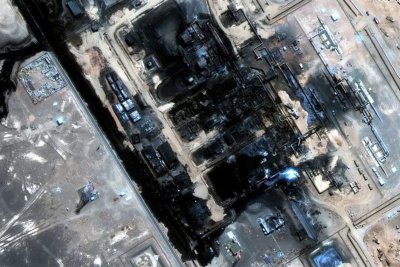
Global oil markets exhibited extreme divergence on Thursday, March 19, 2026, as geopolitical supply risks in the Middle East sent international benchmark Brent crude soaring, while U.S. benchmark West Texas Intermediate (WTI) remained subdued. Brent futures surged by nearly 7%, or $7.39, to settle at $114.77 per barrel after earlier touching $119.13. In stark contrast, WTI futures edged up a mere 0.3% to $96.59, briefly crossing the $100 mark to $100.02 before retreating.
Geopolitical Shockwaves Hit Key Infrastructure
The dramatic surge in Brent prices was triggered by a series of Iranian missile strikes targeting critical energy infrastructure across the Persian Gulf. QatarEnergy reported extensive damage at its primary liquefied natural gas (LNG) hub in Ras Laffan. In Saudi Arabia, defenses intercepted missiles aimed at Riyadh and a gas plant, while the SAMREF refinery in Yanbu, operated by Saudi Aramco, sustained direct hits. Kuwait's Mina al-Ahmadi refinery, operated by Kuwait Petroleum Corporation, was also struck. These attacks directly threaten seaborne crude flows and refining capacity, injecting a significant risk premium into Brent-linked barrels.
WTI Held Back by Ample Domestic Supply
The U.S. benchmark failed to keep pace with the global rally, pressured by robust domestic inventory data. The U.S. Energy Information Administration (EIA) reported a substantial build of 6.2 million barrels in commercial crude stocks for the previous week, bringing total inventories to 449.3 million barrels. Notably, stockpiles at the Cushing, Oklahoma storage hub—the delivery point for WTI futures—reached their highest level since August 2024. "This crude stock build would certainly be more bearish if there was not so much else going on," noted John Kilduff, partner at Again Capital, referencing the cross-border flows spurred by the conflict.
Paradoxically, U.S. crude exports surged by 1.47 million barrels per day to a rate of 4.9 million bpd last week, even as net imports declined. The widening price gap between the benchmarks is making American crude more attractive on the global market. Spot rates for Aframax tankers shipping crude from the U.S. Gulf Coast to Europe have jumped to approximately $6 million per voyage, up from $4.36 million before the conflict. Analysts note cargoes are already being booked for late March and early April shipments.
Strategic Reserves and Central Bank Caution
Adding downward pressure on WTI is a coordinated release from global emergency stockpiles. Member nations of the International Energy Agency (IEA), led by the United States, have authorized the release of 400 million barrels of oil. The U.S. contribution will be 172 million barrels from its Strategic Petroleum Reserve (SPR). This additional supply is weighing more directly on the U.S. benchmark, according to market analysts.
The oil price surge is reverberating through the broader economic landscape. The Federal Reserve held interest rates steady on Wednesday, maintaining its projection for just one quarter-point cut this year. Chair Jerome Powell stated it was too early to gauge the war's full economic impact. Comerica chief economist Bill Adams warned that the Fed would not "ride to the economy's rescue" if persistently high fuel prices continue to stoke inflation.
Market Outlook and Regional Developments
The market remains on high alert for further disruptions. "It is now hitting the plumbing of the global energy system," said Saxo Bank strategist Charu Chanana, arguing the conflict's impact has spilled beyond the battlefield. However, some supply offsets are emerging. Iraq has resumed crude exports from Kirkuk to Turkey at an initial rate of 250,000 barrels per day, and Libya's Sharara field is adjusting flows following a recent fire.
The current situation creates a fragile balance. If Gulf supply outages persist, the price disconnect could continue or even widen, especially if rising Cushing inventories drag WTI lower. The spread between Brent and WTI, now at its widest in 11 years, reflects a market pricing in acute regional shipping and infrastructure risk for waterborne crude, while U.S. supply remains comparatively insulated and abundant.