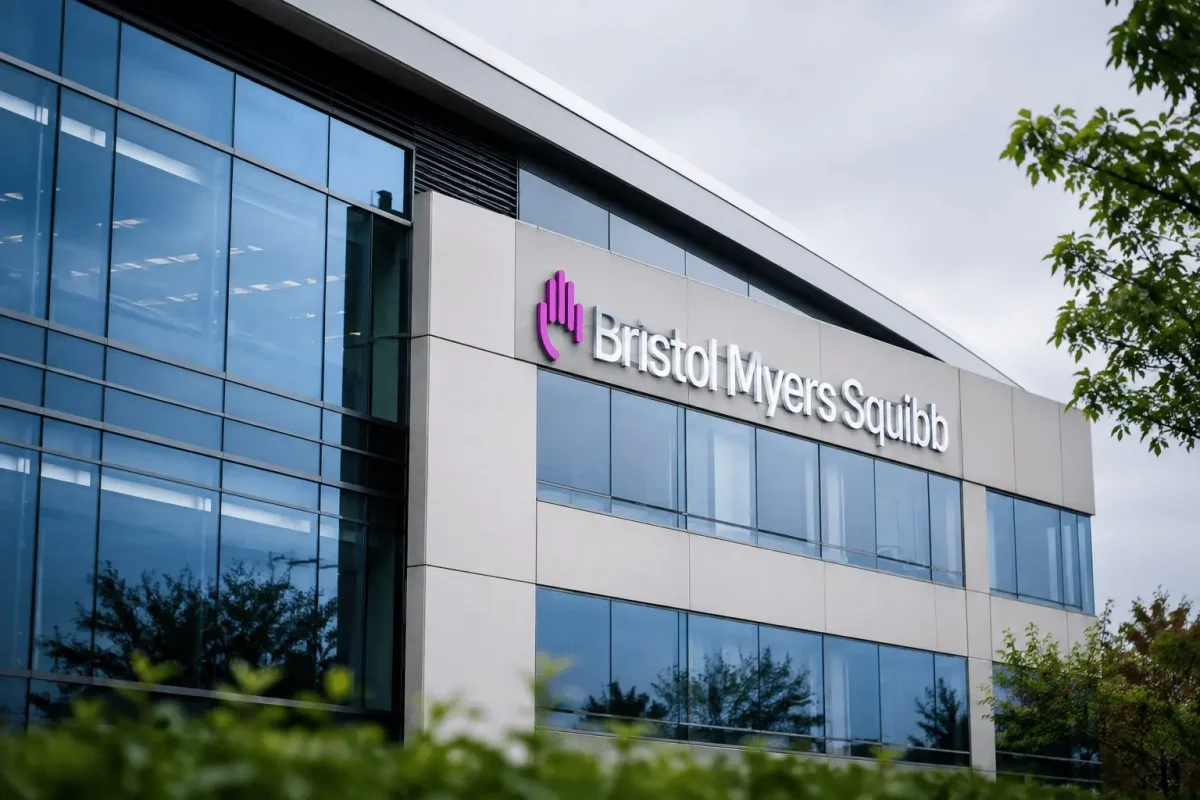
Bristol Myers Squibb (NYSE:BMY) enters Monday's trading session under a cloud of speculation following a Financial Times report that AstraZeneca (NASDAQ:AZN) has explored a potential merger valued near $400 billion. Both companies have declined to comment on the report, and Reuters could not independently verify the discussions. The news, which surfaced over the weekend, sets the stage for heightened volatility as investors weigh the strategic implications of a tie-up between two of the world's largest pharmaceutical firms.
The reported interest comes on the heels of a robust week for Bristol Myers. The stock closed Friday at $65.31, up 5.2% for the week, and just 0.5% shy of its 52-week high. The rally was fueled by a strong second-quarter earnings report that beat Wall Street expectations on nearly every key metric. Revenue came in at $12.97 billion, surpassing the LSEG consensus of $11.75 billion by $1.22 billion, or 10.4%. Adjusted earnings per share of $2.04 topped estimates by $0.45, or 28.3%.
The company's growth portfolio, which includes drugs like Opdivo Qvantig, Reblozyl, Camzyos, Breyanzi, and Opdualag, generated $7.56 billion in revenue, up 15% year-over-year and representing 58.3% of total sales. Legacy products, however, continued to face pressure, with Revlimid sales down 49% due to generic competition. Eliquis, co-marketed with Pfizer (NYSE:PFE), grew 22% and accounted for 34.5% of total revenue, underscoring the company's reliance on the anticoagulant.
Management seized the opportunity to raise its full-year guidance. The midpoint for revenue was lifted by 5.9% to a range of $49.0-$50.0 billion, implying 2.7% growth over 2025, a sharp reversal from the previous forecast of a 3.0% decline. Adjusted EPS guidance was also increased by 10.9% to a midpoint of $6.875. Based on Friday's closing price, the stock now trades at approximately 9.5 times projected 2026 adjusted earnings, down from 10.5 times under the prior guidance.
The potential merger, if it materializes, would create a pharmaceutical behemoth with a combined market value of $396.4 billion as of Friday's close. Bristol Myers accounts for 33.7% of that equity value and 45.7% of combined second-quarter revenue. AstraZeneca's sales are roughly 66% higher than Bristol Myers, making the exchange ratio a critical point of negotiation. The disparity in valuation multiples — Bristol Myers trades at 2.6 times annualized Q2 revenue versus AstraZeneca's 4.3 times — adds complexity to any deal structure.
For investors, the immediate focus is on Monday's opening bell. Will the companies confirm, deny, or remain silent on the talks? Regulatory filings could also emerge. The next scheduled catalyst for Bristol Myers is an FDA decision on iberdomide, expected by August 17. Until then, trading may be driven by estimate revisions and deal speculation.
Risks abound. The reported talks could be delayed, abandoned, or simply never confirmed. Any transaction would face significant regulatory, financing, integration, and political hurdles. Bristol Myers also contends with ongoing threats from generic competition, postponed trial data for milvexian and Cobenfy, and its heavy dependence on Eliquis. As the market opens, the valuation test begins.