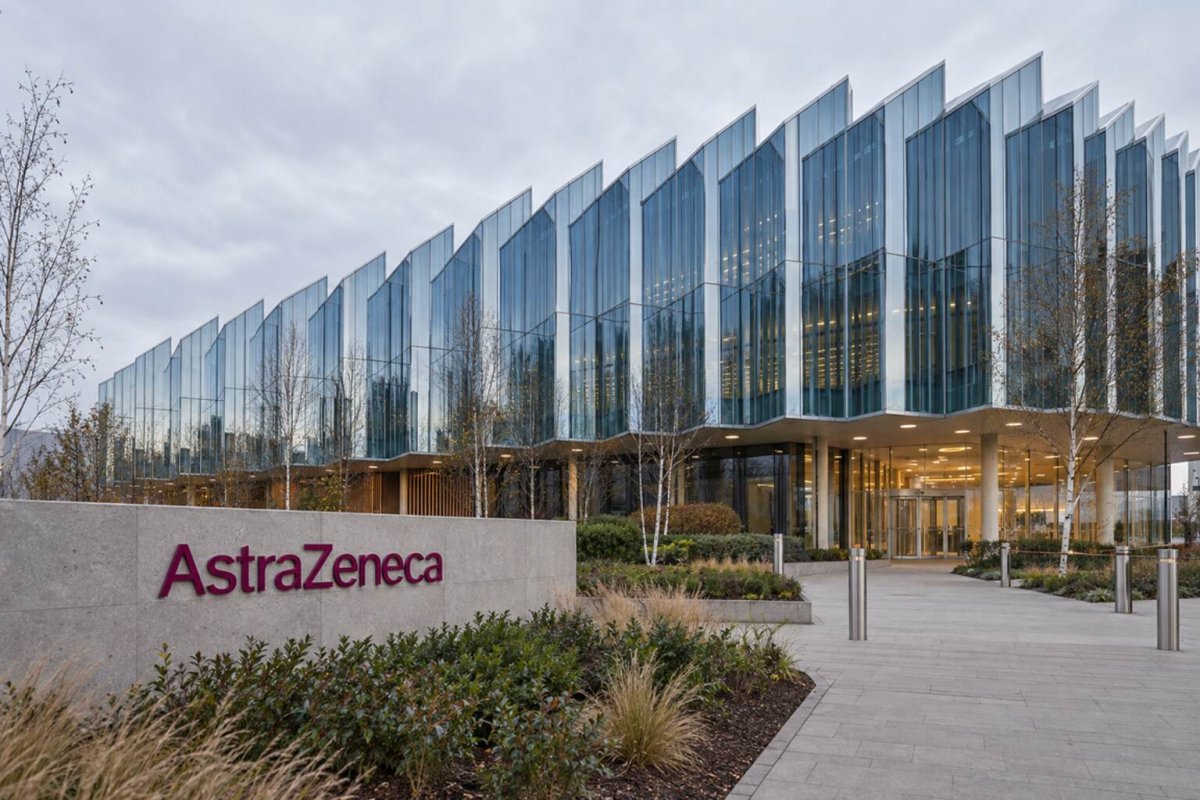
AstraZeneca's ambitious plan to position Etcamah (camizestrant) as a frontline therapy for a broad swath of breast cancer patients has hit a major roadblock. The company announced late Friday that its SERENA-4 Phase III trial failed to achieve a statistically significant improvement in progression-free survival (PFS) compared to standard therapy. While the setback is undeniable, it does not erase the drug's existing approval for a narrower, biomarker-defined patient group — a distinction that will likely shape investor sentiment in the coming sessions.
Trial Details and Results
The SERENA-4 study enrolled 1,371 adults with ER-positive, HER2-negative advanced breast cancer who had not received prior systemic treatment for advanced disease. Patients were randomized to receive either Etcamah plus Pfizer's palbociclib or the aromatase inhibitor anastrozole plus palbociclib. AstraZeneca reported a numerical improvement in investigator-assessed PFS for the Etcamah arm, but the difference did not reach statistical significance. The safety profile showed no new concerns, according to the company.
However, the company did not disclose key data points such as the hazard ratio, confidence intervals, subgroup analyses, or overall survival results. These omissions leave investors without a clear picture of the magnitude of the miss, making it difficult to quantify the lost commercial opportunity. The absence of these details also raises questions about the robustness of the numerical improvement and whether any specific patient subgroups might still benefit.
What Remains Intact: The ESR1 Mutation Niche
The failure of SERENA-4 does not impact the separate approval Etcamah received in September 2024. The U.S. Food and Drug Administration granted accelerated approval for Etcamah in combination with a CDK4/6 inhibitor for patients with ESR1-mutant, ER-positive, HER2-negative advanced breast cancer, as detected by the Guardant360 CDx blood test. This approval was based on the SERENA-6 study, which demonstrated a 56% reduction in the risk of progression or death when patients with emergent ESR1 mutations switched to Etcamah from an aromatase inhibitor before radiographic progression. Similar approvals have been granted in the European Union, Japan, and other markets.
The key difference: SERENA-6 targeted a specific, mutation-driven patient population, whereas SERENA-4 aimed to position Etcamah as an upfront therapy for all first-line patients, regardless of ESR1 status. The failure of SERENA-4 means that Etcamah's commercial success will now rely heavily on the widespread adoption of routine ESR1 testing and clinicians' willingness to switch patients mid-treatment based on blood-based biomarker detection.
Market Reaction and Share Impact
AstraZeneca disclosed the SERENA-4 results at 9:15 p.m. BST Friday (4:15 p.m. New York time), after the U.S. market close. The company's NYSE-listed ADR (ticker: AZN) had already closed at $160.17, down 2.79% on the day, but that decline was not a reaction to the trial news. The first clean market response will come in the next U.S. trading session, where investors will likely reassess the company's oncology pipeline and Etcamah's revenue potential.
The miss is particularly significant because it narrows Etcamah's addressable market, which was a key growth driver for AstraZeneca's oncology franchise. The company had high hopes for Etcamah to become a standard first-line therapy, but now it must rely on the biomarker-selected niche, which is smaller but still clinically meaningful.
Impact on AstraZeneca's Broader Thesis
AstraZeneca is a diversified pharmaceutical giant, and one failed trial is unlikely to derail its overall growth story. The company reported $30.7 billion in first-half 2026 revenue, with oncology contributing $14.1 billion (46% of total) and growing 15% at constant exchange rates. Management also highlighted 183 pipeline projects, including 21 new molecular entities in late-stage development, while reaffirming full-year guidance for mid-to-high-single-digit revenue growth and low-double-digit core EPS growth at constant currencies.
This diversification provides a buffer against a severe re-rating. However, the SERENA-4 failure raises concerns about Etcamah's efficacy in unselected patients and increases the evidence bar for two other Phase III studies, CAMBRIA-1 and CAMBRIA-2, which are evaluating Etcamah in earlier-stage breast cancer. These trials are part of a development program involving approximately 10,000 patients, and their outcomes will be critical to determining Etcamah's ultimate commercial potential.
Key Data Points to Watch
Investors will be watching for three pieces of evidence that could alter the initial judgment on Etcamah:
- Complete SERENA-4 data: The release of the hazard ratio, confidence intervals, and any ESR1-defined subgroup effects will provide clarity on whether there is a subset of patients who might still benefit.
- Early Etcamah uptake: The rate at which clinicians adopt blood-based ESR1 testing and prescribe Etcamah under the approved label will indicate real-world demand.
- CAMBRIA-1 and CAMBRIA-2 readouts: These trials in earlier breast cancer settings could be more consequential than the failed all-comer expansion, as they address a larger patient population and potentially longer treatment durations.
Until those data emerge, the prudent investor conclusion is more nuanced than either “the drug failed” or “nothing changed.” AstraZeneca retains an approved, mutation-guided first-line strategy backed by positive Phase III evidence, but it has lost the argument that Etcamah should be used upfront for a much broader group of patients. The next chapter will be defined by how well the company can execute on the biomarker strategy and whether its earlier-stage trials can restore confidence in the drug's broader potential.