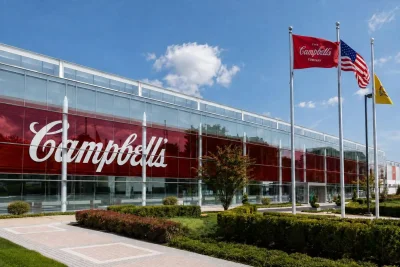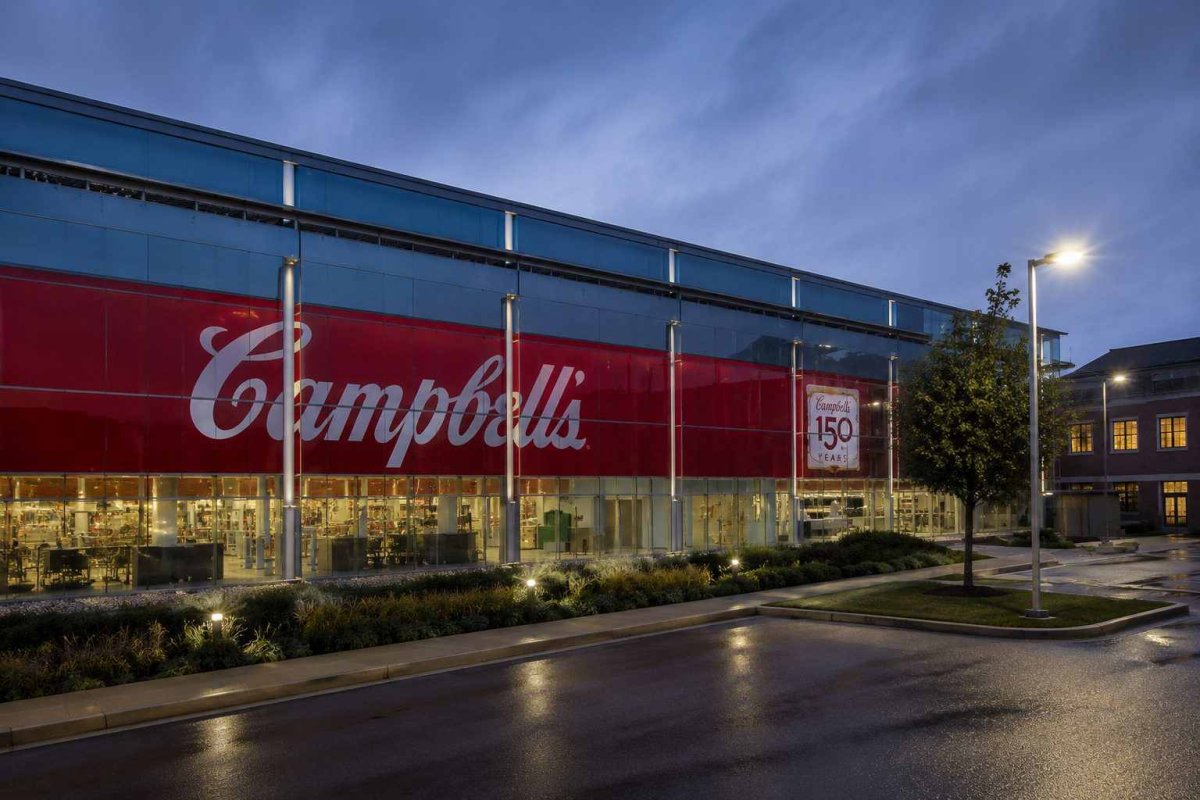
Campbell's Company (NASDAQ: CPB) is bracing for a significant index rebalance as it prepares to exit the S&P 500 and join the S&P SmallCap 600 on Monday, June 22. The stock has already felt the pressure, dropping approximately 7.3% over the past four sessions to close at $21.15 on Thursday. Trading volume surged to 62.1 million shares during the index-rebalance window, reflecting the forced selling by funds tracking the large-cap benchmark.
Index Mechanics and Market Reaction
The move, announced by S&P Dow Jones Indices, is a mechanical reclassification that will see Campbell's replaced in the S&P 500 by Marvell Technology and Flex. While the shift is routine, it introduces a liquidity shake-up: funds tied to the S&P 500 will offload CPB shares, but demand from small-cap trackers may not fully absorb the selling pressure. The market is closely watching whether the stock can hold above the $20.84–$20.95 support zone from the June 17-18 lows, with the next downside target at $19.56.
Valuation and Dividend Yield
At the current price, Campbell's trades at a forward adjusted earnings multiple of 9.4 to 9.8 times its FY2026 EPS guidance of $2.15 to $2.25. The stock offers an attractive annualized dividend yield of 7.4%, based on the latest quarterly payout of $0.39 per share. However, this yield comes with a caveat: the company's guidance implies adjusted EPS will decline 23% to 26% compared to FY2025, raising questions about dividend sustainability if earnings continue to deteriorate.
Operational Challenges and Innovation Push
Campbell's core business has been under pressure. In fiscal Q3, net sales fell 4% to $2.37 billion, adjusted EBIT dropped 24% to $274 million, and adjusted EPS plunged 32% to $0.50. CEO Mick Beekhuizen attributed the weakness to "top-line softness and inflation-driven margin headwinds," though he noted steady demand for at-home cooking staples like Campbell's, Rao's, and Swanson. The Meals & Beverages segment saw organic sales decline 4%, with U.S. soup volumes off 8%, while Snacks reported a 4% drop in organic sales and a 32% slump in segment operating earnings.
To rejuvenate its product lineup, Campbell's is launching its first gluten-free condensed chicken noodle soup in partnership with chickpea-pasta brand Banza, priced at $1.99 per can. The company estimates that about 30% of Americans seek gluten-free options, but the market views this as a test of relevance rather than a quick earnings fix.
Leadership Changes and Cost-Cutting
On June 17, Campbell's announced leadership changes, appointing Melissa Nippert as chief transformation officer and Beth Jolly as chief communications officer, as two senior executives prepare to retire at the end of the fiscal year. The company has already cut $200 million in costs toward its $375 million fiscal 2028 goal and generated $839 million in operating cash flow over the first nine months of the year.
Outlook and Risks
Campbell's maintained its annual guidance after an earlier cut, but CFO Todd Cunfer noted that the low end is "probably more realistic." Headwinds include private-label competition, shifting consumer preferences tied to GLP-1 drugs, and higher logistics costs due to Middle East tensions. Bears argue that Monday's rebalance could be a technical setback rather than a reset, with the dividend yield potentially rising for the wrong reasons if earnings visibility weakens.
The bull case hinges on the stock holding above the $20 level after the index cut, supported by small-cap buyers stepping in. If successful, Campbell's next move will depend on operational execution rather than index mechanics.
Disclaimer: This article is for informational purposes only and does not constitute investment advice. Investors should conduct their own research and consult a qualified financial advisor before making any trading decisions.