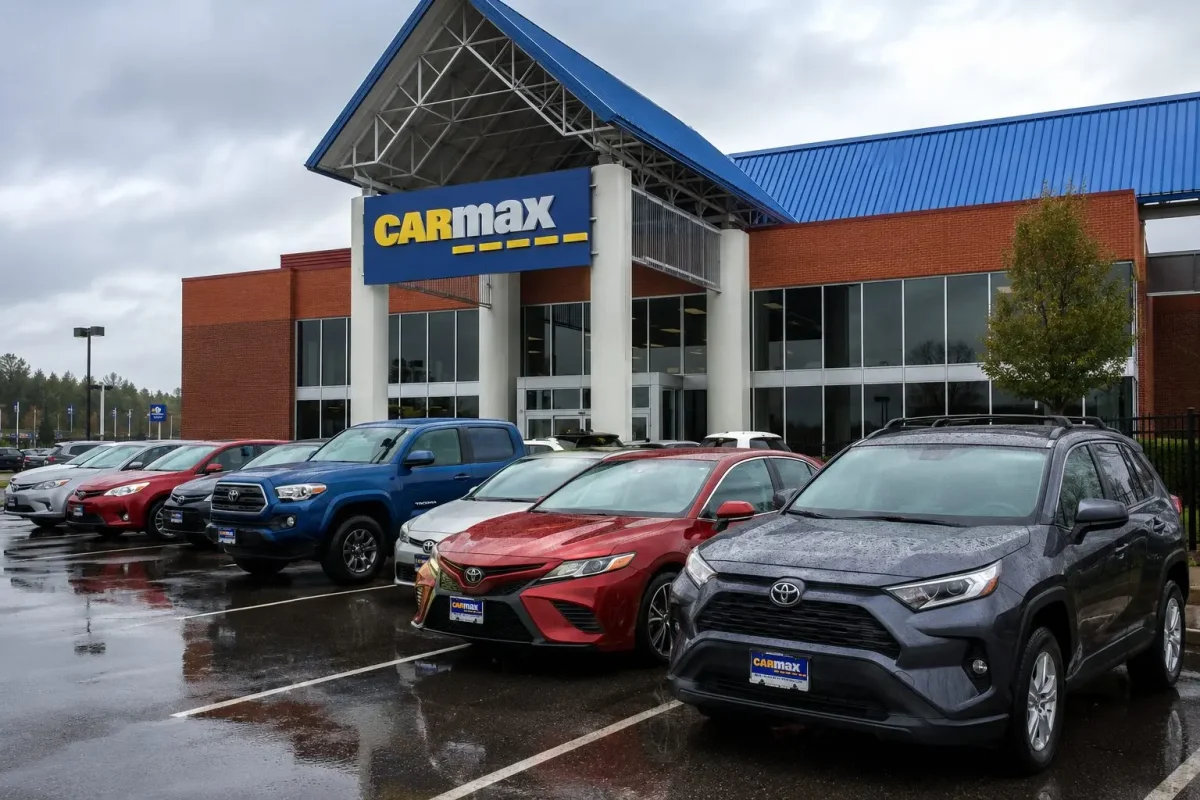
CarMax (KMX) reported fiscal first-quarter revenue of $8.01 billion, surpassing LSEG consensus estimates of $7.4 billion, driven by higher average used-car prices and robust wholesale demand. However, the earnings beat failed to overshadow persistent margin pressures, as retail gross profit per unit fell sharply from $2,407 in the prior-year period to $2,177.
The used-car giant has continued to implement price reductions in an effort to stimulate sales, a tactic that boosted unit volumes but compressed per-vehicle profitability. The company sold 392,357 total retail and wholesale units in the quarter, up 3.3% year-over-year, with wholesale units climbing 8.4%. Comparable-store used-unit sales, however, slipped 0.8%, signaling that the price cuts have not yet fully offset consumer headwinds.
Shares of CarMax gained more than 5% in premarket trading on Wednesday before settling near $52.11, close to Tuesday's close. The stock remains under pressure as investors weigh the company's ability to restore unit growth without further eroding margins. New CEO Keith Barr, who took the helm in March, outlined a strategy focused on tighter pricing, enhanced digital and in-store experiences, higher profit per sale, and cost reduction. Barr stated that CarMax has a "clear strategy" and "everything it needs to thrive," with more details expected during a strategy update in the fall.
Net earnings for the quarter came in at $185.6 million, or $1.31 per diluted share, down from $210.4 million, or $1.38 per share, a year earlier. The decline reflects the impact of reduced retail margins and ongoing affordability challenges for used-car buyers, who continue to face elevated borrowing costs.
Average retail prices rose approximately $1,200, or 4.5%, to $27,288, while wholesale average prices gained 5.1%. These increases provided a boost to top-line revenue, but analysts caution that shares could be at risk if consumers push back against higher prices or if lenders tighten credit conditions.
Cost-cutting measures helped offset some of the margin pressure. Selling, general and administrative expenses fell 3.7% to $635.2 million, and CarMax remains on track to achieve $200 million in planned exit-rate savings by the end of fiscal 2027. The company did not repurchase any shares during the quarter, leaving $1.31 billion remaining on its buyback authorization.
Competition in the used-car space is intensifying, with Carvana moving into new-car franchises through Stellantis brands, and activist investor Starboard Value increasing pressure on CarMax. Starboard has accumulated approximately $350 million in CarMax shares and is urging the company to accelerate digital sales, reduce costs, and sharpen pricing strategies.
Despite the revenue beat, analyst sentiment remains cautious. Benzinga's ratings tracker shows a neutral consensus, with recent updates from Truist Securities, Barclays, and JPMorgan all carrying average price targets below current trading levels. The key risk for CarMax is that continued price reductions to defend market share could further squeeze retail margins, while auto-loan credit costs and affordability challenges persist. A revenue beat is notable, but a genuine turnaround hinges on growing volume without sacrificing the spread.