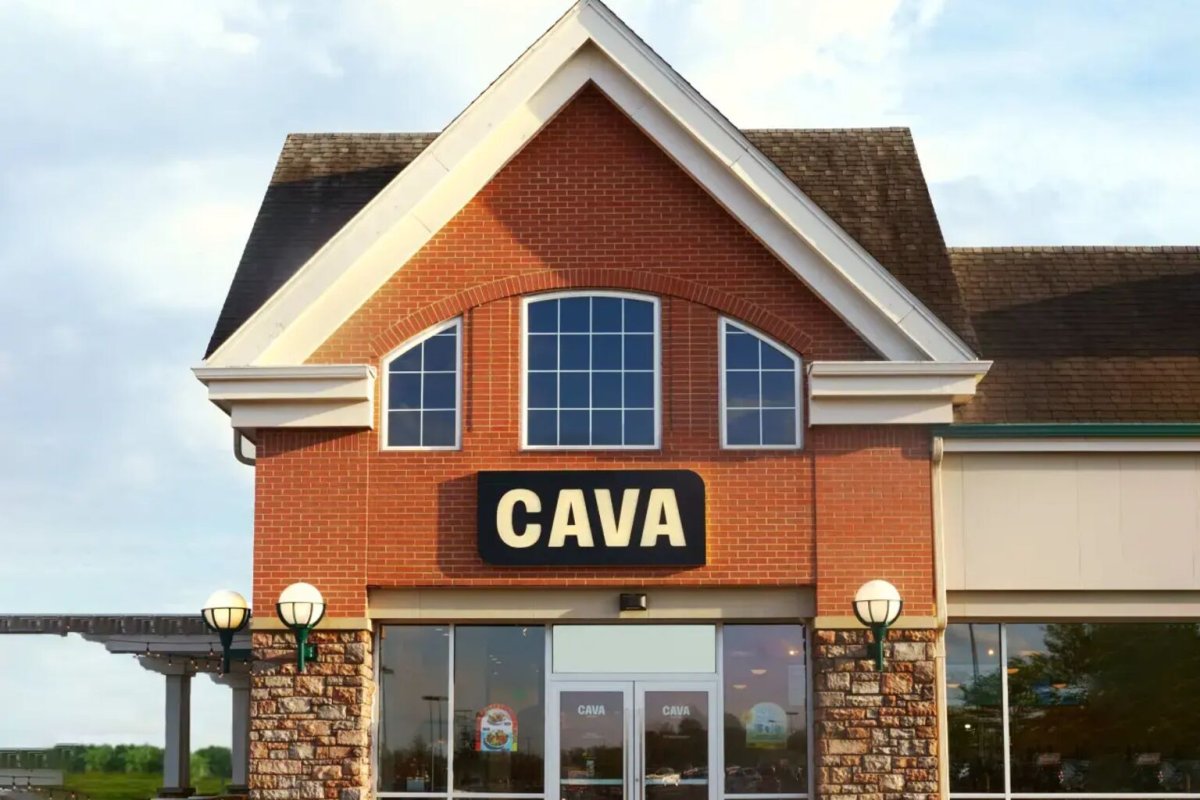
Seaport Research has taken a contrarian stance in the restaurant sector, making CAVA Group (CAVA) its sole Buy recommendation among five major fast-food chains. The brokerage set a price target of $58 per share, a move that comes after CAVA's stock tumbled 8.9% on Tuesday, closing at $49.99. The call is rooted in a key operational differentiator: CAVA continues to attract customers even as the broader industry faces declining foot traffic.
In a report published Wednesday, Seaport initiated coverage on CAVA with a Buy rating while assigning Neutral ratings to Wendy's (WEN), Chipotle Mexican Grill (CMG), Starbucks (SBUX), and McDonald's (MCD). The cautious outlook for the group is based on a 2.4% year-over-year drop in restaurant traffic during August, compounded by headwinds from elevated fuel prices, persistent inflation, and rising bond yields.
At 7:35 a.m. ET Wednesday, CAVA shares were trading near $50.55 in premarket activity. From that level, the $58 target implies a potential upside of approximately 14.7%. However, it's important to note that the stock remains about 20% below its August 11 close, suggesting that the recent selloff has reset valuations but the operating story remains intact.
Traffic Growth: The Bull Case
The bullish thesis hinges on CAVA's ability to grow customer visits. In the 12 weeks ending July 12, the company reported a 9.0% increase in same-restaurant sales, driven by 5.3% guest traffic growth and a 3.7% contribution from price and product mix. Revenue surged 31.3% to $365.4 million, supported by the opening of 17 new restaurants, bringing the total to 476 by quarter-end.
This 5.3% traffic gain is the clearest evidence that CAVA is not merely relying on higher menu prices to drive growth. It also underscores the strength of its new-unit economics: average unit volume climbed to $3.09 million from $2.94 million a year earlier, while the restaurant count expanded by 19.6% year-over-year.
Margin Pressure: The Counterweight
However, the same report reveals a counterbalancing factor. Restaurant-level profit margin contracted by 60 basis points to 25.7%, even though restaurant-level profit dollars rose 28.1% to $93.8 million. Management attributed the margin decline to the launch of the Pomegranate Glazed Salmon, increased third-party delivery mix, and wage investments. In other words, while traffic is strong, scaling the menu and labor base comes with costs.
Looking ahead, CAVA's full-year guidance is more conservative than its latest quarterly performance. The company reaffirmed its outlook for 4.5% to 6.5% same-restaurant sales growth, 75 to 77 net new openings, a restaurant-level margin between 23.7% and 24.3%, and adjusted EBITDA of $181 million to $191 million. This guidance leaves room for traffic to cool and for new-store costs to weigh on consolidated results.
What to Watch
The next quarterly report will be crucial in determining whether the $58 price target is justified. If CAVA's traffic growth converges with the industry's decline, the analyst's key differentiating factor would evaporate. Conversely, sustained visit growth alongside a stable margin would support the view that Tuesday's selloff was an overreaction, leaving the operating story intact.
Investors will be watching closely to see if CAVA can maintain its momentum in a challenging environment. The company's ability to grow traffic while managing costs will be the litmus test for the bull case.