Starbucks (SBUX) shares experienced a 2.4% decline on Tuesday, closing at $102.01, as investors weighed the potential impact of the company's upcoming Snoopy-themed merchandise launch. The limited-edition collection, set to debut on September 15, has generated significant buzz, but the key question remains: can a $39.95 cup meaningfully influence store traffic and sales, or is it merely a drop in the bucket?
The immediate answer is that the cup itself will not alter the company's quarterly financials. However, the more critical signal for investors lies in whether the Peanuts collaboration can drive customers into stores and convert that foot traffic into beverage and food orders. This is particularly important as Starbucks' turnaround strategy is being evaluated based on transaction growth and operating leverage, not on a single week of licensed merchandise sales.
What the Snoopy Collection Entails
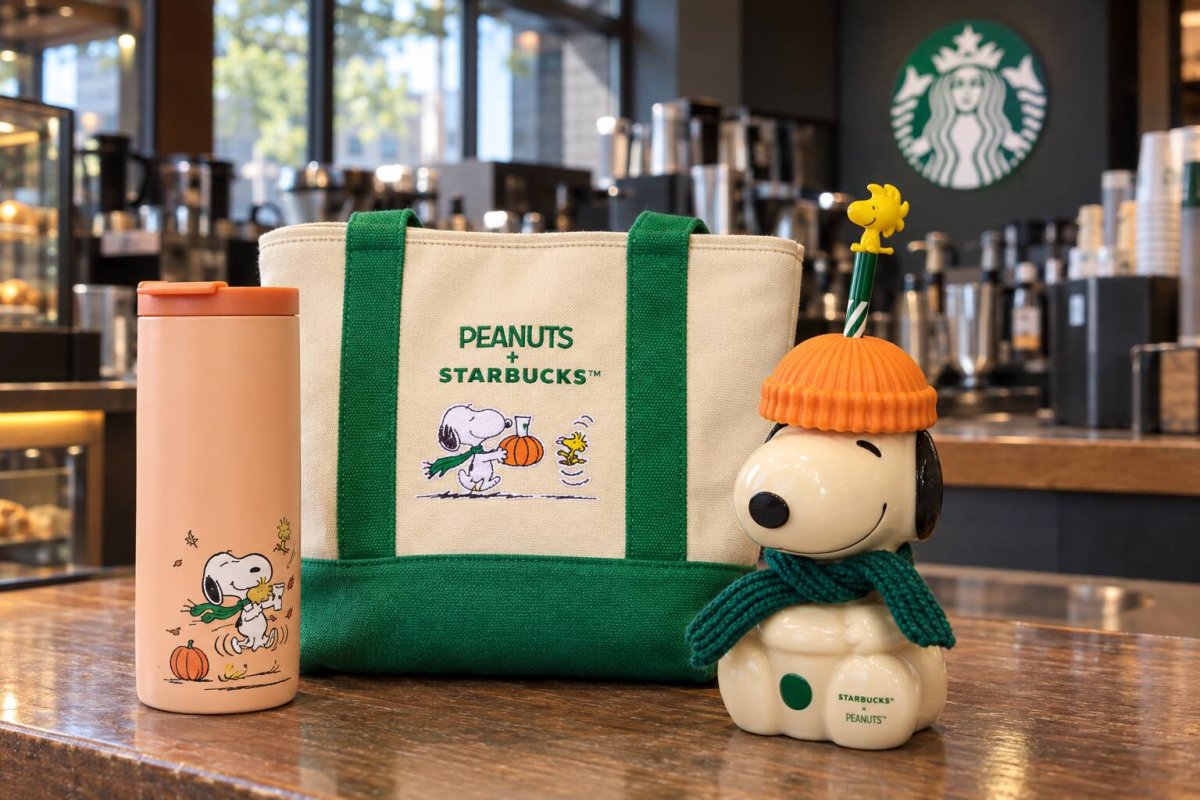
Starbucks has announced a 10-item collection inspired by the 60th anniversary of "It's the Great Pumpkin, Charlie Brown." The flagship item is a Snoopy glass cold cup priced at $39.95, with a two-per-customer limit to manage demand. Other items include an enamel pin set at $14.95 and a Snoopy plush at $34.95. The collection will be available in participating stores across the United States, Canada, Latin America, the Caribbean, Europe, the Middle East, Africa, and Asia-Pacific, while supplies last.
The combination of global distribution, intentional scarcity, and a beloved character makes this launch well-suited for social media virality. However, a rapid sellout could look impressive online without translating into significant financial gains. To put it in perspective, even if one million lead cups were sold at full retail price, that would generate roughly $40 million in gross retail sales—less than 0.5% of Starbucks' $9.3 billion in consolidated revenue from its latest quarter. This figure is an illustration, not a company forecast, as Starbucks has not disclosed inventory or expected merchandise revenue for this collaboration.
The Real Test: Transaction Growth
The financial impact becomes more intriguing when considering the potential for increased transactions. In the fiscal third quarter, North American comparable sales rose 8.1%, driven by a 4.5% increase in transactions and a 3.5% increase in average ticket. North American revenue reached $7.40 billion, with segment operating margin improving 30 basis points to 13.6%. These numbers set a high bar for the upcoming quarter.
Management expects U.S. comparable sales to rise at least 6.5% in the fiscal fourth quarter. A collectible that encourages customers to add a drink or food item could support both traffic and ticket size. Conversely, a customer who only purchases the cup—or leaves frustrated due to a sellout—does little to advance the turnaround narrative.
Starbucks has seen similar merchandise-driven traffic spikes before. The viral glass Bearista cup accompanied a fiscal first quarter where U.S. same-store sales increased 4% and transactions rose 3%, according to the Associated Press. However, that period also benefited from holiday beverages, staffing improvements, and store changes, making it difficult to isolate the impact of the merchandise alone.
Valuation and Expectations
At Tuesday's closing price of $102.01, Starbucks trades at roughly 39 times the midpoint of its fiscal 2026 non-GAAP earnings-per-share guidance of $2.55 to $2.65. This valuation is not built around souvenir cups. Instead, it reflects expectations that the "Back to Starbucks" initiative can sustain sales growth while labor investments, restructuring, and product mix stop eroding margins.
The latest quarter provided mixed signals. Global comparable sales grew 7.9%, and GAAP operating margin expanded 60 basis points to 10.5%. Yet, the company noted that labor investment and restructuring remained offsetting factors. North American store operating expenses still consumed 51.2% of segment revenue, a modest improvement from 51.3% a year earlier.
Given this backdrop, the Peanuts launch serves as an execution check rather than an earnings catalyst. Investors should monitor whether Starbucks reports unusually strong traffic around September 15, whether stores successfully attach beverage and food purchases to merchandise sales, and whether the two-item limit mitigates shortages and customer frustration that often accompany viral cup launches.
The counterargument is that scarcity can generate short-term attention without revealing much about repeat demand. For Starbucks to justify its premium valuation, the customers drawn in by Snoopy will need compelling reasons to return once the shelves are empty. As the company navigates its turnaround, the success of this launch will be measured not by the cups sold, but by the lasting impact on customer habits and store economics.