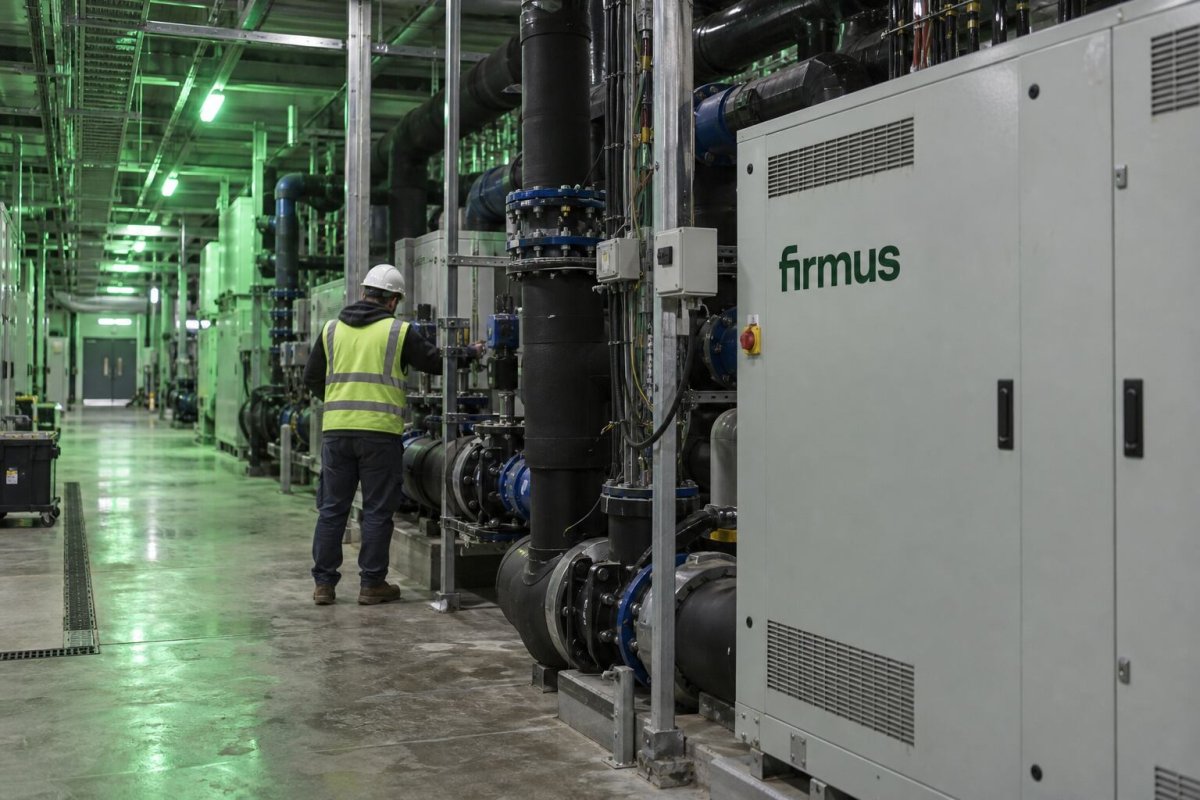
Australian AI infrastructure developer Firmus Technologies has secured OpenAI as an anchor customer for two planned AI-factory sites in Malaysia, pushing its total contracted customer portfolio above 900 megawatts. The announcement, made on September 8, is a significant endorsement for the private company, especially as it eyes a potential public listing. However, the headline number masks a crucial reality: only two of its seven AI factories are currently operational.
The two operating facilities are located in Australia and Singapore, while the remaining five—including the new Malaysia sites—are still in development. Firmus is targeting ready-for-service dates for these projects within the next 24 months. This distinction between contracted and operational capacity is central to understanding the company's true financial position.
The multi-year agreement with OpenAI provides a blue-chip anchor tenant for the Malaysia projects. Firmus plans to deploy Nvidia's Vera Rubin NVL72 systems on the Nvidia DSX AI Factory platform, integrating them with its proprietary HyperCube power-and-cooling system. This customer commitment is expected to ease project financing and procurement, as lenders gain confidence in future utilization and cash flow. It also answers the critical question facing any new AI-infrastructure platform: who will actually rent the expensive compute once it's live?
Yet, the agreement leaves many financial details undisclosed. Firmus did not reveal the contract value, OpenAI's share of the 900+ MW, pricing, minimum-use obligations, or the capital required for the two sites. Reuters reported that Firmus declined to comment on the contract value. The "more than 900 MW" figure refers to Firmus's entire contracted portfolio, not just OpenAI's order.
The gap between contracted and operational capacity remains substantial. Sites require land, grid connections, permits, financing, buildings, cooling systems, networking, and GPUs before generating revenue. Delays could push revenue further out while costs continue to accrue. There is some construction evidence in Australia, where contractor Maas Group reported that its A$200 million contract for Firmus's 100 MW Launceston AI factory is about 35% complete, with commissioning expected in calendar 2026. This demonstrates execution capability but also highlights the work ahead.
Firmus has disclosed economics for another project: its 360 MW Batam partnership with Nvidia is projected to generate US$25 billion to US$30 billion in receipts from committed offtake agreements over the first six years. No comparable revenue range was provided for the OpenAI Malaysia capacity, so applying the Batam figure would be speculative.
Firmus remains private, so there is no direct share-price reaction. The latest valuation marker is its August financing, where the company secured a fully subscribed US$2 billion equity round from investors including Blackstone, Coatue, Nvidia, and Jane Street. This brought new equity raised over the past year to over US$3 billion and pushed the post-money valuation above US$10.5 billion.
The OpenAI deal strengthens that valuation by improving customer quality and broadening geographic reach, but it does not reveal how much equity value is tied to assets already generating cash. With five of seven factories still under construction, prospective IPO buyers would be underwriting a construction and financing program as much as an operating business. A prospectus would need to separate energized MW from contracted MW, disclose the timing and firmness of customer commitments, and show project-level capital costs, debt, margins, and customer concentration. It would also need to address residual-value risk on rapidly superseded GPUs.
For Nvidia shareholders, this agreement is another positive demand signal for Vera Rubin and the AI-factory financing ecosystem. But it is not the same as recognized chip revenue; the systems must still be ordered, delivered, and brought into service. For listed Asia-Pacific data-center developers, Firmus has shown that global AI customers will commit to regional capacity before completion. However, a well-funded private operator with an anchor tenant can bid aggressively for scarce power, contractors, and equipment, potentially raising development costs for everyone else.
The next decisive disclosures will be the Malaysia sites' locations and grid milestones, OpenAI's committed MW, contract start dates, take-or-pay protections, total project cost, and funding mix. Until then, the OpenAI deal should be read as a substantial reduction in demand risk—not the elimination of execution risk. Firmus has found a buyer for future compute; investors still need to see how quickly, and at what return, it can turn that promise into energized capacity.