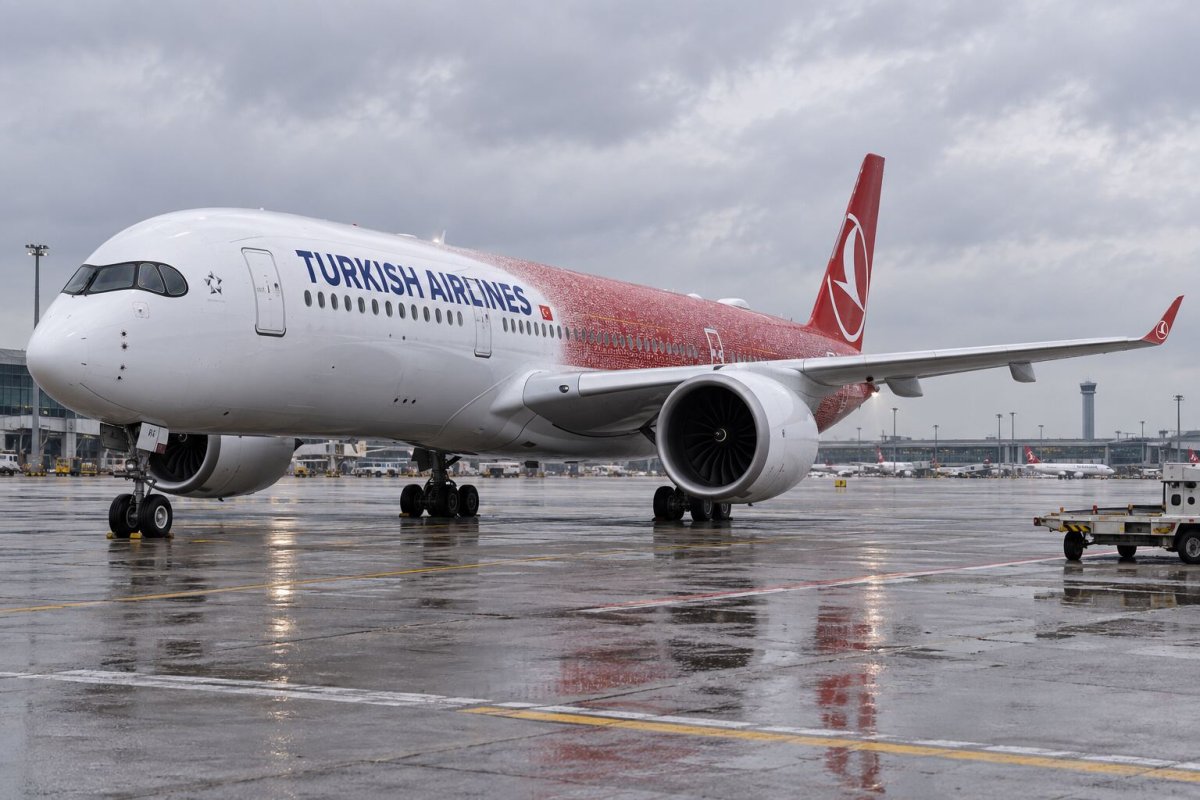
Turkish Airlines' shares closed at TRY 305 in Istanbul on Tuesday, marking a 2.78% increase, following the announcement that the carrier will become the front-of-shirt sponsor for Liverpool FC starting next season. While the market reaction was immediate, the financial details of the partnership remain less clear.
Neither Turkish Airlines nor Liverpool disclosed the exact terms of the agreement in their official statements. However, various news outlets have reported the five-year deal to be worth over £300 million, translating to approximately £60 million annually. This figure, while unconfirmed, has prompted investors to question whether the airline can convert this high-visibility marketing investment into profitable traffic growth.
Details of the Agreement
The sponsorship is set to commence on June 1, 2027, with the Turkish Airlines logo appearing on the match shirts of Liverpool's men's, women's, and academy teams from the 2027-28 season. This marks Liverpool's first change of main club partner in 17 years, with Standard Chartered transitioning to a global partner role after its shirt sponsorship concludes with the 2026-27 campaign.
Given the lack of official confirmation, the reported £300 million figure should be viewed as a benchmark rather than a definitive liability. Unknowns include the payment schedule, contract currency, performance-related clauses, and additional activation costs.
Financial Implications
At the September 8 exchange rate of approximately TRY 65.69 per pound, a £60 million annual fee would equate to around TRY 3.94 billion. If the contract is denominated in sterling, a weaker lira could increase the local-currency cost. Conversely, if the reported figure is a translation from another currency, the sensitivity may be less pronounced.
Turkish Airlines reported revenue of TRY 585.1 billion, operating profit of TRY 34.6 billion, and net profit of TRY 18.8 billion for the first half of 2026. Cash and cash equivalents stood at TRY 78.1 billion as of June 30. The airline's first-half marketing expenses totaled TRY 44.0 billion, meaning a single year of rights fees would represent about 9% of that six-month figure, or roughly 4.5% of an annualized run-rate. While not negligible, this expenditure appears manageable relative to the company's overall financial health.
Strategic Rationale
The strategic logic extends beyond simply selling tickets to Liverpool fans. Turkish Airlines operates a global connecting hub in Istanbul, allowing the brand to reach travelers across Europe, Asia, Africa, and the Americas simultaneously. A football partnership could enhance awareness in key origin markets, potentially filling capacity on connecting itineraries that do not originate or terminate in Turkey.
However, attributing passenger growth or yield improvements directly to the sponsorship will be challenging. Numerous factors, including aircraft supply, fuel prices, competition, and macroeconomic conditions, also influence these metrics. Management must ensure the deal delivers incremental value rather than merely paying a premium for reach that could have been achieved through more cost-effective channels.
Market Reaction and Outlook
The 2.8% rise in THYAO shares on Tuesday, with volume of approximately 50.5 million shares, reflects some investor optimism about the airline's global marketing ambitions. However, a single day's move cannot be solely attributed to this announcement, as broader market trends and currency movements also play a role.
Since the sponsorship does not begin for nearly nine months, its near-term earnings impact is likely limited unless the airline incurs early activation costs or makes advance payments. The most telling evidence will emerge in the 2027 budget and subsequent quarterly reports.
Investor Considerations
To better assess the deal's economics, investors would benefit from clarity on three key points: the accuracy and currency of the reported fee, the extent of activation spending beyond the rights payment, and whether total marketing expenses rise materially once the partnership commences.
For now, the balance-sheet impact appears manageable, but the valuation question remains. At roughly TRY 3.94 billion per year, the deal must either attract profitable passengers, strengthen pricing power, or replace less productive marketing spend. Tuesday's rally suggests some optimism, but the true return on this investment will only be visible in margins and cash flow over time.
