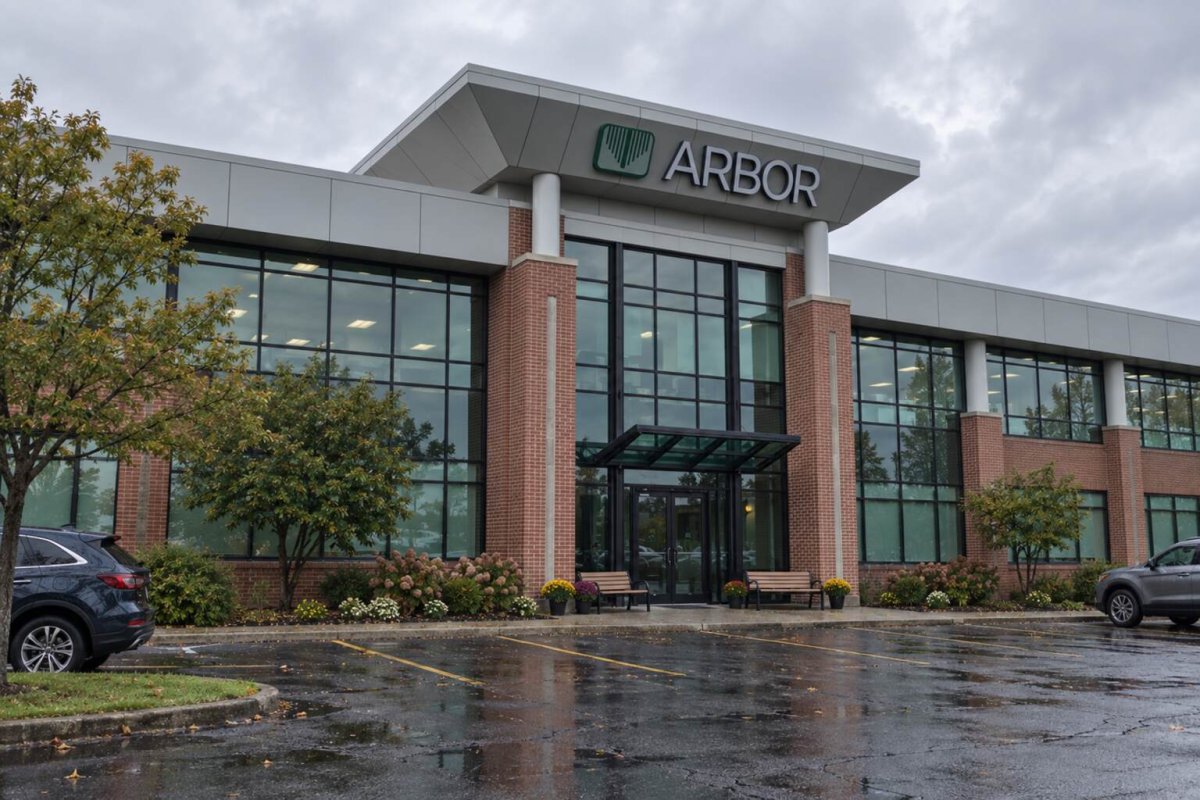
Arbor Realty Trust (NYSE: ABR) saw its shares close at $5.01 on Tuesday, a decline of 4.57%, pushing the annualized dividend yield to a striking 13.6% based on the current quarterly distribution of $0.17 per share. While the yield is undeniably attractive on the surface, the underlying coverage metrics tell a more cautious story.
In the second quarter, Arbor reported distributable earnings of just $0.10 per share, covering only 59% of the quarterly dividend. Even after adjusting for $9.6 million in realized losses tied to legacy assets, coverage improved to about 88%, still falling short of the payout. This shortfall has become a central concern for investors weighing the sustainability of the dividend against the company's ongoing credit challenges.
Dividend Context and Coverage Gaps
Arbor cut its common dividend from $0.30 to $0.17 earlier this year, with the reduced rate reaffirmed in July. At Tuesday's close, four quarterly payments at that level equate to $0.68 annually, representing 13.57% of the share price. The company's dividend history confirms two consecutive declarations at the lower rate.
The June quarter's financials, as reported in Arbor's SEC filing, show a GAAP loss of $0.20 per share and distributable earnings of $0.10. Management also presented an adjusted figure of $0.15 per share after stripping out legacy realized losses, but neither measure reached the $0.17 dividend threshold.
Looking at the first half of the year, the gap widens: distributable earnings totaled $0.17 per share against dividends declared of $0.47, reflecting the higher early-year payout. While this is not a direct forecast for the next two quarters, it underscores the need for recurring earnings to stabilize at or above $0.17 to fully justify the current yield.
Adding another layer of complexity, Arbor's distributable earnings calculation adds back provisions for credit losses and recognizes losses only when management deems an asset nonrecoverable. The company itself warns that this metric is neither operating cash flow nor a complete measure of liquidity, so investors must pair reported coverage with actual loan resolution trends.
Credit Metrics: Mixed Signals
On the positive side, non-performing loan principal declined to $428.8 million at June 30 from $481.5 million three months earlier. However, reserves against those loans rose sharply to $31.1 million from $16.1 million, and three additional non-accrual loans with $94.9 million in principal were added, despite being less than 60 days past due.
Arbor also recorded a $38.2 million net CECL provision for loan losses, modified seven loans totaling $386.9 million for borrowers in financial difficulty, and recognized $13.6 million in impairments on two real estate-owned properties. While the non-performing balance is trending in the right direction, the increased reserve intensity and new non-accrual exposures create a divergent picture that forms the crux of the stock's valuation debate.
Buyback and Financing Moves
Management has been aggressive in using the stock's discount. In July, Arbor repurchased $114.3 million of common stock at $5.42 per share, a price it described as 49% of book value, and an additional $20.8 million at $5.85, or 53% of book. Tuesday's close of $5.01 is below both purchase prices, suggesting the market remains skeptical about the underlying asset values.
Buying back shares near half of stated book value can be accretive if that book value proves collectible, but the liquidity for these repurchases partly came from a $375 million issuance of 6.25% convertible notes due in 2029. This debt-for-equity swap may enhance per-share metrics but also concentrates risk around future credit recoveries and financing costs.
Arbor still maintains access to institutional funding. In August, it completed an $825 million securitization, issuing approximately $730.1 million of investment-grade notes at an initial weighted-average spread of 1.76 percentage points over term SOFR. The company retained about $112.4 million of subordinate interests and plans to use proceeds to repay credit facilities and fund new loans.
Outlook and Investor Implications
This transaction improves funding flexibility but does not transfer away all risk. The next earnings report will be pivotal, with investors looking for distributable earnings to at least match the $0.17 dividend, fewer new non-accrual loans, and reduced reliance on reserves and modifications. If those elements align, the discount and buyback could work in shareholders' favor. Conversely, if realized losses continue to erode distributable earnings, the 13.6% yield may serve as a warning rather than a bargain.
