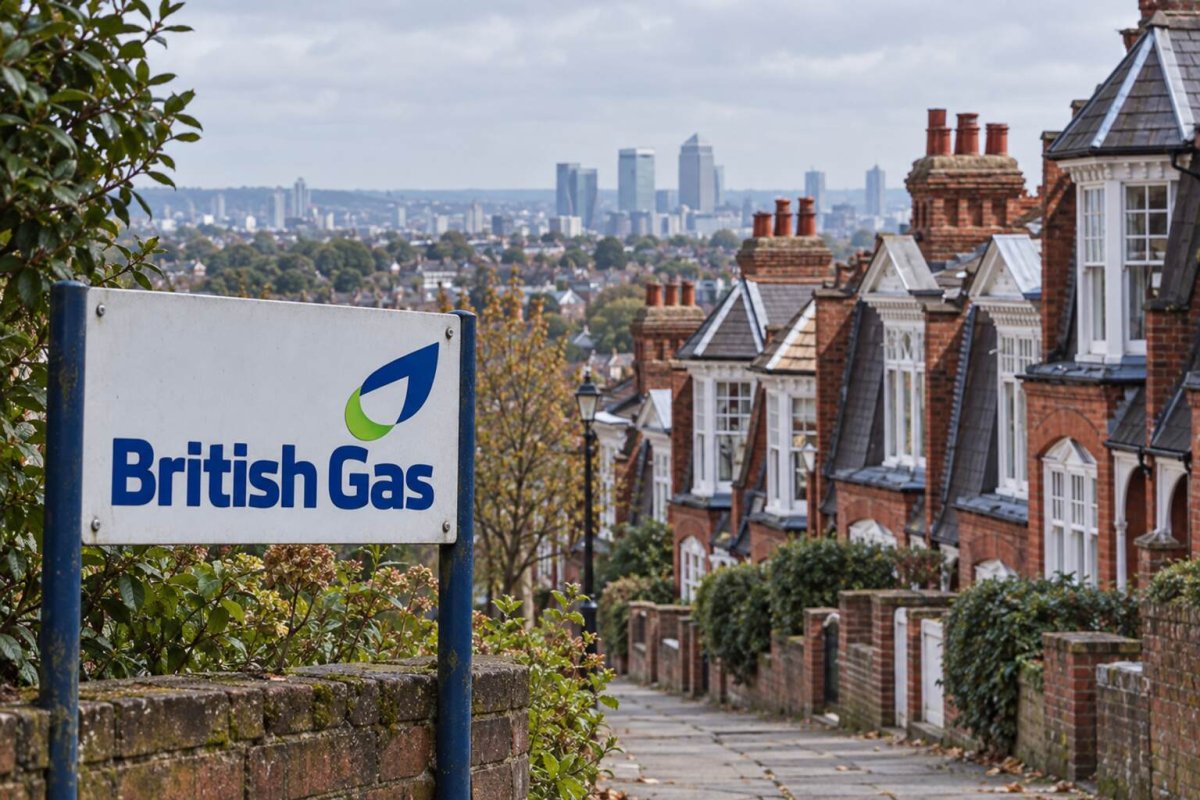
British households could see their energy bills climb by roughly a quarter in January, according to a Bloomberg Economics forecast released Tuesday. The projected increase would lift a typical annual dual-fuel bill above £2,000 for the first time, a development with significant implications for both consumers and the country's largest energy supplier, British Gas owner Centrica.
For Centrica, the forecast is not a straightforward windfall. The price cap mechanism is designed to pass through legitimate wholesale costs to customers, but the actual impact on the company's bottom line will hinge on affordability pressures, the scale of bad debt, and the timing of cost recovery. These factors will ultimately determine how much of the revenue increase reaches shareholders.
Centrica's shares traded at 148.65 pence in London on Tuesday, up about 1% from the previous close. The muted market reaction underscores that the forecast is not an official tariff decision or a clean earnings upgrade, but rather a scenario that could change as wholesale prices fluctuate.
Understanding the Price Cap Forecast
The £2,000 figure is not yet the actual price cap. Ofgem has set the cap for October through December at £1,723 for a typical dual-fuel household paying by direct debit, a 4% increase from the current £1,663 level. The regulator noted that gas bills would rise 8%, while a cut in value-added tax would keep electricity bills broadly stable. That decision covers about 22 million households on default tariffs.
A 25% increase from £1,723 would imply roughly £2,154 a year. However, the eventual January cap may differ because Ofgem uses an observation window for wholesale prices and adds network charges, policy costs, operating allowances, and tax. Gas and power prices can move sharply before that window closes, and government intervention could alter the bill composition. Tuesday's estimate is therefore a scenario, not a bill already sent to customers.
The inflation effect would extend beyond household budgets. A higher cap feeds directly into the consumer-price basket, leaving customers with less money for discretionary purchases. That matters for UK rate expectations and consumer-facing shares, even if wholesale prices retreat before the regulator fixes the final number.
Centrica's Margin Protection Has a Cash-Flow Cost
Centrica's latest accounts reveal why the retail read-through is mixed. In the first half of 2026, Retail adjusted operating profit rose 5% to £281 million, and the segment margin increased to 3.3% from 3.1%. UK home-energy customer accounts slipped to 7.45 million from 7.50 million at the end of 2025, while retention held at 91%.
The pressure point was unpaid bills. Centrica recorded a £216 million UK residential bad-debt charge, up from £159 million a year earlier—a 36% increase. A winter bill above £2,000 could expand the amount owed even if the percentage of customers missing payments stayed unchanged.
There is also a timing mismatch. Centrica said the backwardated commodity curve was likely to produce an under-recovery of energy costs in the second half of 2026, with recovery allowed in later price-cap periods. A higher January cap could close part of that gap, but the supplier may carry the working-capital burden first. The same accounts showed group free cash outflow of £570 million and adjusted net cash of £709 million at June 30, down from £1.49 billion at year-end, although investment was an important part of that decline.
Infrastructure Exposure and Market Implications
Centrica also owns energy infrastructure. Its Rough gas-storage asset earned £57 million of adjusted operating profit in the first half, against a £26 million loss a year earlier, giving the group some exposure to volatile wholesale markets on the other side of the ledger. Retail customers experience that volatility as higher bills, while political pressure can influence what costs Ofgem permits suppliers to recover.
The stock question is therefore less about the headline cap than three measurable items: the final January decision, Centrica's bad-debt charge, and the speed of regulatory cost recovery. A fall in wholesale prices before Ofgem's calculation is complete would weaken the £2,000 scenario. If the forecast holds, Centrica's regulated pass-through should defend its 3.3% retail margin over time, but a repeat of the first half's bad-debt increase could absorb much of that protection.