China has unveiled an ambitious roadmap to build out a low-Earth-orbit (LEO) satellite internet network by 2030, aiming to deliver global connectivity and integrate with terrestrial mobile systems. The plan, approved by the State Council and released on November 26, outlines a series of milestones for accelerating satellite launches, spectrum sharing tests, and the expansion of broadband services from higher orbits.
Key Targets and Timelines
The implementation plan, jointly issued by the Ministry of Industry and Information Technology (MIIT), the Cyberspace Administration of China, and the National Development and Reform Commission, sets a 2030 deadline for the 'substantial completion' of the LEO constellation. It also calls for increased broadband capacity from geostationary and medium-Earth-orbit satellites, along with coordinated frequency management across all orbital regimes.
Service Expansion and Applications
The plan emphasizes the rollout of direct-to-phone satellite connectivity, satellite VHF data links for maritime use, and commercial trials of Internet of Things (IoT) devices. It also targets the deployment of at least 2,000 super base stations and 2,000 emergency base stations to support mobile network coverage, and aims to integrate satellite internet with China's BeiDou navigation system.
China has already licensed mobile satellite services to its three major carriers—China Telecom, China Mobile, and China Unicom—since September 2025. The new plan seeks to expand these services and deepen the convergence of satellite and terrestrial networks.
Progress and Launch Activity
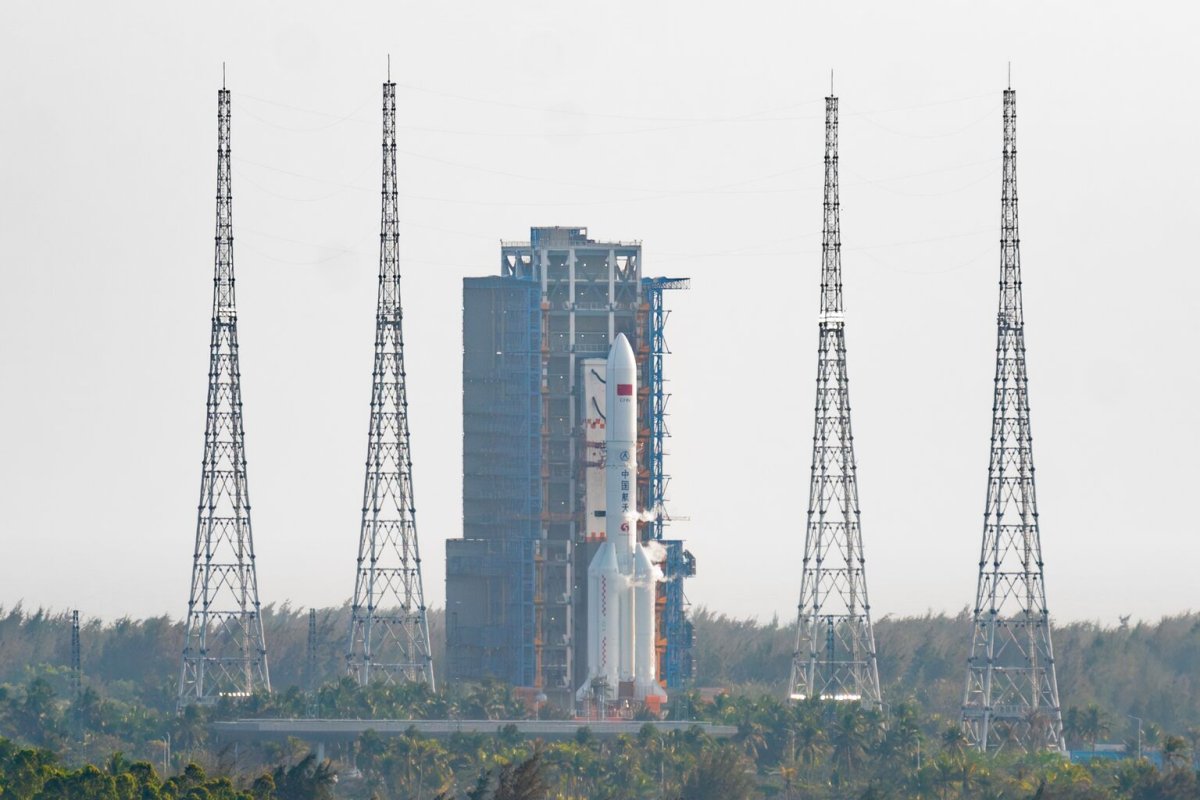
China has been advancing its LEO capabilities, with the launch of the 29th batch of internet satellites from Hainan's commercial spaceport on November 9. The first group of LEO satellites was sent into orbit on December 16, 2024, aboard a Long March 5B rocket from Wenchang, carrying Ka-band broadband payloads. The MIIT earlier set a target of attracting over 10 million satellite communications users by 2030.
Implications for the Global Space Race
China's accelerated push into LEO satellite internet mirrors efforts by private players like SpaceX's Starlink and Amazon's Project Kuiper, highlighting the strategic importance of space-based connectivity for national security and economic competitiveness. The plan does not specify a total satellite count or a launch schedule, but analysts will monitor launch frequency and commercial rollouts as indicators of progress.
For investors, the development could benefit Chinese satellite manufacturers and component suppliers, though many are not publicly listed on US exchanges. The broader space sector, including US-based satellite operators and launch providers, may see increased competitive pressure.
As China moves toward its 2030 goal, the global satellite internet market is set for intensified rivalry, with implications for telecommunications, data services, and emergency response capabilities worldwide.